
Engineering Excellence: The 6kW Fiber Laser for Aluminum Alloy Fabrication in Leon
The industrial landscape of Leon, Spain, is undergoing a significant transformation. As a region historically rooted in agriculture and heavy manufacturing, the demand for precision-engineered components has never been higher. For factory owners and engineers operating in the Polígono Industrial de Onzonilla or Villadangos del Páramo, the transition from traditional mechanical cutting to high-power fiber laser technology is a strategic necessity. Specifically, the 6kW fiber laser, optimized for aluminum alloy sheet metal, represents the pinnacle of efficiency for the agricultural sector. This guide examines the technical architecture of the tube-welded standard bed and the specific parameters required for high-precision aluminum processing.
The Structural Foundation: Engineering the Tube-welded Standard Bed
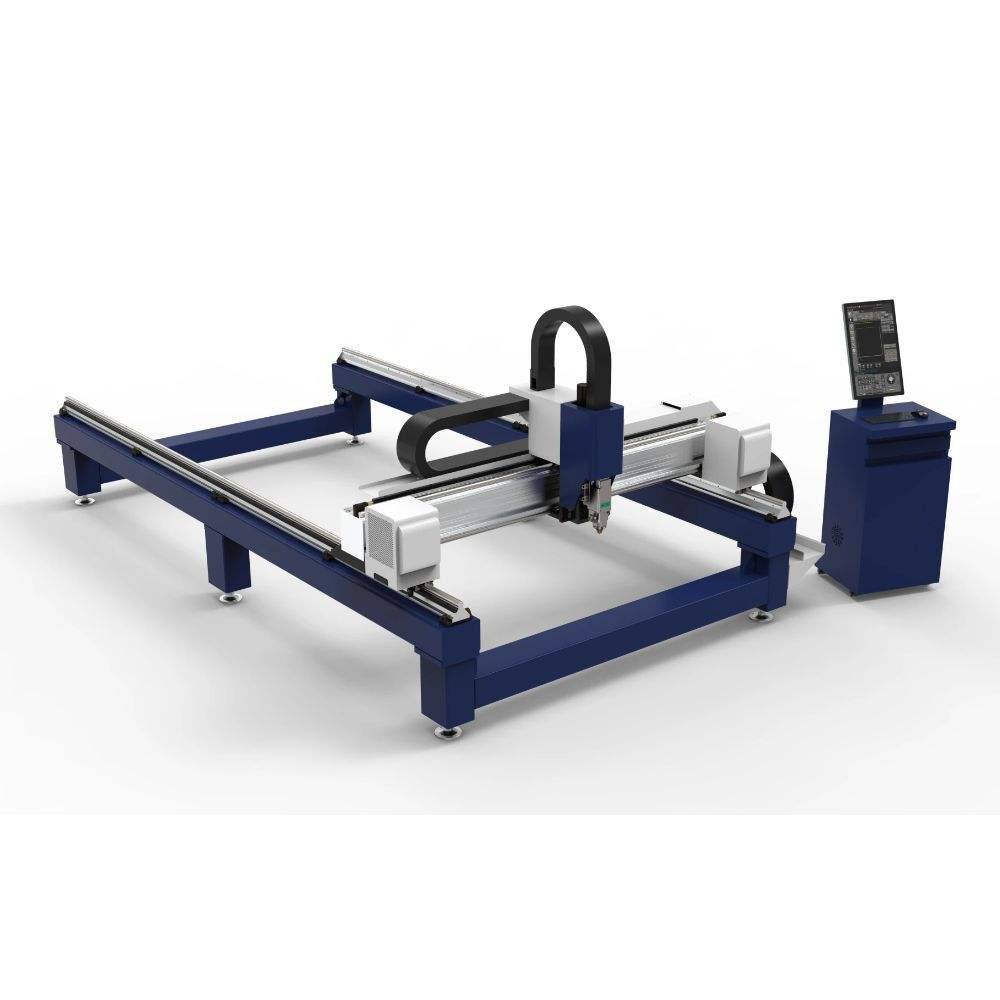
In the realm of laser cutting, the bed is the most critical component for long-term accuracy. For a 6kW system, which operates at high accelerations and speeds, the structural integrity of the machine frame determines the quality of the finished part. The tube-welded standard bed is an engineered solution designed to balance rigidity, vibration damping, and thermal stability.
Unlike lighter frames, the tube-welded bed utilizes high-strength rectangular steel tubes. During the manufacturing process, these tubes are reinforced with internal stiffeners to create a cellular structure. This design is particularly advantageous for the 6kW power class. The 6kW laser head moves at speeds often exceeding 100m/min with accelerations of 1.2G to 1.5G. Without a robust bed, these inertial forces would cause microscopic oscillations, leading to “ripples” on the cut surface of aluminum sheets.
To ensure lifetime precision, the bed undergoes a rigorous stress-relief process. After welding, the entire frame is subjected to high-temperature annealing in a specialized furnace. This process eliminates the internal stresses created during welding, ensuring that the bed will not deform over decades of use. For agricultural engineers in Leon producing large-scale irrigation components or grain silo panels, this means a machine that maintains a positioning accuracy of ±0.03mm over a 3000mm x 1500mm working area.

Technical Advantages for Agricultural Manufacturing
Agriculture in the Leon region requires equipment that is both lightweight and corrosion-resistant. Aluminum alloys, particularly the 5000 and 6000 series, are the preferred materials for grain transport systems, livestock trailers, and precision spraying equipment. However, aluminum is a “non-ferrous” metal with high thermal conductivity and high reflectivity, making it notoriously difficult to cut with lower-power lasers.
The 6kW power threshold is the “sweet spot” for aluminum fabrication. At this power level, the energy density is sufficient to overcome the material’s initial reflectivity instantaneously. Engineers can achieve high-speed “vaporization cutting” rather than simple melt-and-blow cutting. This results in a significantly smaller Heat Affected Zone (HAZ), preserving the mechanical properties of the aluminum alloy—a critical factor for structural agricultural components that must withstand cyclical loading.
Furthermore, the 6kW system allows for the use of compressed air or nitrogen as an assist gas for thicknesses up to 10mm. This eliminates the oxidation layer typically found when cutting with oxygen, allowing for immediate welding or powder coating without the need for secondary edge cleaning. For a factory owner, this translates to a 30% reduction in labor costs per part.
High-Precision Cutting of Aluminum Alloys: Data-Driven Parameters
Precision in aluminum cutting is not merely about power; it is about the synchronization of the CNC system with the laser source. Aluminum 5083 and 6061, common in Leon’s manufacturing hubs, require specific frequency and pulse width modulations to avoid dross (slag) accumulation on the bottom edge.
A 6kW laser provides the following performance benchmarks for Aluminum Alloy:
– 3mm Aluminum: Cutting speeds of up to 25-30 m/min using Nitrogen (20 bar).
– 6mm Aluminum: Cutting speeds of 8-10 m/min, providing a mirror-like finish.
– 10mm Aluminum: Stable production cutting at 3-4 m/min.
The high-precision head of a 6kW system features an autofocus function with a response time of less than 0.1ms. When cutting large aluminum sheets that may have slight surface undulations, the capacitive sensor maintains a constant nozzle-to-plate distance. This is vital for aluminum because even a 0.2mm deviation in focus can lead to a “burr” that requires manual grinding. For the engineer, the goal is “Right First Time” production, which the 6kW fiber laser delivers consistently.
Addressing the Challenge of Reflectivity
One of the primary concerns for engineers in Leon when considering a laser for aluminum is “back-reflection.” Aluminum is highly reflective in its molten state. If the reflected laser beam travels back into the fiber delivery system, it can destroy the laser source.
Modern 6kW systems designed for the European market incorporate multi-stage optical isolators and “back-reflection protection” modules. These sensors detect any returning light and shut down the beam in microseconds. Additionally, the use of nLIGHT or IPG laser sources with “back-reflection immune” technology allows for the continuous cutting of highly reflective 1000-series aluminum without risk to the hardware. This reliability is essential for agricultural factories that operate on tight seasonal deadlines where machine downtime is not an option.
Integration with Agricultural Industry 4.0 in Leon
The Leon market is increasingly moving toward Industry 4.0. The 6kW fiber laser is not a standalone tool but a data-driven node in the factory ecosystem. With advanced nesting software, engineers can maximize material utilization of expensive aluminum sheets. Nesting efficiency for complex agricultural parts—such as perforated screens for seed cleaning or custom brackets for harvesters—can reach 90-95%.
The CNC controllers on these machines support standard G-code and integrate seamlessly with CAD/CAM software like SolidWorks or AutoCAD, which are standard in Spanish engineering offices. This allows for a direct digital workflow from the designer’s desk in Leon to the machine floor, reducing the margin for human error and increasing the speed of prototyping for new agricultural implements.
Operational Economics and ROI for Factory Owners
From a business perspective, the 6kW laser on a tube-welded bed offers a compelling Return on Investment (ROI). While the initial capital expenditure is higher than a 3kW system, the cost-per-part is significantly lower due to the exponential increase in cutting speed.
Consider the following economic factors:
1. Gas Consumption: By cutting faster at 6kW, the total volume of Nitrogen used per meter of cut is actually lower than at 3kW, as the “dwell time” over the material is reduced.
2. Electricity Efficiency: Modern fiber lasers have a wall-plug efficiency of over 35%. The 6kW system replaces multiple older CO2 lasers or plasma cutters, drastically reducing the factory’s peak kVA requirement.
3. Maintenance: The tube-welded bed requires zero structural maintenance. Unlike CO2 lasers with complex mirrors and bellows, the fiber laser is a solid-state technology with no moving parts in the light-generation path.
For a factory in Leon processing 50 tons of aluminum annually, the 6kW laser typically pays for itself within 18 to 24 months through labor savings and increased throughput.
Conclusion: The Future of Leon’s Industrial Sector
The 6kW Sheet Metal Laser, characterized by its tube-welded standard bed and its specialized capabilities for aluminum alloy, is more than just a cutting tool; it is a catalyst for industrial growth. For the agricultural engineers and factory owners of Leon, it provides the precision necessary to compete in a global market. By investing in a machine that offers structural stability and high-power efficiency, local manufacturers can ensure they are producing the highest quality equipment for the fields of Castilla y León and beyond. The shift to 6kW technology is not just an upgrade—it is the new standard for excellence in metal fabrication.
















