
Comprehensive Guide to 6kW Precision Laser Systems for Stainless Steel Fabrication in Mexico City
The industrial landscape of Mexico City (CDMX) and its surrounding metropolitan areas, such as Tlalnepantla and Vallejo, is undergoing a significant technological transformation. As a primary hub for automotive, aerospace, and food processing industries, the demand for high-precision components has never been greater. At the center of this evolution is the 6kW fiber laser system, a powerhouse of efficiency designed to handle the rigorous demands of stainless steel laser cutting. This guide explores the technical nuances, environmental considerations, and operational strategies for deploying 6kW laser technology within the unique geographical and economic context of Mexico City.
The Technical Superiority of 6kW Fiber Laser Technology
In the realm of thermal cutting, the 6kW power rating represents a critical “sweet spot” for medium-to-heavy industrial applications. Unlike lower-wattage systems that may struggle with thick-gauge materials or higher-wattage systems that require massive capital investment and infrastructure, the 6kW fiber laser offers an optimal balance of speed, precision, and operational cost. For stainless steel, this power level allows for high-speed processing of sheets ranging from 1mm to 20mm with exceptional edge quality.
The 6kW system utilizes a fiber optic delivery method, where the laser beam is generated by bank of diodes and transmitted through a flexible fiber cable. This eliminates the need for complex mirrors and bellows required by older CO2 systems, resulting in a more stable beam profile and significantly lower maintenance requirements. For engineers in Mexico City, where industrial space can be at a premium and technical uptime is critical, the compact footprint and reliability of fiber technology are paramount.
 laser cutting machine” style=”width: 100%; max-width: 800px; height: auto; margin: 20px 0;”>
Stainless Steel Dynamics: Challenges and Solutions
Stainless steel is prized for its corrosion resistance and aesthetic appeal, but it presents specific challenges during the laser cutting process. Its high chromium and nickel content makes it more reflective than carbon steel, and its lower thermal conductivity means heat stays concentrated near the cut zone. A 6kW system provides the necessary power density to overcome these physical barriers instantaneously, ensuring a clean vaporizing of the metal rather than a slow melt.
One of the most critical factors in stainless steel fabrication is the choice of assist gas. In Mexico City’s competitive market, fabricators often choose between Nitrogen and Oxygen. For stainless steel, Nitrogen is the industry standard for high-precision work. Because Nitrogen is an inert gas, it prevents oxidation during the cutting process, leaving a bright, silver edge that is ready for welding or immediate assembly without secondary cleaning. A 6kW laser optimized with high-pressure Nitrogen delivery can achieve cutting speeds that significantly outperform traditional mechanical methods, directly impacting the throughput of a facility.
Adapting to the Mexico City Environment: Altitude and Infrastructure
Operating high-precision laser cutting equipment in Mexico City requires specific engineering considerations due to the city’s altitude of approximately 2,240 meters (7,350 feet) above sea level. The lower atmospheric pressure at this elevation affects the cooling efficiency of air-cooled chillers and the density of assist gases.
Engineers must ensure that the laser’s cooling system is rated for high-altitude operation. Reduced air density means that heat exchange is less efficient; therefore, oversized chillers or specialized heat exchangers are often recommended to prevent the laser source from overheating during long production cycles. Furthermore, the gas delivery systems must be calibrated to account for pressure differentials, ensuring that the 6kW beam remains stabilized by a consistent flow of Nitrogen at the nozzle. Power stability is another concern in certain industrial zones of CDMX. Utilizing high-quality voltage regulators and Uninterruptible Power Supplies (UPS) is essential to protect the sensitive CNC electronics and the fiber laser source from voltage spikes or sags common in heavily loaded urban grids.
Precision Engineering and Tolerance Control
The hallmark of a 6kW precision system is its ability to maintain tight tolerances, often within +/- 0.05mm. This level of accuracy is vital for the aerospace and medical device sectors growing in the Queretaro-Mexico City corridor. The precision is achieved through a combination of high-end linear motors, robust gantry designs, and sophisticated CNC control software.
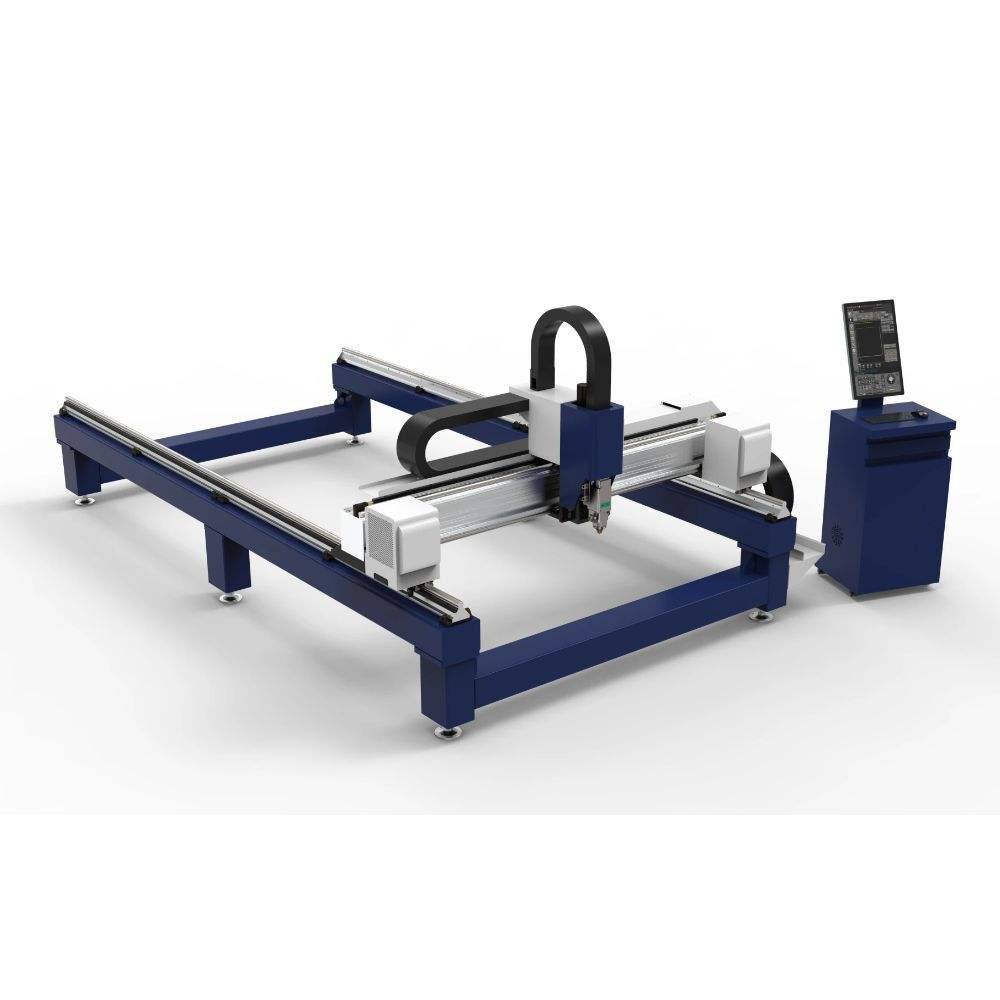
Modern 6kW systems utilize “Flying Optics” technology, where the cutting head moves rapidly over the stationary workpiece. The lightweight yet rigid construction of the gantry allows for high acceleration rates (often exceeding 1.5G), which is necessary to maintain precision when cutting intricate geometries in stainless steel. When laser cutting complex patterns or small holes (with diameters smaller than the material thickness), the 6kW system’s ability to modulate power in real-time prevents “burn-back” and ensures perfectly circular apertures.
Optimizing the Workflow: Nesting and Automation
In the high-cost environment of stainless steel procurement, material utilization is a key metric for profitability. Integrated nesting software plays a vital role in the 6kW laser cutting workflow. By intelligently arranging parts on a standard sheet (e.g., 1.5m x 3.0m), the software minimizes scrap. Advanced features like “common line cutting”—where two parts share a single cut path—not only save material but also reduce the total processing time and gas consumption.
For shops in Mexico City looking to scale, automation is the next logical step. A 6kW laser is so fast that manual loading and unloading often become the bottleneck. Implementing automated pallet changers or robotic arm integration allows the machine to operate with minimal human intervention, effectively enabling “lights-out” manufacturing. This is particularly advantageous for meeting the high-volume demands of the Mexican automotive supply chain (Tier 1 and Tier 2 suppliers).
Maintenance and Technical Support in Central Mexico
Investing in a 6kW laser system is a long-term commitment, and the availability of local technical support in Mexico City is a decisive factor for operational success. Unlike CO2 lasers that require frequent gas refills and mirror alignments, fiber lasers are largely solid-state. However, they still require a rigorous preventive maintenance schedule.
Key maintenance tasks include:
- Optical Inspection: Regularly checking the protective windows (cover glass) to prevent dust contamination from damaging the focus lens.
- Chiller Maintenance: Ensuring the coolant is clean and at the correct pH level to prevent internal corrosion of the laser source.
- Gas Path Integrity: Checking for leaks in high-pressure lines to ensure Nitrogen is delivered efficiently to the laser cutting head.
- Calibration: Periodic checks of the gantry alignment and motor synchronization to maintain sub-millimeter precision.
Having a local inventory of consumables—nozzles, ceramics, and protective windows—within the Mexico City area ensures that downtime is kept to a minimum. Professional engineering firms in the region now offer specialized training for local operators, bridging the gap between advanced technology and the skilled Mexican workforce.
Economic Outlook: The ROI of 6kW Systems
The economic justification for a 6kW precision laser in Mexico City is driven by the reduction in “cost per part.” While the initial investment is higher than traditional plasma or waterjet systems, the speed of fiber laser cutting on stainless steel drastically reduces labor and energy costs per unit. Furthermore, the high-quality finish eliminates the need for grinding or deburring, which are labor-intensive processes.
As Mexico continues to solidify its position as a global manufacturing powerhouse under the USMCA (T-MEC) agreement, the ability to produce high-precision stainless steel components locally is a strategic advantage. Companies that adopt 6kW fiber technology can compete not just on price, but on the complexity and quality of the work they can perform, moving up the value chain from basic fabrication to high-tech engineering services.
Conclusion
The 6kW precision laser system is more than just a tool; it is a catalyst for industrial growth in Mexico City. By understanding the specific requirements of stainless steel—ranging from material science to the environmental impacts of altitude—local manufacturers can harness this technology to achieve unprecedented levels of productivity. As the demand for laser cutting services continues to rise in the heart of Mexico, the 6kW fiber laser stands as the definitive solution for those seeking to combine power, precision, and profitability.
















