
The Integration of 6kW Precision Laser Systems in Tijuana’s Industrial Landscape
The manufacturing sector in Tijuana, Baja California, has undergone a significant transformation over the last decade, evolving from basic assembly operations to high-precision engineering hubs. At the center of this evolution is the implementation of 6kW fiber laser technology. For facilities processing carbon steel, the 6kW power threshold represents a critical “sweet spot” in engineering—balancing high-speed throughput with the thermal control necessary for intricate geometries. As global supply chains continue to favor “nearshoring,” Tijuana’s proximity to the United States market demands a level of precision and efficiency that only advanced laser cutting systems can provide.
A 6kW precision laser system utilizes a fiber optic medium to amplify light, resulting in a beam with a wavelength of approximately 1.07 microns. This specific wavelength is highly absorbed by ferrous metals, particularly carbon steel, making it significantly more efficient than legacy CO2 systems. For engineers in the Tijuana region, where energy costs and production deadlines are constant variables, the transition to 6kW systems offers a pathway to reduced operational overhead and superior edge quality.
Technical Specifications and Beam Dynamics
The Physics of 6kW Fiber Delivery
The 6kW output refers to the continuous wave power delivered at the focal point. Unlike lower-wattage systems, a 6kW source provides enough energy density to maintain a stable plasma state during the laser cutting process, even in thicker sections of carbon steel. The beam quality, often measured by the Beam Parameter Product (BPP) or M2 factor, ensures that the energy is concentrated into a microscopic spot size. This concentration allows for a narrower kerf width, which is essential for nesting parts tightly and maximizing material utilization—a vital factor when managing the fluctuating costs of raw steel in the Mexican market.
Thermal Management in Carbon Steel Processing
Carbon steel, while highly conductive, is susceptible to heat-affected zones (HAZ) if the cutting speed is too slow or the power modulation is poorly controlled. A 6kW system allows for higher feed rates, which paradoxically reduces the total heat input into the workpiece. By moving the beam faster across the material, there is less time for thermal energy to conduct into the surrounding metal, thereby preserving the structural integrity and metallurgical properties of the carbon steel. This is particularly important for aerospace components manufactured in Tijuana, where material specifications are stringent.

Optimizing Carbon Steel Cutting for Tijuana’s Maquiladoras
Material Grades and Thickness Ranges
In the Tijuana industrial corridor, the most common materials processed include A36 hot-rolled steel, 1018 cold-rolled steel, and various high-strength low-alloy (HSLA) steels. A 6kW precision laser system is capable of processing carbon steel plates up to 25mm (1 inch) with high reliability. While a 3kW system might struggle or require extremely slow speeds for 16mm plate, the 6kW variant maintains a consistent cut profile, ensuring that the bottom edge of the cut is free from excessive dross or slag.
Assist Gas Strategies: Oxygen vs. Nitrogen
The choice of assist gas is a critical engineering decision in laser cutting. For carbon steel, oxygen is the traditional choice. The oxygen reacts exothermically with the iron in the steel, adding thermal energy to the process and allowing for the cutting of thicker sections at lower power levels. However, this leaves an oxide layer on the cut edge that must be removed before painting or welding. In Tijuana’s high-output environments, many engineers are shifting toward “high-pressure nitrogen cutting” for thinner carbon steel gauges (up to 6mm). Using nitrogen prevents oxidation, resulting in a clean, shiny edge that is immediately ready for secondary processes, thereby eliminating the labor costs associated with de-burring and cleaning.
Operational Excellence and Efficiency Metrics
Throughput and ROI Calculations
From a management perspective, the 6kW system represents a significant leap in Return on Investment (ROI). When compared to a 4kW system, a 6kW laser can increase cutting speeds on 12mm carbon steel by as much as 40-50%. In a 24/7 production environment typical of Tijuana’s larger maquiladoras, this increase in throughput allows a single machine to do the work of two older units. This consolidation reduces the footprint required on the factory floor and lowers the total cost per part by distributing fixed overhead across a higher volume of units.
Precision and Repeatability
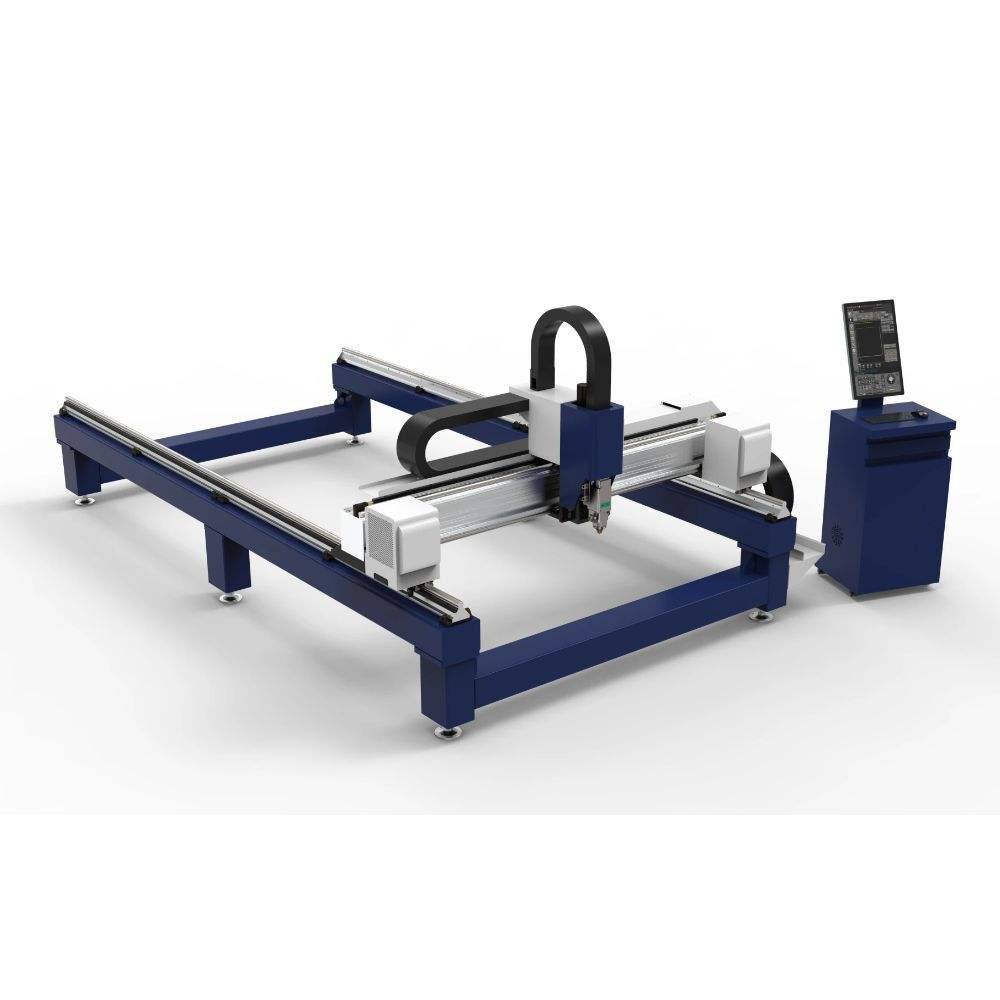
Precision in laser cutting is not just about the laser source; it is also about the motion control system. High-end 6kW systems are often paired with linear motors and high-resolution encoders that allow for positional accuracies within ±0.03mm. For complex carbon steel assemblies—such as automotive chassis components or electronic enclosures—this level of repeatability ensures that every part fits perfectly during the assembly phase, reducing the need for manual adjustments and rework.
Maintenance and Environmental Considerations in Tijuana
Addressing Local Environmental Factors
Tijuana’s coastal environment and industrial particulate levels present unique challenges for high-precision machinery. The 6kW fiber laser source is inherently more robust than CO2 lasers because the beam is contained within a fiber optic cable, protecting it from atmospheric contaminants. However, the external optics (the cutting head lens) and the chiller system require rigorous maintenance schedules. The high humidity and salt air can lead to corrosion if the machine’s internal environment is not properly regulated through refrigerated air dryers and dust extraction systems.
The Importance of Chiller Stability
A 6kW laser generates a substantial amount of heat within the resonator and the cutting head. Precision laser cutting requires a dual-circuit cooling system to maintain a constant temperature within ±1°C. In the warmer months in Tijuana, the chiller’s efficiency is paramount. If the laser source fluctuates in temperature, the beam’s mode and stability can shift, leading to inconsistent cut quality and potential damage to the fiber delivery system. Engineering teams must prioritize high-capacity, industrial-grade chillers to ensure 100% duty cycle performance.
The Future of Manufacturing in the Cali-Baja Region
Integration with Industry 4.0
Modern 6kW systems are no longer standalone tools; they are data-driven nodes within a smart factory. Integration with ERP and MES systems allows Tijuana-based manufacturers to track material usage, gas consumption, and machine uptime in real-time. Predictive maintenance algorithms can analyze the power draw and beam stability, alerting technicians to potential issues before a component fails. This proactive approach is essential for maintaining the “Just-in-Time” (JIT) delivery schedules required by US-based partners across the border.
Skill Development for the Local Workforce
As the technology in Tijuana becomes more sophisticated, there is a growing need for specialized technical training. Operating a 6kW precision laser requires an understanding of CNC programming, nesting optimization, and material science. Local educational institutions and technical schools are increasingly partnering with industrial providers to train the next generation of laser technicians. This investment in human capital is what will ultimately sustain Tijuana’s position as a leader in precision metal fabrication.
Conclusion
The 6kW precision laser system is more than just a cutting tool; it is a catalyst for economic and technical growth in Tijuana. By providing the power necessary to process carbon steel with unmatched speed and the precision required for high-tech applications, these systems allow local manufacturers to compete on a global scale. As the demand for faster, cleaner, and more efficient laser cutting grows, the 6kW fiber laser will remain the cornerstone of the region’s industrial infrastructure. For any engineering firm looking to optimize their carbon steel production, the transition to high-power fiber technology is not merely an upgrade—it is a strategic necessity for the modern era of manufacturing.
















