
Introduction to 6kW Precision Laser Systems
The evolution of industrial fabrication has been significantly accelerated by the advent of high-power fiber laser technology. Among the various power configurations available, the 6kW precision laser system has emerged as a critical benchmark for versatility, speed, and accuracy. This power level represents the “sweet spot” for many industrial applications, particularly when dealing with highly reflective non-ferrous metals such as brass. In regions like Leon, which serves as a burgeoning hub for automotive, electrical, and decorative hardware manufacturing, the implementation of 6kW systems has redefined production timelines and quality standards.
laser cutting technology at the 6kW level utilizes a fiber-optic delivery system that provides a high-intensity beam with a wavelength of approximately 1.06 microns. This specific wavelength is more readily absorbed by metallic surfaces compared to the 10.6 microns of traditional CO2 lasers. For manufacturers in Leon looking to optimize their throughput, the 6kW system offers a robust balance between capital investment and operational capability, allowing for the processing of both thin sheets and medium-thick plates with exceptional edge quality.

The Technical Superiority of 6kW Fiber Lasers for Brass
Brass, an alloy of copper and zinc, is prized for its conductivity, corrosion resistance, and aesthetic appeal. However, from an engineering perspective, it is one of the most challenging materials to process. Brass is highly reflective and has high thermal conductivity, which means it tends to reflect the laser energy back into the cutting head or dissipate the heat so quickly that a stable melt pool is difficult to maintain.
Overcoming Material Reflectivity
The 6kW precision laser system addresses these challenges through sheer energy density and advanced back-reflection protection. In the past, laser cutting brass was risky; reflected light could travel back through the delivery fiber and destroy the laser source. Modern 6kW systems are equipped with optical isolators and sensors that monitor back-reflection in real-time. By utilizing a 6,000-watt output, the system can achieve an “instantaneous pierce,” breaking the reflectivity barrier immediately and establishing a stable kerf. This allows for continuous, high-speed processing without the risk of equipment damage.
Enhanced Thermal Management
Because brass conducts heat so efficiently, the laser must move fast enough to prevent the heat-affected zone (HAZ) from spreading. A 6kW system provides the necessary power to maintain high feed rates, ensuring that the energy is concentrated on the cut line. This results in a cleaner edge with minimal dross (slag) at the bottom of the cut, which is essential for components that require tight tolerances or decorative finishes in Leon’s specialized markets.
Applications in the Leon Industrial Sector
Leon has established itself as a critical node in the global supply chain, particularly within the Bajío region’s automotive and aerospace corridors. The demand for precision laser cutting in this area is driven by the need for rapid prototyping and high-volume production of intricate brass components.
Automotive and Electrical Component Manufacturing
In the automotive sector, brass is frequently used for connectors, terminals, and sensor housings due to its electrical properties. A 6kW laser system allows manufacturers in Leon to produce these parts with micron-level precision. The ability to cut complex geometries without the need for physical dies or tooling significantly reduces lead times. Furthermore, the 6kW power level is ideal for cutting thicker brass busbars used in electric vehicle (EV) battery packs, where clean, burr-free edges are mandatory to prevent electrical arcing.
Decorative Hardware and Tooling
Leon’s history in the leather and footwear industry has branched out into high-end hardware and specialized tooling. Brass is a staple material for luxury buckles, ornaments, and precision molds. The 6kW laser cutting process ensures that even the most intricate patterns are rendered with sharp corners and smooth curves, reducing the need for secondary polishing or machining. This efficiency is a competitive advantage for local workshops aiming to supply international luxury brands.
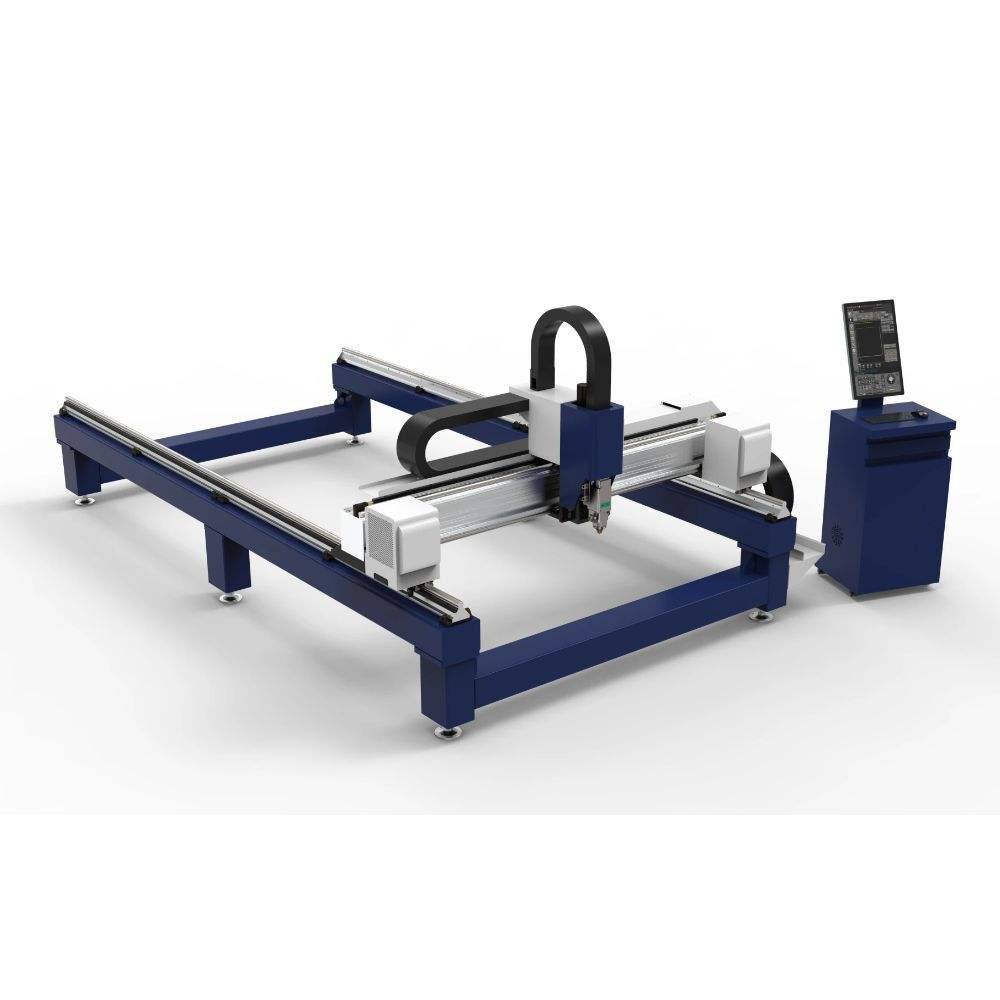
Optimizing Laser Cutting Parameters for Brass
Achieving the best results with a 6kW system requires more than just raw power; it requires a deep understanding of the interplay between gas pressure, focal position, and cutting speed.
Assist Gas Selection: Nitrogen vs. Oxygen
For brass, Nitrogen is the preferred assist gas. When laser cutting with Nitrogen, the gas acts as a mechanical force to blow the molten metal out of the kerf while simultaneously preventing oxidation. This results in a bright, clean cut edge that is ready for welding or plating. While Oxygen can be used for thicker sections to add exothermic energy, it often results in a darkened, oxidized edge on brass which is generally undesirable for precision engineering applications. A 6kW system provides enough energy to use Nitrogen effectively even on thicker brass plates (up to 12mm or 15mm), maintaining high edge quality.
Focus and Nozzle Configuration
Precision is also a function of the focal point. For brass, the focus is typically set slightly below the surface of the material to ensure a wider kerf base, which helps in the efficient removal of the heavy molten brass. Using a double-layer nozzle can also improve the laminar flow of the assist gas, further stabilizing the cutting process. In the high-production environments of Leon, fine-tuning these parameters can result in a 20-30% increase in processing speed.
Maintenance and Longevity of High-Power Systems
A 6kW precision laser is a significant investment, and maintaining its performance is paramount for long-term profitability. The environment in industrial Leon can be dusty, which poses a threat to sensitive optical components.
Optical Cleanliness and Cooling
The cutting head is the most vulnerable component. Regular inspection of the protective window is mandatory, as any dust or brass splatter can cause the window to overheat and crack under the 6kW beam. Additionally, the chiller system must be meticulously maintained. A 6kW fiber laser generates substantial heat within the source and the cutting head. The cooling system must maintain a constant temperature within ±0.5°C to prevent thermal expansion of the optical elements, which would otherwise lead to “focus shift” and inconsistent cutting results.
Motion System Calibration
To match the speed of a 6kW laser, the machine’s gantry and drive system must be capable of high acceleration (often up to 1.5G or 2.0G). Regular lubrication of the linear guides and calibration of the servo motors ensure that the “precision” aspect of the laser cutting system is upheld. In Leon, where many factories operate on three shifts, a proactive maintenance schedule is the difference between seamless production and costly downtime.
Future Trends: Automation and Industry 4.0 in Leon
The integration of 6kW laser systems into the broader “Smart Factory” ecosystem is the next step for Leon’s manufacturing base. Modern systems are now equipped with IoT sensors that track power consumption, gas usage, and cutting hours. This data allows for predictive maintenance, where the machine notifies the operator before a failure occurs.
Furthermore, the high speed of 6kW laser cutting often creates a bottleneck at the loading and unloading stage. To solve this, many facilities in Leon are adopting automated shuttle tables and robotic sorting arms. This allows the laser to run at its maximum capacity, processing brass sheets 24/7 with minimal human intervention. As the local industry moves toward higher value-added manufacturing, the precision and efficiency of the 6kW fiber laser will remain the cornerstone of the fabrication shop.
Conclusion
The 6kW precision laser system represents a transformative technology for the industrial landscape of Leon. By effectively overcoming the inherent challenges of brass—such as high reflectivity and thermal conductivity—this technology enables local manufacturers to produce complex, high-quality components for the automotive, electrical, and decorative sectors. Through the strategic application of laser cutting, combined with rigorous maintenance and optimized parameters, businesses can achieve unprecedented levels of productivity. As Leon continues to grow as an industrial powerhouse, the 6kW fiber laser will undoubtedly play a pivotal role in shaping the future of precision metal fabrication.
















