
Engineering Guide: Implementing 6kW Precision Fiber Laser Systems for Aluminum Fabrication in Puebla’s Agricultural Sector
The industrial landscape of Puebla, Mexico, has undergone a significant transformation. While historically recognized for its automotive prowess, the region’s agricultural machinery sector is now demanding higher precision and material versatility. As factory owners and engineers transition from traditional carbon steel to high-strength aluminum alloys for irrigation components, storage silos, and harvesting equipment, the technology used for fabrication must evolve. The 6kW Precision Fiber Laser System represents the current gold standard for this transition, offering the specific power density required to overcome the unique metallurgical challenges of aluminum.
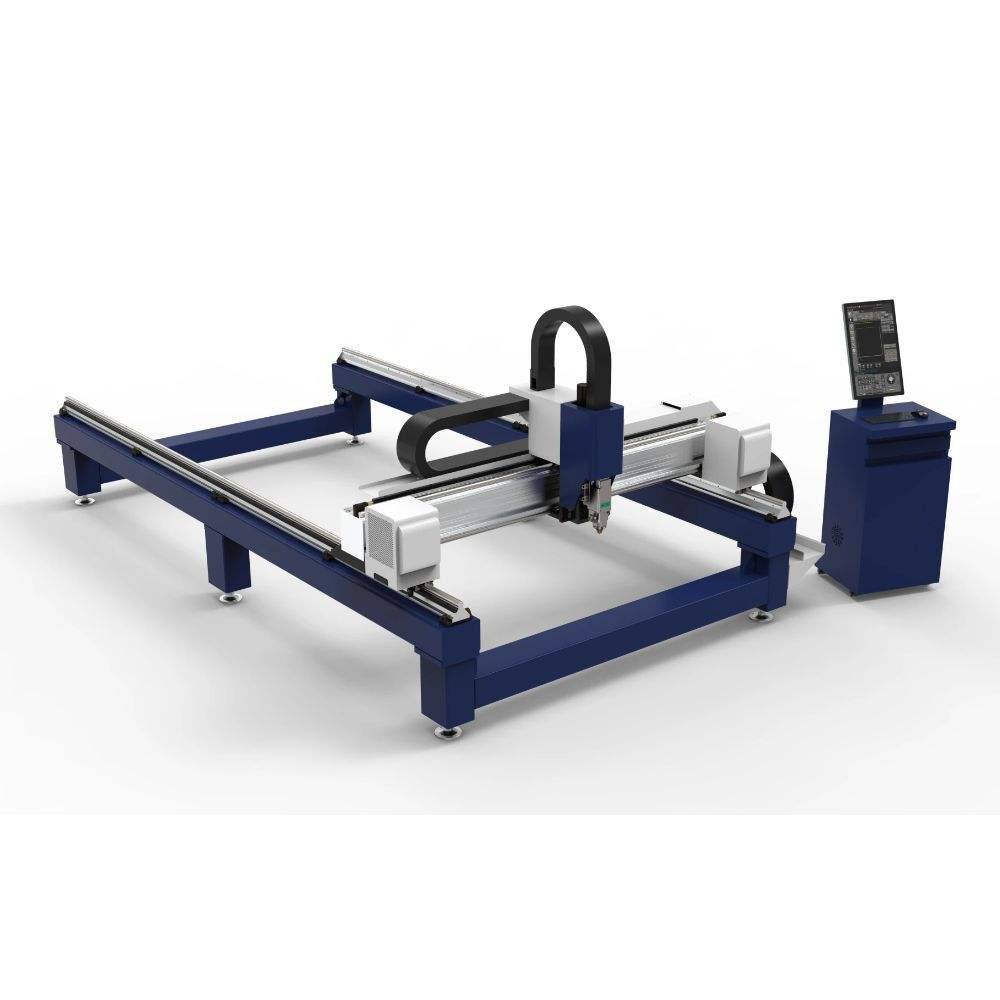
The Structural Foundation: Plate-welded Heavy Duty Bed Technology
In precision laser cutting, the quality of the cut is inextricably linked to the stability of the machine’s chassis. For a 6kW system operating at high acceleration speeds, a standard frame is insufficient. The Plate-welded Heavy Duty Bed is engineered to provide the thermal and mechanical mass necessary to dampen vibrations that would otherwise manifest as striations on the cut surface of aluminum alloys.
The manufacturing process of this bed involves high-quality carbon steel plates, often exceeding 20mm in thickness, which are joined using a multi-pass welding technique. Unlike cast iron beds which can be brittle, or thin-walled tube frames that vibrate at high frequencies, the plate-welded structure offers superior tensile strength. Following the welding process, the bed undergoes a rigorous stress-relief annealing process in a high-temperature furnace. This ensures that internal stresses generated during welding are eliminated, preventing the frame from warping over years of operation in the varying climate of the Puebla highlands.
From an engineering perspective, the “honeycomb” internal reinforcement of the bed provides a high strength-to-weight ratio. This allows the machine to handle G-forces of up to 1.5G during rapid traverse without compromising the micron-level positioning of the cutting head. For Puebla’s agricultural engineers, this translates to consistent part geometry across a 10-year equipment lifecycle.
Technical Challenges of Aluminum Alloy Laser Processing
Aluminum is notoriously difficult to process with lower-power lasers due to its high thermal conductivity and high reflectivity. In its solid state, aluminum can reflect up to 90% of infrared laser radiation. This poses two risks: damage to the laser source via back-reflection and poor edge quality due to insufficient energy absorption.
A 6kW power rating is the “inflection point” for aluminum. At this power level, the energy density at the focal point is sufficient to instantaneously melt the surface, drastically reducing reflectivity and allowing the beam to penetrate the material. When processing common agricultural alloys such as 5052 or 6061, the 6kW system maintains a stable “keyhole” during the melt process.
Furthermore, aluminum’s high thermal conductivity means that heat dissipates rapidly from the cut zone into the surrounding material. If the cutting speed is too slow—a common issue with 1kW or 2kW systems—the Heat Affected Zone (HAZ) expands, leading to dross (slag) formation on the bottom edge and potential warping of thin-gauge sheets. The 6kW system allows for feed rates that outpace the thermal conduction rate, resulting in a narrow kerf and a “burr-free” finish that requires no secondary grinding.
Optimizing Gas Dynamics for High-Precision Cuts
For engineers in the Puebla market, the choice of assist gas is critical to the ROI of a 6kW system. When cutting aluminum, Nitrogen is the preferred medium. Unlike Oxygen, which creates an exothermic reaction and can leave an oxidized, grainy edge, Nitrogen acts as a cooling agent and a mechanical force to eject the molten aluminum from the kerf.
Data-driven analysis shows that at 6kW, using high-pressure Nitrogen (typically 1.2 to 1.5 MPa) allows for “clean-cut” results on aluminum plates up to 12mm thick. For agricultural applications where components are often exposed to fertilizers and moisture, an oxide-free edge is essential for paint adhesion and corrosion resistance. The precision of the 6kW beam, combined with optimized nozzle geometry, ensures that the gas flow is laminar, preventing turbulence that could distort the laser path.
The Integrated Solution: Plate and Tube Versatility
Agricultural machinery design rarely relies solely on flat sheets. Frames, supports, and irrigation manifolds require the integration of square and round tubing. Modern 6kW systems in the Puebla region are increasingly configured as “combo” machines, utilizing the same heavy-duty bed for both plate and tube processing.
This integration reduces the factory footprint and capital expenditure. The high-precision chucks used in the tube-cutting attachment are synchronized with the laser’s CNC controller, allowing for complex intersections and “fish-mouth” cuts that are essential for welding tubular frames. For a Puebla-based factory, this means the ability to produce a complete harvester chassis or an automated feeding system on a single machine tool.

Data-Driven Performance Metrics
To justify the investment, engineers must look at the throughput data. In a comparative analysis of 3kW vs. 6kW systems cutting 6mm 6061-T6 Aluminum:
1. Cutting Speed: A 3kW system typically achieves 2.5 m/min, while a 6kW system reaches 6.0 m/min—a 140% increase in productivity.
2. Edge Roughness (Ra): The 6kW system, due to higher stable speeds, reduces Ra values by approximately 30%, often achieving a surface finish of <12.5 μm.
3. Power Consumption per Meter: While the 6kW source draws more instantaneous power, the significantly faster cutting speed results in a lower "total kilowatt-hours per part" metric compared to lower-power systems running for longer durations.
These metrics are particularly relevant for Puebla’s agricultural sector, where seasonal demand requires rapid production scaling. The ability to double output without doubling the labor force or floor space is a significant competitive advantage.
Maintenance and Longevity in Industrial Environments
The environmental conditions in Puebla—characterized by dust from agricultural processing and variable humidity—necessitate a robust filtration and protection system. The 6kW Precision Laser System utilizes a fully enclosed beam path and an independent chiller system.
The Plate-welded Heavy Duty Bed plays a role here as well. Its mass acts as a heat sink, absorbing ambient thermal fluctuations and maintaining the alignment of the linear guides. These guides, typically sourced from high-end manufacturers like HIWIN or THK, are protected by heat-resistant bellows and an automatic lubrication system. For the engineer, this means the mean time between failures (MTBF) is significantly extended, and the “re-leveling” of the machine is rarely required, even after heavy use.
Strategic Implementation for Puebla Factory Owners
Investing in a 6kW system is not merely an equipment upgrade; it is a strategic shift toward high-value manufacturing. As the Mexican government pushes for more efficient agricultural practices, the demand for lightweight, durable aluminum equipment will grow.
Factory owners should focus on three key implementation pillars:
1. Operator Training: Transitioning from CO2 or low-power fiber to 6kW requires an understanding of focal point shifts and gas pressure optimization.
2. Software Integration: Utilizing advanced nesting software to minimize aluminum scrap, which is significantly more expensive than steel scrap.
3. Power Infrastructure: Ensuring the factory’s electrical grid can handle the peak loads of a 6kW fiber source and its auxiliary components (chiller, dust collector).
Conclusion: The Future of Precision Fabrication
The 6kW Precision Laser System, anchored by a Plate-welded Heavy Duty Bed, offers the Puebla agricultural market a path to global competitiveness. By solving the inherent difficulties of aluminum fabrication—reflectivity, heat dissipation, and structural vibration—this technology enables the production of superior machinery that is lighter, stronger, and more resistant to the elements. For the engineer, it provides a reliable, data-backed tool for innovation. For the factory owner, it provides the efficiency and versatility required to dominate the regional market and beyond. The shift to high-power fiber laser technology is no longer an option for those seeking growth; it is a fundamental requirement for modern industrial excellence.
















