The Industrial Evolution: Riyadh as a Hub for Offshore Fabrication
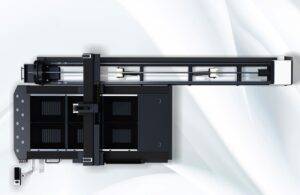
Saudi Arabia’s Vision 2030 has catalyzed a massive transformation in the Kingdom’s manufacturing capabilities. While the Eastern Province has traditionally been the heart of the oil and gas sector, Riyadh has emerged as a high-tech industrial epicenter. The deployment of 6000W Universal Profile Steel Laser Systems in Riyadh is a testament to this geographic expansion. These systems are designed to bridge the gap between heavy-duty structural engineering and the precision required for modern offshore platforms.
Offshore platforms—whether for oil extraction, gas processing, or the emerging offshore wind sector—require materials that can withstand extreme hydrostatic pressure and saline corrosion. This starts with the precision of the cut. A 6000W fiber laser provides the “sweet spot” of power: it is high enough to penetrate the thick carbon steel and stainless steel sections typical of jacket structures and topsides, yet refined enough to maintain a narrow kerf width, reducing the heat-affected zone (HAZ) that can compromise metallurgical properties.
The 6000W Fiber Advantage: Power Meets Precision
In the realm of fiber lasers, wattage is more than just a speed metric; it is a capability threshold. A 6000W (6kW) system is particularly adept at handling the “medium-to-thick” range of steel—specifically between 10mm and 25mm—which constitutes the majority of secondary and tertiary offshore structural components.
Unlike traditional plasma cutting, which often leaves a dross-heavy edge requiring significant post-processing, the 6000W fiber laser produces a “weld-ready” edge. For Riyadh-based manufacturers shipping components to the coast, this eliminates hundreds of man-hours spent on grinding and edge preparation. The fiber laser’s beam quality allows for a stable, high-density energy concentration that vaporizes steel almost instantly, resulting in a smooth, perpendicular cut face that meets the strict ISO standards for offshore structural welding.
Universal Profile Processing: Beyond Flat Sheets
The term “Universal Profile” indicates that these systems are not limited to flat plate processing. Offshore platforms are a complex web of I-beams, H-beams, C-channels, and large-diameter hollow structural sections (HSS). A universal laser system is equipped with multi-axis heads and rotary axes that allow for the 3D cutting of these profiles.
In the context of offshore platforms, the ability to laser-cut complex intersections—such as saddle cuts for pipe-to-pipe connections—is a game-changer. Historically, these were cut manually or with rudimentary mechanical tools, leading to gaps that required massive amounts of filler metal during welding. The 6000W laser, integrated with 5-axis motion, can create perfect “fish-mouth” joints and beveled edges in a single pass. This level of accuracy ensures that when the modules are assembled at the shipyard in Dammam or Jeddah, they fit together with zero tolerance for error, significantly increasing the structural fatigue life of the platform.
Zero-Waste Nesting: Economics of the “Perfect Cut”
Material costs account for a significant portion of any offshore project’s budget. High-grade marine steel is an expensive commodity. Zero-waste nesting refers to the use of advanced algorithmic software that arranges parts on a given profile or sheet to maximize material utilization.
In a 6000W system, the precision of the beam allows for “common-line cutting,” where two parts share a single cut line. This is only possible with the stability of a high-end fiber laser. In Riyadh’s competitive fabrication market, achieving a 90-95% material utilization rate through intelligent nesting can be the difference between a winning bid and a loss.
Furthermore, “zero-waste” isn’t just about the main parts; it’s about the “remnant management.” The software tracks every offcut, cataloging it for future use on smaller brackets or gussets. For offshore platforms that require thousands of small attachment points for piping and electrical trays, this capability transforms “scrap” into valuable inventory, directly impacting the project’s bottom line.
Adapting to the Offshore Environment: Quality Control and Compliance
Offshore platforms are subject to some of the most rigorous safety and quality standards in the world, including those set by Saudi Aramco, the American Petroleum Institute (API), and Bureau Veritas. The 6000W Universal Profile Laser System facilitates compliance through digital traceability.
Most modern systems in Riyadh are now integrated with IoT (Internet of Things) sensors that record the laser power, gas pressure, and cutting speed for every individual part. This creates a “digital birth certificate” for structural components. If a platform member fails ten years later, the operators can trace it back to the exact cutting parameters used in the Riyadh facility. This level of accountability is essential for the high-stakes environment of offshore energy.
Moreover, the precision of laser cutting minimizes the risk of micro-cracks. Traditional mechanical shearing or low-quality thermal cutting can introduce stress points in the steel. The 6000W fiber laser’s localized heat input ensures the bulk of the material remains cool, preserving the specialized grain structure of offshore-grade steel (such as S355 or S420 grades).
Strategic Logistics: Why Riyadh is the Ideal Location
Installing these advanced systems in Riyadh offers a strategic advantage. As a central logistics hub, Riyadh is equidistant to the major oil fields of the Eastern Province and the new developments along the Red Sea coast (such as the NEOM and Red Sea Global projects).
By fabricating complex structural profiles in Riyadh using 6000W laser technology, companies can transport “ready-to-assemble” kits to the coast. This “Lego-style” modular construction reduces the need for heavy machinery and extensive labor at the offshore yards, which are often congested and expensive. The high-speed capability of the 6kW laser ensures that even the most massive orders can be processed locally in Riyadh and delivered on a Just-In-Time (JIT) basis.
The Environmental Impact: Sustainability in Steel
As the global energy industry moves toward “Green Steel” and lower carbon footprints, the efficiency of the 6000W fiber laser plays a crucial role. Fiber lasers are significantly more energy-efficient than older CO2 laser technologies, converting more electricity into light and less into wasted heat.
When combined with zero-waste nesting, the environmental footprint of the fabrication process is slashed. Less wasted steel means less energy spent on recycling scrap, and higher precision means less welding consumables are used. For Riyadh-based firms looking to align with the Saudi Green Initiative, investing in 6000W fiber technology is a clear step toward sustainable heavy industry.
Future Outlook: AI and Automation
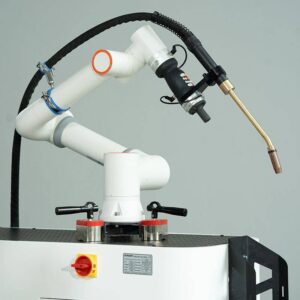
The future of 6000W Universal Profile systems in Riyadh lies in further automation. We are already seeing the integration of robotic loading and unloading arms that allow these machines to run “lights-out” shifts. In the context of offshore platforms, this means 24/7 production cycles to meet the aggressive timelines of modern field developments.
Artificial Intelligence (AI) is also beginning to play a role in predictive maintenance. The system can detect when a protective lens is degrading or when the gas flow is suboptimal, alerting operators before a bad cut occurs. This ensures that every beam and plate destined for an offshore rig meets the “First Time Right” principle, which is critical when a single defective component could delay a multi-billion dollar project.
Conclusion
The 6000W Universal Profile Steel Laser System is more than just a cutting tool; it is a cornerstone of modern offshore engineering in Saudi Arabia. By locating these high-tech systems in Riyadh, the Kingdom is proving that it can combine its traditional energy prowess with cutting-edge manufacturing technology. Through the synergy of high-power fiber optics, universal profile versatility, and zero-waste nesting, Riyadh is setting a new global standard for how the infrastructure of the sea is built on land. For the offshore platform industry, this translates to faster builds, lower costs, and unshakeable structural integrity.