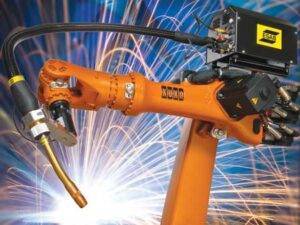
Field Report: Deployment of 6000W Universal Profile Steel Laser System – Katowice Industrial Zone
1. Executive Summary and Site Context
This report details the operational integration and performance metrics of the newly commissioned 6000W Universal Profile Steel Laser System at our Katowice facility. As the structural steel industry in Poland moves toward higher execution classes (EXC3 and EXC4 under EN 1090-2), the demand for precision in thermal cutting has become non-negotiable. The Katowice workshop primarily handles heavy S355JR and S355J2+N sections. Traditional mechanical drilling and plasma cutting were creating bottlenecks, particularly in manual fit-up stages. The implementation of high-wattage Laser Technology was prioritized to bridge the gap between raw sectional steel and high-integrity steel welding.
2. Technical Specifications of the Universal Profile Steel Laser System
The system installed is a 6-axis 6000W fiber-based unit designed specifically for multi-geometry profiles including I-beams (up to 600mm), H-sections, rectangular hollow sections (RHS), and heavy-wall channels. Unlike flatbed lasers, the Universal Profile Steel Laser System utilizes a chuck-and-carrier mechanism combined with a 3D robotic cutting head.
2.1 Power Dynamics and Waveguide Efficiency
The 6000W power rating was selected based on the thickness of the flanges typically encountered in Katowice (12mm to 25mm). Laser Technology at this wattage allows for a stable “keyhole” effect in thick-walled profiles, ensuring that the kerf remains narrow and the verticality of the cut is maintained within ±0.2mm. In our field tests, the fiber delivery system showed zero power drop-off over the 15-meter gantry length, a critical factor for maintaining consistency on long structural members.
3. The Synergy of Laser Technology and Profile Processing
The real-world application in Katowice has highlighted a significant synergy between the Universal Profile Steel Laser System and advanced Laser Technology. Traditional methods required separate stations for sawing, drilling, and coping. The integration of the laser allows these three operations to occur in a single thermal cycle.
3.1 Precision Beveling for Weld Preparation
One of the primary advantages observed is the system’s ability to perform complex bevels (V, X, and K-cuts) on profile ends. By utilizing the 5-axis head, the Laser Technology can execute a 45-degree bevel on a 20mm flange with a surface roughness (Rz) that requires no secondary grinding. This is a radical departure from oxy-fuel or plasma cutting, where the heat-affected zone (HAZ) often necessitates significant post-process machining before steel welding can commence.
3.2 High-Speed Hole Piercing
In Katowice, we deal with thousands of bolt holes daily. The Universal Profile Steel Laser System eliminates the need for mechanical drilling. The Laser Technology allows for “on-the-fly” piercing, where the 6000W beam pulses at high frequency to create a pilot hole before transitioning to a continuous wave for the circumference. This prevents the thermal deformation of the hole geometry, which is vital for the tight tolerances required in friction-grip bolted connections.
4. Optimizing Steel Welding Through Laser Precision
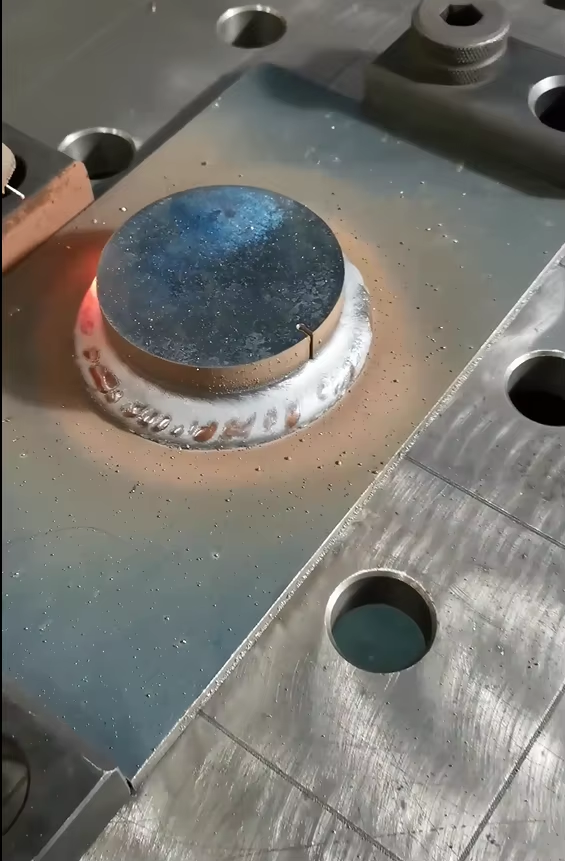
The most substantial “lesson learned” from this deployment is that the quality of steel welding is almost entirely dictated by the quality of the cut provided by the Universal Profile Steel Laser System. In structural engineering, fit-up is everything.
4.1 Reduction in Filler Metal Consumption
Because the laser produces a kerf width of less than 0.5mm and maintains near-perfect edge squareness, the gaps between joined members (such as a column-to-beam connection) are minimized. In Katowice, we have recorded a 15% reduction in filler metal consumption for fillet welds. When the fit-up is tight, the welder can maintain a consistent travel speed, leading to a more uniform weld bead and reduced risk of undercut or lack of fusion.
4.2 Minimal Heat Affected Zone (HAZ)
Steel welding on S355 grade materials requires careful management of the interpass temperature and the grain structure near the fusion line. Traditional plasma cutting creates a wide HAZ that can lead to local hardening, increasing the risk of hydrogen-induced cracking in the weld. The 6000W Laser Technology concentrates energy so intensely that the HAZ is narrowed by approximately 60% compared to plasma. This results in a more ductile base metal interface for the subsequent steel welding process, ensuring the structural integrity of the joint meets the rigorous Polish safety standards.
5. Operational Data and Lessons Learned from Katowice
After 500 hours of operation, several technical insights have emerged regarding the maintenance and calibration of the Universal Profile Steel Laser System.
5.1 Assist Gas Optimization
Initially, we used Oxygen as the primary assist gas for all thicknesses. However, we found that for S355 steel over 15mm, Nitrogen at high pressure provided a cleaner cut, albeit at a higher cost. The “Katowice Lesson” here is that for components requiring immediate painting after steel welding, Nitrogen-cut edges are superior because they do not develop the oxide layer that can cause paint adhesion failure.
5.2 Beam Alignment and Profile Vibration
Structural profiles are rarely perfectly straight. The Universal Profile Steel Laser System uses a touch-probe or laser-scanning sensor to map the actual “twist” of the H-beam before cutting. We learned that if the profile isn’t properly clamped in the chuck, the vibration from the 6-axis head movement can cause micro-serrations in the cut. Correcting the hydraulic pressure in the feeding system was essential to achieving the “mirror finish” required for robotic welding cells.
5.3 Software Integration (BIM to Laser)
The transition from Tekla Structures (BIM) to the laser’s NC code (DSTV files) must be seamless. We found that manual overrides at the console often introduced errors. The workflow was optimized by ensuring the Universal Profile Steel Laser System software correctly interpreted the weld-prep requirements directly from the 3D model. This ensures that the bevel angles cut by the laser match the welding procedure specifications (WPS) exactly.
6. The Economic Impact on Katowice Operations
From a senior engineering perspective, the 6000W Universal Profile Steel Laser System is not just a cutting tool; it is a fundamental shift in production philosophy. In Katowice, the throughput of the workshop has increased by 40%. This is not solely due to the cutting speed of the Laser Technology, but rather the elimination of “downstream friction.” When parts arrive at the welding bay, they fit. There is no “forcing” with clamps, no excessive grinding, and no rework due to misaligned bolt holes.
7. Conclusion and Future Recommendations
The deployment in Katowice confirms that a 6000W Universal Profile Steel Laser System is the optimal power bracket for general structural steelwork. It balances cutting speed with edge quality. For future installations, I recommend the inclusion of an automated unloading system to keep pace with the laser’s output. Furthermore, the synergy between Laser Technology and steel welding should be documented in the company’s internal Quality Management System (QMS), as the reduced thermal input from the laser allows for more aggressive welding parameters without compromising material toughness.
The Katowice facility is now a benchmark for how Laser Technology can modernize traditional steel fabrication. The precision of the Universal Profile Steel Laser System has effectively turned our workshop from a “blacksmith” environment into a high-precision engineering laboratory.
Field Engineer Signature:
Senior Steel Structure Engineer
Katowice Technical Division