
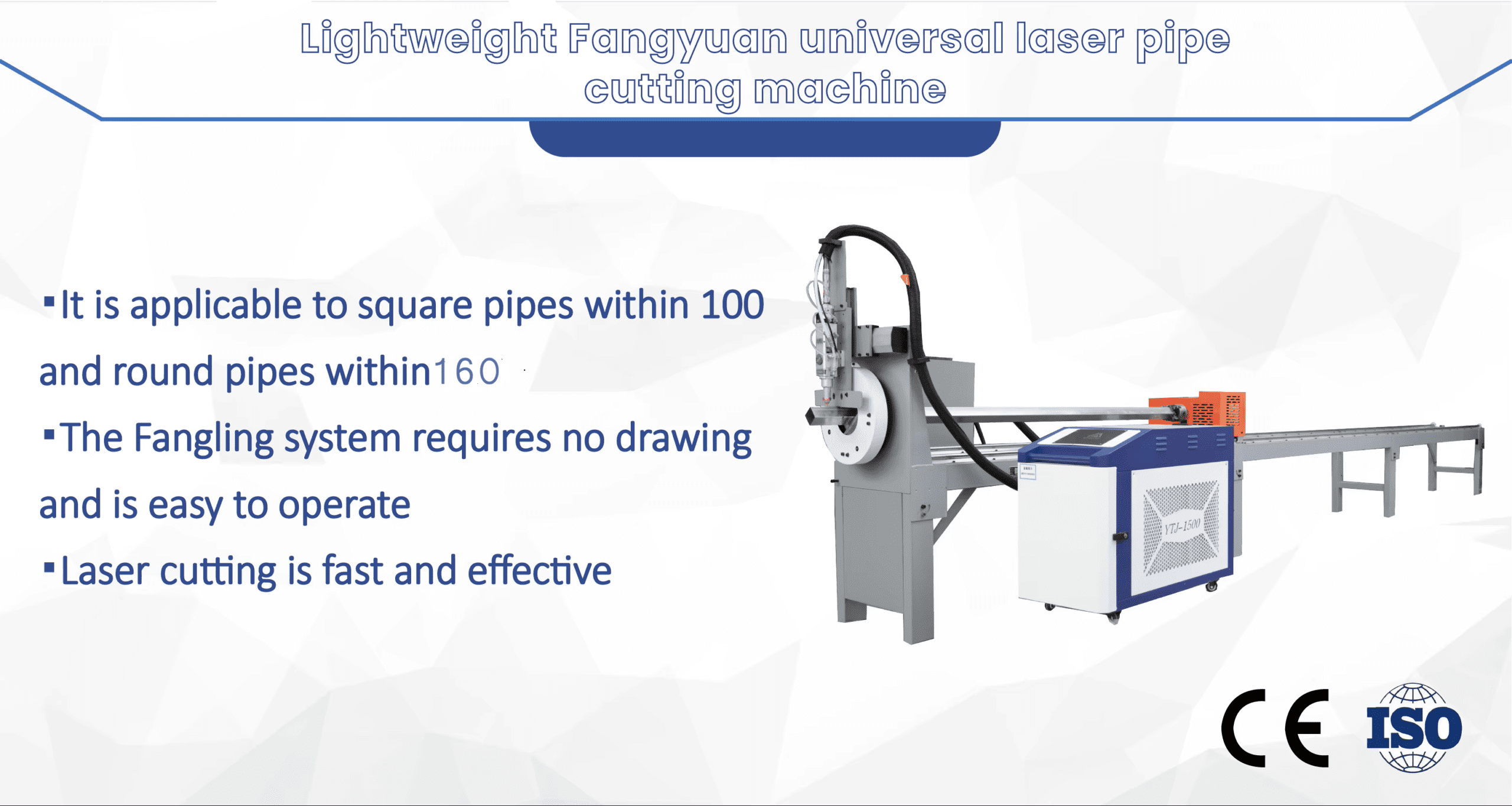
Field Evaluation: 6000W Fiber Laser Integration in Structural Steel Fabrication
The transition from traditional mechanical fabrication—consisting of band sawing, radial drilling, and manual layout—to high-power fiber laser processing represents a paradigm shift in the structural steel industry. This report focuses on the deployment of a 6000W Universal Profile Steel Laser System within the heavy industrial corridor of Monterrey, Mexico. As a primary hub for North American infrastructure manufacturing, Monterrey’s fabrication facilities are under increasing pressure to meet the rigorous tolerances required for electrical transmission towers (power towers) while contending with rising labor costs and the demand for higher throughput.
The 6000W system analyzed herein is specifically designed to handle “universal” profiles, including H-beams, I-beams, C-channels, and L-shaped angle steel. The integration of high-wattage fiber sources with multi-axis CNC kinematics allows for the execution of complex geometries, bolt holes, and weld preparations in a single setup, fundamentally altering the economics of structural steel processing.
System Architecture and Beam Kinematics
At the core of the system is a 6000W Ytterbium fiber laser source. For structural steel applications, particularly those involving thicknesses ranging from 6mm to 25mm, 6000W provides the optimal power density to maintain high feed rates without excessive heat-affected zones (HAZ). The beam quality (BPP) is tuned to ensure a narrow kerf width, which is critical when cutting structural bolt holes that must adhere to strict RCSC (Research Council on Structural Connections) specifications.
The “Universal” aspect of the system relies on a sophisticated 4-axis or 5-axis chuck system. Unlike flatbed lasers, profile lasers must rotate the workpiece while the cutting head moves in the X, Y, and Z planes. In Monterrey’s power tower sector, where angle steel (L-profiles) dominates the lattice structure, the ability of the system to compensate for material “twist” and “bow” in real-time is essential. High-speed capacitive sensors in the cutting head maintain a constant standoff distance even when the profile’s structural integrity varies due to mill tolerances.
Power Tower Specifics: Precision Metrics in Monterrey
Power towers are essentially giant lattice structures where the structural integrity depends on the perfect alignment of thousands of bolt holes. Traditional punching methods often deform the surrounding material, leading to stress concentrations. The 6000W laser system, however, utilizes a non-contact thermal process that ensures hole cylindricity and perpendicularity within ±0.1mm.
In Monterrey’s high-output environments, the “fit-up” phase of assembly is where the ROI of the laser system is most visible. By utilizing the 6000W source to cut precision “bird-mouth” joints and complex bevels for weld prep, the manual grinding time is reduced by approximately 85%. Furthermore, the system’s ability to etch part numbers and alignment marks directly onto the steel during the cutting cycle eliminates manual marking errors, which is vital for the logistical management of thousands of unique tower components destined for remote sites.
The Critical Role of Automatic Unloading Technology
The primary bottleneck in heavy steel processing has historically been the “material in/material out” cycle. A 12-meter H-beam or a heavy angle section cannot be manually handled without significant downtime and safety risks. The Automatic Unloading technology integrated into the 6000W system solves this through a series of synchronized hydraulic lifts and chain conveyors.
Solving the Precision-Efficiency Paradox
In traditional systems, as the laser finishes a cut, the component often drops into a bin or onto a conveyor, potentially damaging the finished edge or causing a misalignment in the next cut due to vibration. The advanced automatic unloading system utilizes a “following support” mechanism. As the chucks push the material forward, pneumatic support rollers adjust their height dynamically to prevent “sag,” which is the leading cause of geometric inaccuracy in long-form profiles.
Once the cut is complete, the unloading arms secure the finished part and move it laterally to a staging area while the next profile is already being loaded. This “hidden time” processing ensures that the 6000W laser source maintains a high “beam-on” percentage. In the Monterrey field study, the implementation of automatic unloading resulted in a 35% increase in daily tonnage compared to manual unloading configurations.
Mitigating Deformation in Heavy Sections
Heavy structural steel possesses significant internal stresses from the hot-rolling process. When a laser introduces heat during the cutting of large apertures or long slots, these stresses are released, often causing the material to “spring.” The automatic unloading and clamping system utilizes high-torque servo motors to maintain a rigid grip on the workpiece, counteracting this movement. This is particularly important for the long cross-arms of transmission towers, where a 1mm deviation over 6 meters can result in a failed inspection at the assembly yard.
Synergy Between 6000W Power and Structural Processing
The selection of a 6000W power rating is a calculated engineering decision. While 12kW or 20kW sources are available, they often introduce excessive heat into thinner-walled profiles typical of lattice towers (6mm-10mm), leading to thermal warping. The 6000W source provides enough energy to “vaporize” the material quickly (sublimation cutting or high-pressure nitrogen cutting) without saturating the surrounding steel with heat.
This power level also allows for the use of compressed air as a shielding gas on certain grades of A36 or A572 steel, significantly reducing the cost per meter of cut compared to liquid oxygen. In the Monterrey industrial context, where gas logistics can be a significant overhead, the ability to utilize high-pressure air at 6000W while maintaining a dross-free finish is a significant competitive advantage.
Technical Challenges and Environmental Variables
Operating high-power lasers in Monterrey presents specific environmental challenges, primarily ambient temperature fluctuations and airborne particulates from neighboring heavy industrial sites. The 6000W system evaluated features an isolated, climate-controlled cabinet for the laser source and a double-chilled cooling loop to maintain the resonator and cutting optics at a constant 22°C.
Furthermore, the “Universal” software integration is critical. The system must ingest DSTV files directly from structural detailing software like Tekla Structures. The field report indicates that the software’s ability to automatically nest different tower members on a single 12-meter stock length reduced scrap rates by 12% compared to manual nesting. This is paramount when dealing with high-strength, low-alloy (HSLA) steels where material costs represent the bulk of the project budget.
Conclusion: The Future of Monterrey’s Steel Sector
The data gathered from the 6000W Universal Profile Steel Laser System confirms that the integration of automatic unloading is no longer an optional luxury but a structural necessity for high-volume power tower fabrication. The synergy between the 6000W fiber source and automated material handling addresses the three pillars of modern engineering: precision, throughput, and safety.
By eliminating manual handling, the system mitigates the primary source of operational injury and part damage. Simultaneously, the laser’s ability to produce “assembly-ready” components directly from raw profiles eliminates secondary machining processes. For Monterrey’s steel fabricators, this technology represents the most viable path toward meeting the escalating demands of the North American energy grid, ensuring that structural integrity is never sacrificed for the sake of speed. The transition to automated laser profiling is, therefore, the definitive technical evolution for the region’s heavy industry.
















