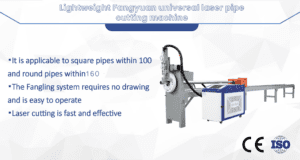
Field Integration Report: 6000W Universal Profile Steel Laser System Deployment
1. Introduction and Site Context: The Istanbul Steel Sector
This report documents the commissioning and operational assessment of the 6000W Universal Profile Steel Laser System at a primary structural fabrication facility in Istanbul. The local market, driven by seismic-resilient construction requirements and large-scale infrastructure projects, demands a level of precision that traditional mechanical sawing and plasma drilling lines can no longer cost-effectively provide.
The transition to high-wattage Laser Technology in the structural field represents more than an incremental speed increase. In this Istanbul workshop, the introduction of the 6000W system has fundamentally altered the workflow for S355JR and S355J2+N structural profiles. We are moving away from multi-stage processing—where a beam is moved from a saw to a drill to a coping station—toward a single-pass “all-in-one” execution. This report outlines the technical synergy observed between the hardware and the specific metallurgical demands of Steel cutting at scale.
2. Technical Synergy: Universal Profile Steel Laser System and Advanced Laser Technology
The core efficiency of the 6000W system lies in the integration of a multi-axis fiber head with a robust profile-clamping rotation system. Unlike flatbed lasers, a Universal Profile Steel Laser System must manage the dimensional irregularities inherent in hot-rolled structural sections (H-beams, I-beams, UPN, and L-profiles).
2.1 Beam Delivery and Power Density
At 6000W, the power density of the fiber source allows for high-speed Steel cutting through flange thicknesses up to 20mm with negligible taper. In Istanbul’s high-humidity coastal environment, the stability of the laser source is paramount. The Laser Technology employed here uses a redundant diode module architecture, ensuring that even if one module experiences a drop in efficiency, the beam quality (M2 factor) remains sufficient to penetrate heavy-walled structural sections without slag re-attachment.
2.2 The 3D Cutting Environment
The “Universal” aspect of the system refers to its ability to process 360-degree geometries. By utilizing a 5-axis or 6-axis cutting head, the system achieves complex bevels for weld preparations (K, V, and Y cuts) directly on the profiles. This eliminates the manual grinding hours previously required by the Istanbul site’s welding teams. The synergy between the Laser Technology and the robotic positioning system allows for real-time compensation of beam “camber” or “sweep,” ensuring that bolt holes are perfectly orthogonal even if the raw material has a slight mill-induced twist.
3. Real-World Application: Precision Steel Cutting Performance
During the first month of operation in Istanbul, we focused on the processing of HEA 300 and HEB 400 beams for a local commercial development. The Steel cutting parameters were tuned to balance gas consumption against edge quality.
3.1 Kerf Management and Heat Affected Zones (HAZ)
One of the primary concerns for a senior engineer is the Heat Affected Zone. In structural applications, excessive heat can lead to local embrittlement. The 6000W Laser Technology produces a significantly narrower HAZ compared to Oxy-fuel or Plasma. We measured the HAZ at less than 0.1mm on 15mm flange thicknesses. This allows for the Universal Profile Steel Laser System to cut bolt holes that are “bolt-ready” without the need for reaming, meeting Eurocode 3 execution class 3 (EXC3) standards directly from the machine.
3.2 Oxygen vs. Nitrogen Processing
In the Istanbul workshop, we experimented with both Oxygen and Nitrogen as assist gases. While Oxygen allows for the Steel cutting of thicker sections at lower power, it leaves an oxide layer that must be removed before painting. By leveraging the 6000W power of the Universal Profile Steel Laser System, we were able to switch to Nitrogen for sections up to 12mm, resulting in a clean, weld-ready surface that increased the throughput of the painting line by 25%.
4. Lessons Learned: Engineering Observations from the Field
Deployment in a high-volume environment like Istanbul provides several “hard-won” lessons that aren’t found in the manufacturer’s manual. As a senior engineer, I have identified three critical areas where the Universal Profile Steel Laser System requires specific oversight.
4.1 Material Surface Quality and Sensor Sensitivity
Turkish steel mills produce high-quality sections, but surface scale (mill scale) can vary between batches. The capacitive height sensors in the Laser Technology head are extremely sensitive. We found that “heavy” scale can interfere with the sensor’s ability to maintain a constant focal distance during Steel cutting.
Lesson: Implement a pre-process “wire brush” pass or adjust the sensor frequency to accommodate local mill scale variations. Do not assume the factory presets will handle all S355 grades identically.
4.2 Software Integration and BIM Workflow
The Universal Profile Steel Laser System is only as good as the data it receives. We encountered initial bottlenecks when importing .NC1 files from Tekla Structures. The Laser Technology requires specific lead-in and lead-out parameters to prevent “notching” at the corners of H-beam webs.
Lesson: Standardize the nesting software logic to include a 2mm “overshoot” on internal corners. This prevents stress concentrators in the steel profiles, a critical factor in seismic zones like Istanbul.
4.3 Dynamics of Heavy Profile Handling
The speed of Steel cutting with a 6000W source often outpaces the material handling capabilities of the workshop. We observed that the Universal Profile Steel Laser System would sit idle while waiting for the overhead crane to clear the outfeed conveyor.
Lesson: A structural laser requires dedicated side-loading buffer racks. If you are upgrading to 6000W Laser Technology, you must simultaneously upgrade your logistical flow or the ROI will be throttled by manual labor.
5. Structural Integrity and Quality Control
From a structural integrity standpoint, the Universal Profile Steel Laser System has proven superior for fatigue-rated joints. In our Istanbul test samples, the smoothness of the laser-cut edge (Rz value) significantly reduces the starting points for fatigue cracks compared to plasma-cut edges.
For the Steel cutting of slotted holes and complex copes, the accuracy of the 6000W beam ensures a tighter fit-up during assembly. We have recorded a reduction in weld volume by approximately 15% because the gaps between joined members are now consistently below 0.5mm. This precision is a direct result of the Laser Technology‘s ability to maintain a stable focal point regardless of the profile’s structural depth.
6. The “Istanbul” Environment: Power and Climate Factors
Technical performance is also dictated by the local environment. Istanbul’s industrial grid can experience voltage fluctuations. We installed a dedicated 150kVA stabilizer to protect the Universal Profile Steel Laser System‘s resonators. Furthermore, the chiller unit for the Laser Technology was oversized to handle the 35°C+ temperatures and high humidity of the Marmara region in summer. Without this adjustment, the Steel cutting consistency would drop as the laser source struggled with internal thermal expansion.
7. Conclusion: The New Standard for Structural Steel
The implementation of the 6000W Universal Profile Steel Laser System in Istanbul has validated that Laser Technology is no longer a luxury for thin-sheet workshops—it is a necessity for heavy structural steel. The synergy of high-wattage power and multi-axis movement allows for a level of Steel cutting precision that reduces downstream labor and improves the structural reliability of the finished product.
For firms looking to follow this path: focus on the software-to-hardware pipeline and do not underestimate the importance of assist gas purity. The 6000W system is a powerful tool, but its success in the field depends on the engineer’s ability to adapt the technology to the realities of raw mill-finish steel and the specific geometric demands of the project. Istanbul’s skyline is increasingly being built on these tolerances, and the results speak for themselves in the speed and quality of current builds.
Report Compiled By:
Senior Steel Structure Engineer
Istanbul Field Office