The Dawn of High-Power Fiber Lasers in the Bajío Region
Queretaro has long been recognized as the heart of Mexico’s aerospace and automotive industries. However, a new frontier is emerging: the modernization of national and international railway infrastructure. At the center of this revolution is the 6000W Fiber Laser. Unlike the CO2 lasers of the past, fiber laser technology utilizes an optical fiber doped with rare-earth elements (such as ytterbium) to amplify light. At 6000W, the power density is sufficient to pierce through thick structural steels used in rail car chassis and bridge trusses with surgical precision.
The 6kW threshold is particularly significant for railway applications. It strikes the perfect balance between electrical efficiency and the ability to process carbon steel up to 25mm or 30mm thickness. In the context of Queretaro’s industrial parks, where energy efficiency is a key KPI (Key Performance Indicator), the fiber laser’s wall-plug efficiency—often exceeding 35%—offers a sustainable path toward heavy-duty manufacturing.
Universal Profile Processing: Beyond the Flat Sheet
Traditional laser systems are restricted to flat sheets. However, railway infrastructure demands the use of “Universal Profiles”—I-beams, H-beams, C-channels, and L-angles. Processing these requires a sophisticated 3D kinematic system. The 6000W Universal Profile Steel Laser System utilizes a series of high-torque chucks and a pass-through feeder that rotates the beam while the laser head maneuvers around the geometry.
For a railway engineer in Queretaro, this means that a 12-meter I-beam can be loaded into the machine, and all necessary bolt holes, interlocking notches, and length cuts can be performed in a single automated cycle. This eliminates the “stacking error” associated with moving a heavy beam from a saw to a drill press to a milling machine. In the rail industry, where vibration and load distribution are critical, the accuracy of these laser-cut profiles ensures that every structural member fits perfectly, reducing internal stress in the final assembly.
The Game-Changer: ±45° Bevel Cutting for Weld Preparation
In heavy-duty railway manufacturing, parts are rarely joined at 90-degree butt joints without preparation. To ensure deep weld penetration—essential for the bogies and frames that support thousands of tons of freight—edges must be beveled. Historically, this was a manual process involving grinders or specialized milling machines, which were slow, loud, and prone to human error.
The ±45° beveling head is a masterpiece of optomechanical engineering. Using a specialized 5-axis cutting head, the laser can tilt during the cutting process. This allows for the creation of V-grooves, Y-grooves, X-grooves, and K-grooves directly on the profile.
Why is ±45° the magic number? It covers the vast majority of AWS (American Welding Society) standards for structural steel. By achieving a clean, oxide-free bevel at 6000W, the system produces a surface that is immediately ready for robotic welding. In the competitive manufacturing landscape of Queretaro, the ability to bypass the “grinding station” saves hundreds of man-hours per project and significantly reduces the consumption of abrasives.
Strategic Importance for Railway Infrastructure
Railway infrastructure is unforgiving. Components are subjected to constant thermal expansion, massive dynamic loads, and corrosive environments. The 6000W fiber laser addresses these challenges through the minimization of the Heat Affected Zone (HAZ).
When cutting structural steel, excessive heat can alter the metallurgy of the edge, making it brittle and prone to stress-corrosion cracking. The high speed of a 6000W fiber laser means the beam passes through the material so quickly that the surrounding steel remains relatively cool. This preserves the ductility of the railway components, a vital factor for tracks and rolling stock that must withstand the seismic and climatic variations found across the Mexican landscape.
Furthermore, the precision of laser cutting allows for “tab-and-slot” construction. Rail car manufacturers in Queretaro can design parts that self-fixture, locking into place before welding. This reduces the need for expensive, complex jigs and fixtures, allowing for faster prototyping and production of specialized rail cars, such as those used for the “Tren Maya” or intermodal freight corridors.
Queretaro: A Logistics and Technical Hub
Choosing Queretaro as the location for such advanced systems is no coincidence. The state’s proximity to major rail lines—operated by companies like Kansas City Southern de México and Ferromex—creates a feedback loop between the manufacturer and the end-user.
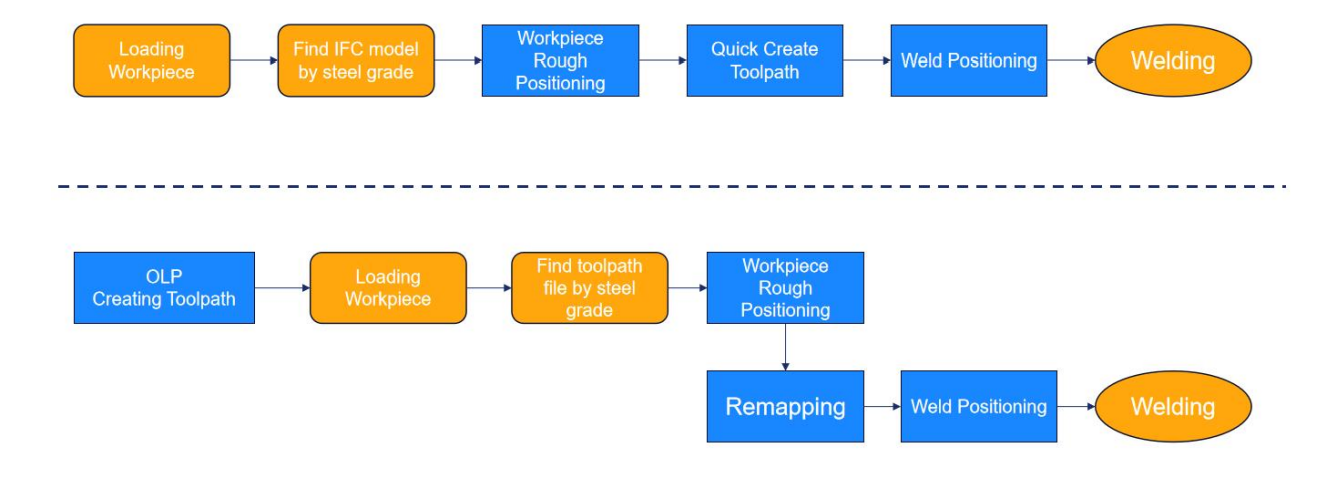
The presence of world-class technical universities in Queretaro ensures a steady supply of laser technicians and CNC programmers. Operating a 6000W system with a bevel head requires a deep understanding of CAD/CAM software. The system translates 3D models (STEP or IGES files) directly into G-code, accounting for the complex compensation required when the laser head tilts. The local workforce’s expertise in “Industry 4.0” allows for the full exploitation of the laser’s capabilities, including real-time monitoring of gas pressure, nozzle condition, and cutting speed.
Economic and Environmental Impact
From an economic standpoint, the 6000W Universal Profile Laser provides a massive competitive advantage for Queretaro-based fabricators. In the global bidding process for infrastructure projects, the ability to offer lower lead times and higher precision is decisive. Because the laser uses nitrogen or oxygen as an assist gas, the kerf (the width of the cut) is incredibly narrow, leading to better material nesting and less scrap steel.
Environmentally, the fiber laser is a “clean” technology compared to traditional methods. There is no need for cutting fluids or coolants that require hazardous waste disposal. The dust and fumes generated are captured by high-efficiency filtration systems, maintaining the air quality standards required by Queretaro’s environmental regulations.
Technical Considerations: Oxygen vs. Nitrogen Cutting
For the 6000W system, the choice of assist gas is paramount. When cutting heavy structural profiles for railway bridges, oxygen is often used to facilitate an exothermic reaction, allowing for the processing of thicker carbon steel at lower power levels. However, this leaves a thin oxide layer on the cut surface.
For high-end rolling stock components where paint adhesion and weld purity are non-negotiable, nitrogen is the preferred assist gas. Nitrogen cutting is a purely high-pressure melt-and-blow process. At 6000W, the system can achieve high-speed nitrogen cuts on thinner profiles, leaving a “silver” edge that requires zero post-processing. The flexibility to switch between these gases on a single machine allows Queretaro manufacturers to pivot between heavy civil engineering projects and high-precision mechanical components for trains.
The Future of Rail Fabrication in Mexico
As we look toward the future, the 6000W Universal Profile Steel Laser System is just the beginning. The integration of AI-driven nesting and automatic loading/unloading systems will further increase the autonomy of these machines. In Queretaro, the convergence of high-power photonics and railway engineering is creating a center of excellence that will serve not just Mexico, but the entire North American rail network.
The ±45° beveling capability ensures that we are not just cutting metal; we are engineering joints that will last for a century. In the world of railway infrastructure, where failure is not an option, the precision of the fiber laser is the ultimate insurance policy. Queretaro is now uniquely positioned to lead this charge, transforming raw steel into the veins and arteries of modern commerce with the power of light.