The Industrial Evolution of Haiphong: A Gateway for Advanced Laser Technology
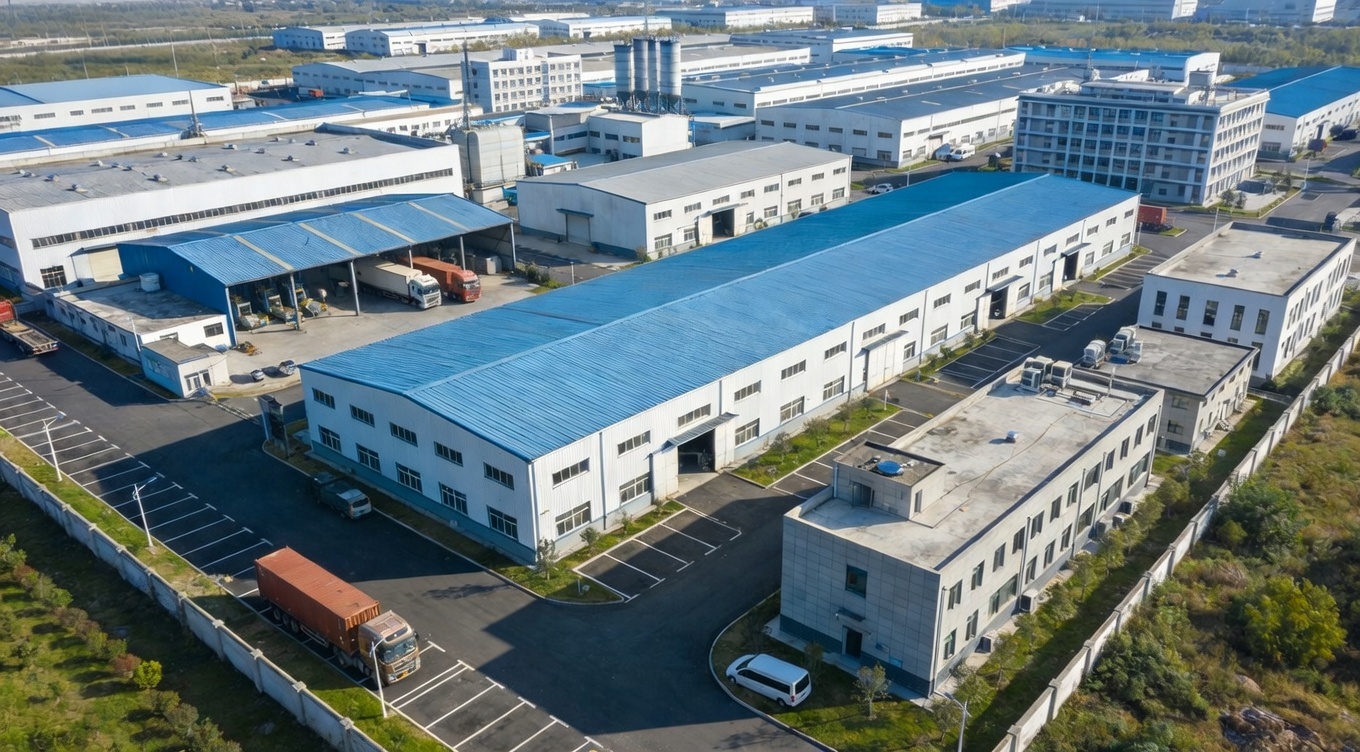
Haiphong has long been the industrial heartbeat of Northern Vietnam. As the city undergoes a massive transformation to become a global logistics hub, the expansion of its aviation infrastructure—specifically projects surrounding Cat Bi International Airport and supporting logistics hangars—demands a level of structural sophistication that traditional methods cannot meet.
In the past, the fabrication of I-beams and H-sections for airport terminals relied on plasma cutting or mechanical sawing. While functional, these methods introduced significant thermal distortion or required secondary finishing processes like deburring and drilling. The introduction of the 6000W Heavy-Duty I-Beam Laser Profiler has fundamentally changed this landscape. This machine is not merely a cutter; it is a comprehensive robotic fabrication center that allows Haiphong’s construction firms to compete on a global scale, delivering projects faster and with a structural fidelity that was previously unattainable.
The Power of 6000W: Why Fiber Laser is the Professional Choice
As an expert in fiber lasers, I am often asked why 6000W is the “sweet spot” for heavy-duty structural steel. In the realm of airport construction, we are dealing with thick-walled I-beams that must support massive roof spans and withstand significant wind loads.
A 6000W fiber laser source provides the perfect balance between photon density and energy consumption. It offers enough “punch” to pierce through 20mm to 30mm carbon steel beams with ease, maintaining a narrow kerf width that ensures the structural integrity of the beam remains uncompromised. Unlike CO2 lasers, fiber technology uses a solid-state gain medium, meaning there are no internal mirrors to align and no bellows to maintain. For a dusty construction environment in a humid coastal city like Haiphong, the durability of a fiber delivery system is an essential operational advantage.
Furthermore, the 6000W output allows for high-speed “fly-cutting” on thinner sections of the beam web, while providing the localized heat intensity required for complex beveling on the thicker flanges. This versatility is critical when fabricating the intricate joints required for modern, aesthetically striking airport architecture.
Zero-Waste Nesting: The Economics of Efficiency
Perhaps the most revolutionary aspect of these modern profilers is the “Zero-Waste” nesting capability. In structural steel fabrication, the “butt end” or “tailing” of a 12-meter I-beam is traditionally discarded as scrap because the machine’s chucks cannot hold onto the last remaining segment of the material. This can result in 5% to 10% material loss per beam.
The heavy-duty profilers deployed in Haiphong utilize a sophisticated multi-chuck system—often a four-chuck configuration. This allows the machine to pass the beam from one chuck to another, effectively “handing off” the material so that the laser can cut right up to the very edge of the beam.
Combined with intelligent nesting software, the machine can calculate the optimal arrangement of different parts (base plates, connection holes, and notches) across a single length of steel. In the context of a multi-million dollar airport project, where thousands of tons of steel are used, reducing waste from 8% to less than 1% results in massive cost savings. In Haiphong’s competitive bidding environment, these savings often represent the difference between a profitable project and a loss.
Precision Engineering for Airport Structural Integrity
Airport terminals are unique structures. They require vast, open interior spaces, which necessitate long-span trusses and heavy I-beam frameworks. The precision of a 6000W laser profiler is vital here for several reasons:
1. **Perfect Bolt Hole Alignment:** Traditional drilling can lead to slight deviations which, over a 50-meter span, result in massive alignment issues. The laser profiler cuts bolt holes with a tolerance of ±0.1mm. When the beams arrive at the construction site in Haiphong, they fit together like Lego blocks, significantly reducing crane time and onsite labor costs.
2. **Complex Beveling for Welding:** For high-load joints, beams must be beveled for full-penetration welding. The 5-axis 3D cutting head on these heavy-duty machines can cut V, X, and Y-shaped bevels automatically. This ensures that the weld seeps deep into the joint, meeting the stringent safety codes required for public aviation buildings.
3. **Weight Reduction Through Cut-outs:** Modern airport design often incorporates “cellular beams” (beams with circular or hexagonal holes cut into the web). These holes allow for the passage of HVAC and electrical utilities while reducing the weight of the steel. The 6000W laser executes these patterns with incredible speed, maintaining the structural strength while allowing for more elegant, lightweight designs.
Overcoming Environmental Challenges in Haiphong
Operating high-precision laser equipment in a coastal, industrial city like Haiphong presents specific challenges. The high humidity and salinity in the air can be detrimental to sensitive electronics and optical components.
The 6000W Heavy-Duty Profilers designed for this region feature IP54-rated electrical cabinets and climate-controlled laser sources. The “Heavy-Duty” designation also refers to the machine bed itself. These machines are built with high-manganese steel frames that are heat-treated to remove internal stresses. This ensures that even when processing a 2-ton I-beam, the machine does not vibrate or lose calibration. For the engineers in Haiphong, this means the machine they buy today will still be cutting with the same precision ten years from now, despite the rigorous demands of 24/7 airport construction schedules.
The Digital Twin: From BIM to laser cutting
The integration of Building Information Modeling (BIM) with laser cutting software is the final piece of the puzzle. In Haiphong’s modern projects, the airport’s digital twin—a complete 3D model of the structure—is exported directly to the laser profiler’s software (such as Lantek or CypTube).
The machine “knows” exactly where every notch and hole needs to be based on the master architectural plan. This eliminates human error. As a fiber laser expert, I have seen how this digital workflow transforms a workshop. The floor is no longer cluttered with paper blueprints; instead, operators monitor a digital interface that tracks material usage in real-time, providing the project managers with instant data on production milestones.
Environmental Impact and Sustainability
Beyond the financial gains, the move toward 6000W zero-waste technology reflects a commitment to sustainable construction. Steel production is a carbon-intensive process. By utilizing zero-waste nesting, Haiphong is effectively reducing the carbon footprint of its infrastructure by ensuring that every kilogram of steel produced is actually utilized in the building.
Furthermore, fiber lasers are significantly more energy-efficient than older CO2 models, consuming about 70% less electricity. This aligns with Vietnam’s broader goals of greening its industrial sector while continuing its rapid economic expansion.
Conclusion: The Future of Haiphong’s Infrastructure
The deployment of the 6000W Heavy-Duty I-Beam Laser Profiler in Haiphong is more than a technological upgrade; it is a strategic investment in the city’s future. As the airport construction progresses, the precision, speed, and material efficiency provided by these machines will set a new standard for the Vietnamese construction industry.
For the structural engineers and fabricators involved, the message is clear: the days of manual layout and “good enough” tolerances are over. The era of high-power fiber laser fabrication has arrived, and it is building the gateways of tomorrow with zero waste and infinite precision. Whether it is a new hangar for wide-body aircraft or a sprawling passenger terminal, the 6000W laser is the tool that ensures Haiphong’s ambitions are etched in steel.