
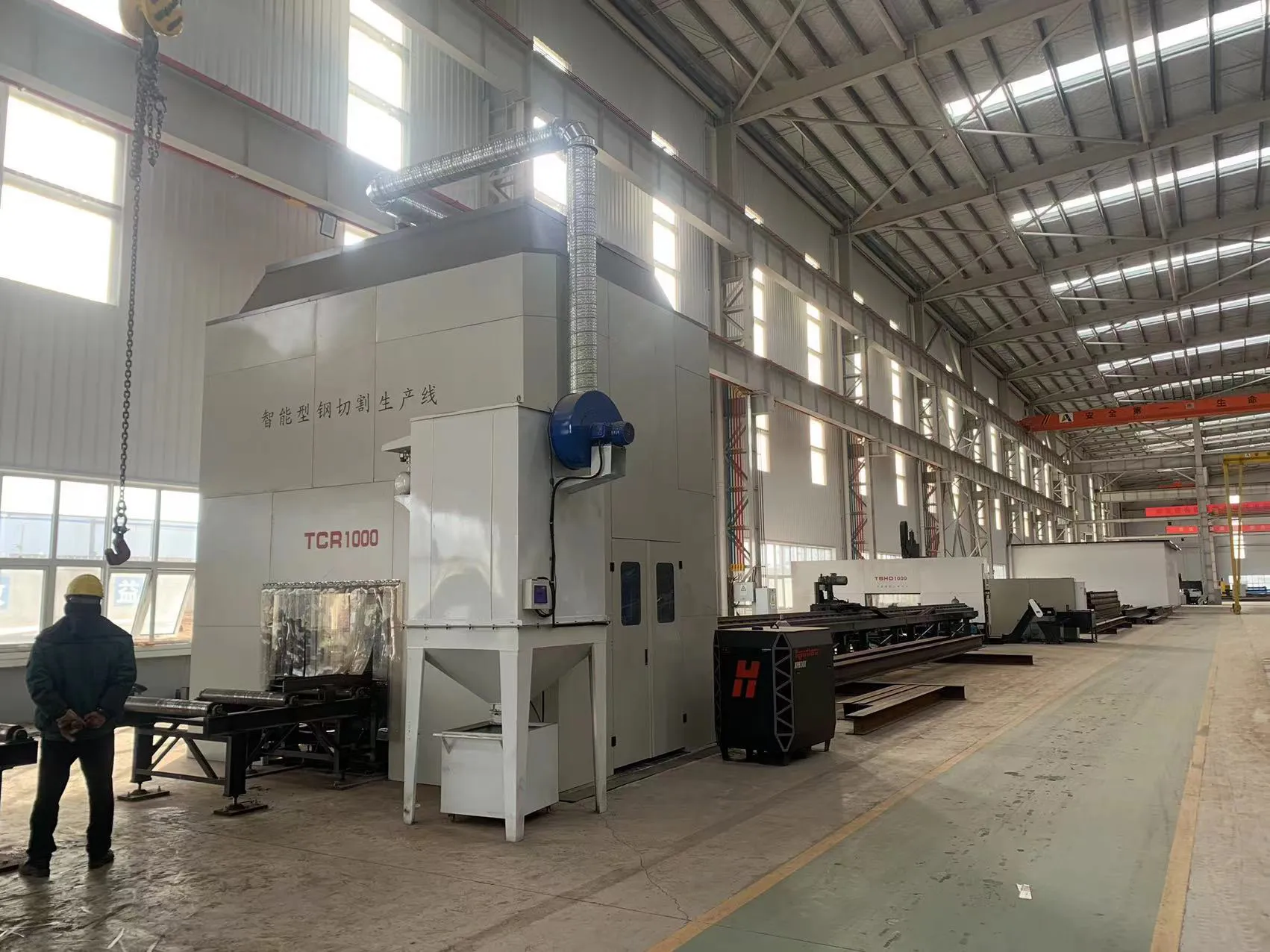
Field Engineering Report: Integration of 6000W Infinite Rotation 3D Laser Systems in Power Tower Fabrication
1. Project Scope and Regional Context: Haiphong Infrastructure Hub
The industrial expansion in Haiphong, Vietnam, particularly within the energy transmission sector, has necessitated a paradigm shift in structural steel processing. Power towers—complex lattice structures designed to withstand high wind loads and seismic variables—require extreme precision in H-beam and angle steel fabrication. Traditional methods, involving sequential sawing, drilling, and manual oxy-fuel or plasma beveling, have proven insufficient for the high-tensile requirements of the current Haiphong grid expansion projects.
This report evaluates the deployment of the 6000W H-Beam laser cutting Machine equipped with an Infinite Rotation 3D Head. The objective is to analyze the synergy between high-power fiber laser sources and multi-axis kinematic heads in reducing thermal distortion and increasing throughput in heavy-duty structural applications.
2. Kinematic Analysis of the Infinite Rotation 3D Head
The core technical advantage of the subject system lies in its “Infinite Rotation” capability. Unlike standard 5-axis heads limited by ±360-degree cable wrap constraints, the infinite rotation mechanism utilizes a slip-ring or advanced fiber-optic rotary joint assembly. This allows the cutting head to maintain continuous angular velocity during complex beveling sequences on H-beam flanges and webs.
In power tower fabrication, H-beams often require “V,” “Y,” and “K” shaped bevels for weld preparation. Standard 3D heads often require a “recoil” or “unwind” move when transitioning between flange faces or executing 360-degree notches. This recoil introduces a 2-4 second dwell time, which, when multiplied by hundreds of bolt holes and connection nodes, significantly impacts cycle time. The infinite rotation head eliminates these non-productive movements, ensuring a constant feed rate and a more uniform Heat Affected Zone (HAZ).
3. 6000W Fiber Laser Synergy and Material Interaction
The selection of a 6000W fiber laser source is strategic for the material thicknesses encountered in Haiphong’s power tower specifications (typically S355 and S460 grade steel). While 3000W systems can penetrate thick-walled H-beams, the 6000W threshold provides the “power density reserve” necessary for high-speed nitrogen cutting or high-quality oxygen-assisted cutting on sections up to 20mm.
Thermal Management:
High-power fiber lasers operate at a wavelength of approximately 1.06 µm, which is highly absorbed by structural steel. At 6000W, the energy density allows for a narrower kerf width compared to plasma. This is critical for the bolt holes of power towers, where tolerance must be within +0.2mm/-0.0mm to ensure structural integrity under high-tension loads.
Gas Dynamics:
The system utilizes a specialized 3D nozzle design that maintains a constant standoff distance even at steep bevel angles (up to 45 degrees). The 6000W source ensures that even at an inclined path—where the “effective thickness” of the material increases—the melt ejection remains efficient, preventing dross accumulation on the lower edge of the flange.
4. Solving Precision Bottlenecks in Power Tower Nodes
Power towers consist of hundreds of intersecting members. The “node” areas—where multiple H-beams or angles converge—are traditionally the most difficult to fabricate.
The Problem: Conventional drilling and sawing cannot easily create the “fish-mouth” cuts or complex coped ends required for optimal load distribution in lattice structures.
The Laser Solution: The 6000W 3D head executes complex spatial curves directly onto the H-beam. By utilizing a 5-axis simultaneous interpolation, the machine can cut the web and flanges in a single program sequence. The precision of the 3D head ensures that when these beams arrive at the assembly site in Haiphong, they fit with “zero-gap” tolerances. This reduces the reliance on heavy-duty welding fillers and minimizes the risk of structural failure at the joint.
5. Automation and Workflow Integration
The H-beam laser system is not merely a cutting tool but an automated processing cell. The integration involves:
1. Automatic Loading and Measurement: Given the deviations in hot-rolled H-beams (camber and sweep), the system employs laser sensors to map the actual profile of the beam before cutting. The software then compensates the cutting path in real-time.
2. Nesting for Heavy Sections: Specialized 3D nesting software optimizes the layout of parts on a 12-meter H-beam, significantly reducing scrap rates—a critical factor given the rising cost of high-grade steel.
3. Single-Pass Processing: The 6000W laser performs the functions of three machines: the band saw (length cutting), the drill line (bolt holes), and the manual welder (beveling/notching). In the Haiphong field test, this resulted in a 65% reduction in man-hours per ton of processed steel.
6. Impact on Post-Processing and Galvanization
Power towers in coastal regions like Haiphong are subject to high salinity and humidity, making hot-dip galvanization mandatory. The quality of the laser cut directly influences the longevity of the protective coating.
Unlike plasma cutting, which can leave a hardened, nitrogen-rich edge that resists pickling and leads to poor zinc adhesion, the 6000W laser (particularly when using Oxygen as the assist gas) produces a clean, oxide-ready edge. The precision of the 3D head also ensures that bolt holes are perfectly perpendicular or correctly beveled, preventing the “shadowing” effect during the galvanizing bath where zinc fails to coat the interior of poorly cut holes.
7. Technical Challenges and Mitigation in the Haiphong Environment
Operating high-precision 6000W lasers in an industrial coastal environment presents specific challenges:
* Humidity Control: The high humidity in Haiphong can lead to condensation within the optical path. The system utilizes a pressurized, filtered air curtain and dual-circuit chilling to maintain the dew point within the laser cabinet.
* Power Stability: To maintain the beam quality required for 3D beveling, voltage stabilizers were integrated to protect the 6000W generator from the fluctuations common in heavy industrial zones.
* Vibration Damping: The machine bed, weighing upwards of 20 tons, is anchored to a reinforced foundation to negate the harmonic vibrations caused by nearby heavy forging or rolling equipment in the Haiphong facility.
8. Conclusion: The Future of Structural Steel Processing
The deployment of the 6000W H-Beam Laser Cutting Machine with Infinite Rotation 3D Head represents the pinnacle of current structural steel fabrication technology. For the power tower sector in Haiphong, the benefits are clear: a transition from manual, multi-step fabrication to a high-precision, automated “all-in-one” process.
The infinite rotation head solves the kinematic limitations that previously hindered the speed of 3D laser cutting, while the 6000W source provides the necessary throughput for industrial-scale production. This technology does not merely improve efficiency; it enhances the structural safety of the energy grid by ensuring that every connection node is manufactured to aerospace-level tolerances in a heavy-industry environment.
Field Engineer: Senior Technical Lead
Location: Haiphong Industrial Sector
Subject: Structural Steel Optimization Report #88-24-HP
















