The Dawn of Automated Structural Fabrication in Rosario
Rosario, Argentina, has long been recognized as a critical industrial and logistical hub, bolstered by its strategic position on the Paraná River. However, as the city and its surrounding regions look toward the future of sports infrastructure and iconic stadium designs, the traditional methods of steel fabrication—plasma cutting, manual drilling, and mechanical sawing—are proving insufficient. The introduction of the 6000W H-Beam laser cutting Machine with Automatic Unloading represents a leap forward, offering the precision of aerospace engineering applied to the massive scale of civil infrastructure.
In the context of stadium construction, where architectural aesthetics meet complex load-bearing requirements, the 6000W fiber laser provides a solution that addresses both form and function. This technology allows local fabricators to produce intricate geometries in heavy structural steel that were previously deemed too costly or technically difficult to execute.
The Technical Superiority of 6000W Fiber Laser Power
In the realm of fiber lasers, wattage dictates both the thickness of the material that can be cut and the speed at which that cutting occurs. For H-beams (or I-beams) used in stadium frames, the 6000W power level is often considered the “sweet spot” for industrial efficiency.
At 6000W, the laser can effortlessly penetrate the thick flanges and webs of structural steel beams, often ranging from 10mm to 25mm in thickness. Unlike CO2 lasers or plasma cutters, the fiber laser maintains a remarkably small Heat Affected Zone (HAZ). This is critical for stadium structures where the metallurgical integrity of the steel must remain uncompromised to withstand dynamic loads, such as the rhythmic movement of thousands of fans or high wind pressures on cantilevered roofs. The result is a clean, burr-free edge that requires no secondary finishing, ready for immediate assembly or welding.
Precision Engineering for H-Beam Geometries
H-beams are the backbone of any large-scale stadium. They provide the necessary rigidity for expansive seating tiers and the skeletal support for massive canopy roofs. However, cutting these beams to exact specifications is notoriously difficult due to their three-dimensional profile.
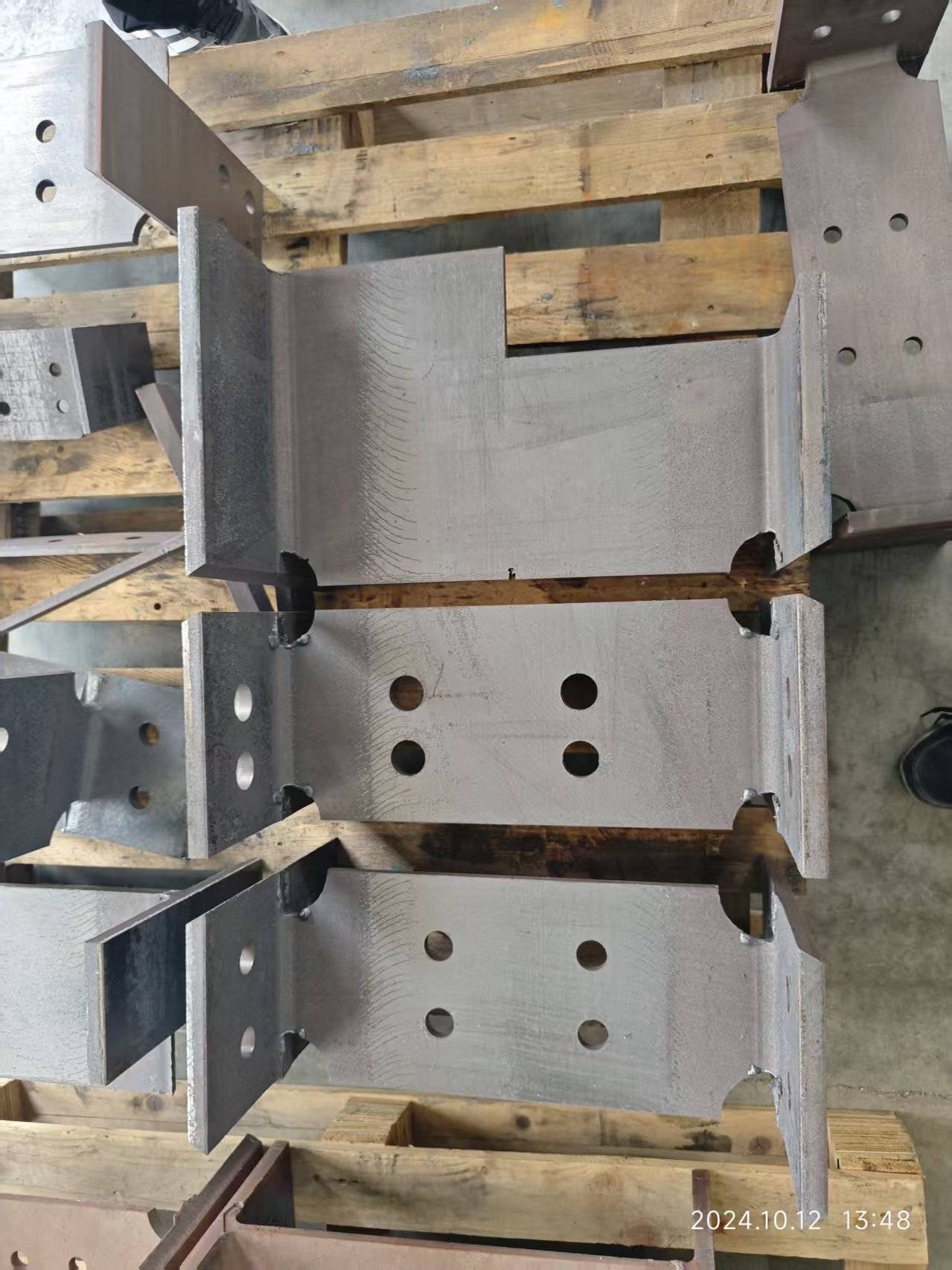
The 6000W H-beam laser machine utilizes a sophisticated six-axis robotic or gantry-based system that allows the laser head to rotate around the beam. This enables the machine to perform complex tasks in a single pass:
1. **Bolt Hole Precision:** Cutting perfectly circular holes for high-tension bolts, ensuring a seamless fit-up during on-site erection.
2. **Beveling for Weld Preparation:** Creating precise V, Y, or K-shaped bevels on the beam ends, which is essential for deep-penetration structural welds.
3. **Coping and Notching:** Executing intricate cutouts where beams intersect, allowing for “nesting” of structural members that maximizes space and aesthetic appeal.
The Role of Automatic Unloading in Continuous Production
One of the primary bottlenecks in heavy steel fabrication is material handling. An H-beam can weigh several tons, and the transition from cutting to the next stage of production often involves dangerous and time-consuming crane maneuvers.
The integration of an Automatic Unloading System transforms the 6000W laser from a standalone tool into a continuous production cell. As the laser completes its programmed sequence, the unloading mechanism—consisting of synchronized heavy-duty rollers and hydraulic lifters—safely moves the finished beam to a collection rack.
For projects in Rosario, where construction timelines are often tight and labor safety is paramount, this automation reduces the risk of workplace injuries and eliminates the “idle time” between cuts. It allows the machine to operate with minimal human intervention, effectively doubling or tripling the daily throughput compared to manual unloading methods.
Optimizing Stadium Steel Structures for Safety and Design
Stadiums are unique architectural challenges because they must support massive “dead loads” (the weight of the structure) and “live loads” (the weight and movement of the audience). The precision of a 6000W laser ensures that every component of a truss or rafter is cut to a tolerance of +/- 0.1mm.
In Rosario’s specific climate, which can experience high humidity and occasional intense storm winds from the pampas, the accuracy of laser-cut joints is a safety imperative. When beams fit together perfectly, the structural load is distributed exactly as the engineers intended in their CAD models. Furthermore, the ability to cut weight-reduction patterns into the webs of H-beams—without sacrificing structural strength—allows architects to design lighter, more graceful stadium canopies that seem to float over the stands.
Software Integration: From BIM to Beam
The modern 6000W H-beam laser does not operate in a vacuum; it is the final stage of a digital workflow. Most projects today utilize Building Information Modeling (BIM). The laser’s control software can directly import IFC or TEKLA files, translating the 3D architectural model into cutting paths.
This “digital-to-physical” workflow is particularly beneficial for Rosario’s engineering firms. It eliminates manual measurement errors and ensures that if a change is made in the stadium’s digital twin, it is instantly reflected in the laser’s instructions. The software also optimizes “nesting,” or the arrangement of cuts on a single beam, to minimize scrap metal. Given the fluctuating price of high-grade structural steel, the material savings provided by laser nesting can represent a significant percentage of the total project budget.
Economic Impact on Rosario’s Industrial Sector
Investing in 6000W laser technology provides Rosario-based manufacturers with a competitive edge that extends beyond the city limits. By reducing the cost per cut and increasing the speed of delivery, local firms can bid on major national and international infrastructure projects.
The shift toward fiber lasers also aligns with global sustainability trends. Fiber lasers are significantly more energy-efficient than plasma or CO2 alternatives. They require no laser gas and have fewer consumable parts. For a city like Rosario, which is looking to modernize its industrial base while respecting environmental standards, the 6000W laser offers a “green” path to heavy manufacturing. The reduction in secondary grinding and cleaning also means less dust and noise pollution in the fabrication shop, improving the working environment for technicians.
Meeting International Quality Standards
Stadium construction is governed by rigorous international codes, such as those from the American Welding Society (AWS) or ISO standards. These codes dictate the quality of cuts and the preparation of surfaces for welding.
The 6000W fiber laser is uniquely suited to meet these standards. Because the laser beam is so concentrated, the heat input into the beam is localized. This prevents the warping or distortion that often occurs with plasma cutting, where the intense heat can “bow” a long H-beam over its length. By maintaining the straightness and dimensional stability of the beam, the laser ensures that the final stadium structure meets all seismic and safety certifications required for public assembly venues.
The Future: Toward Smart Fabrication
As we look toward the next decade of development in Rosario, the 6000W H-beam laser is just the beginning. The next step is the integration of AI-driven sensors that can detect imperfections in the raw steel and adjust the laser parameters in real-time. Coupled with automatic unloading and robotic sorting, the fabrication of stadium steel is moving toward a “lights-out” manufacturing model.
For the developers, architects, and citizens of Rosario, this technology means more than just faster construction. It means the ability to build safer, more daring, and more efficient stadiums that will serve as landmarks for generations to home. The 6000W H-Beam Laser Cutting Machine is not just a tool; it is the engine of a new era in structural engineering, proving that even the heaviest steel can be shaped with the grace and precision of light.