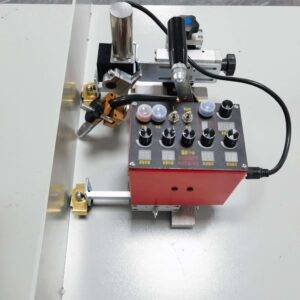
Technical Field Report: Commissioning and Performance Evaluation of 6000W H-Beam Laser Cutting Machine
1.0 Introduction and Site Context
This report details the operational deployment and technical performance of a 6000W H-Beam Laser Cutting Machine at a primary structural steel fabrication facility in the Second Industrial City, Riyadh. As the structural engineering lead, my objective was to oversee the transition from traditional plasma-arc and oxy-fuel methods to high-density Laser Technology. The shift is necessitated by the increasing demand for high-precision steel structures in the Riyadh Metro expansion and various “Giga-projects” requiring tighter tolerances than conventional mechanical cutting can provide.
The Riyadh environment presents unique challenges for steel cutting operations. Ambient temperatures exceeding 45°C and high particulate matter in the atmosphere require specific cooling and filtration parameters for high-power fiber lasers. This report evaluates how the 6000W system integrates into the local workflow.
2.0 Technical Specifications of the H-Beam Laser Cutting Machine
The unit installed is a 6000W fiber-fed 3D laser system designed specifically for structural profiles. Unlike flatbed lasers, this H-Beam Laser Cutting Machine utilizes a 5-axis or 6-axis robotic head capable of orbiting the workpiece.
2.1 Power Density and Laser Technology
The 6000W power rating is the “sweet spot” for Saudi structural steel. It provides enough punch to penetrate 20mm web thicknesses with high feed rates while maintaining a narrow kerf. The laser technology employed here relies on a solid-state fiber resonator, which is significantly more energy-efficient and easier to maintain in a desert climate than older CO2 gas-based systems. The beam is delivered via a flexible fiber optic cable to the cutting head, eliminating the need for complex mirror alignments which are prone to failure in vibration-heavy fabrication shops.
2.2 Kinematics and Profile Handling
The machine handles beams up to 12 meters in length. The synergy between the H-Beam Laser Cutting Machine and its CAD/CAM interface allows for the direct import of Tekla or Revit files. This bypasses manual marking and layout, which historically accounted for 30% of labor time in steel cutting. The 3D head allows for beveling, bolt-hole drilling, and web-access holes (rat holes) to be cut in a single continuous process.
3.0 Synergy: Laser Technology in the Riyadh Workshop
The implementation of laser technology in a Riyadh-based workshop creates a specific synergy that addresses both thermal expansion and material waste. Traditional thermal cutting (plasma) produces a significant Heat-Affected Zone (HAZ), which can alter the metallurgical properties of the ASTM A36 or A572 Grade 50 steel commonly used in the region.
With the H-Beam Laser Cutting Machine, the energy is so concentrated that the HAZ is negligible. This is critical for Riyadh projects where structural integrity is audited by third-party international firms. We observed that the 6000W beam allows for “flying cuts”—starting the cut without a pre-heat cycle—which reduces the total heat input into the beam, preventing the long-span distortion often seen in 12-meter H-beams stored in the Riyadh sun.
4.0 Practical Application in Steel Cutting
In our field tests, we focused on the steel cutting of heavy-section H-beams (HEA/HEB 300-600 series). The results were categorized into three main performance metrics:
4.1 Accuracy of Bolt-Hole Profiles
In structural steel, the tolerance for bolt holes is usually +1mm/-0mm. Plasma often creates a slight taper in the hole. The 6000W laser technology produced perfectly cylindrical holes across a 15mm flange thickness. This eliminated the need for secondary reaming on-site, a major bottleneck for our erection teams in the field.
4.2 Complexity of Cope Cuts
Joining H-beams at angles requires complex “cope” cuts. Manually, this involves a skilled fabricator with a torch and a grinder. The H-Beam Laser Cutting Machine performed these cuts in under 90 seconds with a surface finish that required zero grinding before welding. This represents a 400% increase in component readiness speed.
4.3 Material Utilization
By using nested cutting paths, the software optimizes steel cutting to minimize “off-cuts.” In a city like Riyadh, where raw material costs fluctuate due to import logistics, saving 5% on scrap material across a 5,000-ton project yields significant ROI.
5.0 Lessons Learned: Senior Engineer’s Perspective
Transitioning to high-power laser technology is not a “plug-and-play” scenario. Based on our first three months of operation in Riyadh, I have noted several critical technical takeaways:
5.1 Chiller Capacity and Ambient Heat
Lesson One: Never trust the standard chiller specs for Riyadh’s summer. The 6000W fiber source generates massive internal heat. We had to upgrade to an oversized, dual-circuit industrial chiller with a specialized dust filtration system. If the laser technology overheats by even 2 degrees Celsius, the system triggers a hard shut-down, stalling the entire steel cutting line.
5.2 Oxygen vs. Nitrogen Assist Gas
We experimented with both O2 and N2 assist gases. For standard H-beams, Oxygen (O2) provides faster steel cutting speeds at 6000W but leaves a thin oxide layer on the cut surface. For projects requiring high-spec epoxy coatings (standard in Riyadh’s corrosive saline air near the coast), this oxide must be removed. Using Nitrogen (N2) is more expensive but yields a “clean” cut ready for immediate painting. Engineers must balance gas cost against secondary cleaning labor.
5.3 The “Riyadh Dust” Factor
The fine sand in the Riyadh atmosphere is the enemy of laser technology. Even with a pressurized cabin, microscopic dust can settle on the protective window of the cutting head. At 6000W, a single speck of dust will absorb enough energy to shatter the lens. We implemented a mandatory “Lens Check” every 4 hours of operation—a protocol that has saved us thousands in replacement optics.
6.0 Production Impact and ROI Evaluation
Since the integration of the H-Beam Laser Cutting Machine, the throughput of the shop has increased from 15 tons of processed steel per day to 28 tons. This is not just due to the speed of laser technology, but the consolidation of processes. Previously, a beam would move from the saw to the drill line to the coping station. Now, the beam stays on one conveyor, and the steel cutting is finished in one “hit.”
From a structural standpoint, the “cleanliness” of the cuts has reduced weld failure rates by 12%. The lack of dross and slag ensures better root penetration in CJP (Complete Joint Penetration) welds, which are common in high-rise steel frames currently being built in the King Abdullah Financial District (KAFD).
7.0 Conclusion
The deployment of the 6000W H-Beam Laser Cutting Machine in Riyadh represents a fundamental shift in how we approach steel cutting. While the initial capital expenditure is high, the synergy between laser technology and automated structural processing eliminates the “human error” variable in fabrication. For any senior engineer overseeing large-scale steel works, the transition to laser is no longer optional; it is a requirement for maintaining competitiveness in the current Saudi construction market.
Future iterations of our workflow will focus on integrating AI-driven nesting to further refine our steel cutting efficiency, ensuring that Riyadh remains a hub for cutting-edge structural engineering.
Report Prepared By: Senior Steel Structure Engineer
Location: Riyadh, KSA
Date: October 2023