The Industrial Context: Why Rosario is the Epicenter for Wind Energy Manufacturing
Rosario, strategically positioned along the Paraná River, has long been the heartbeat of Argentina’s metallurgical and heavy machinery industry. As the global demand for renewable energy intensifies, Rosario’s proximity to major steel mills and its robust logistics network make it the ideal location for the fabrication of wind turbine towers.
Wind towers are not merely hollow tubes; they are complex assemblies of internal platforms, stiffeners, and massive structural flanges. Historically, the fabrication of the H-beams and structural profiles used in the internal tower architecture relied on mechanical sawing or oxy-fuel cutting. However, as turbine heights exceed 1200 meters and blade lengths increase, the structural tolerances of the tower components have become significantly tighter. The introduction of the 6000W H-Beam laser cutting Machine provides Rosario-based manufacturers with the precision necessary to meet international standards (such as IEC 61400), ensuring that every structural element contributes to the fatigue resistance of the tower.
Technical Prowess: The 6000W Fiber Laser Advantage
In the realm of structural steel, 6000W (6kW) represents the “sweet spot” for fiber laser power. While 12kW or 20kW machines exist for ultra-thick plate cutting, 6kW offers the most efficient balance of capital investment and operational capability for H-beams typically used in tower internals.
The fiber laser source produces a beam with a wavelength of approximately 1.06 microns. This short wavelength allows for high absorption rates in carbon steel, which is the primary material for wind towers. At 6000W, the machine can effortlessly penetrate H-beam flanges and webs up to 20mm–25mm thick with extreme speed. Unlike plasma cutting, which can leave a dross-heavy edge and a wide kerf, the 6kW laser delivers a narrow, high-energy density beam that results in a “mirror finish” edge. This eliminates the need for post-cut machining, allowing the beam to move directly from the laser table to the welding station.
The ±45° Bevel Cutting Revolution: Engineering for Weld Preparation
The most critical feature of this machine is its 5-axis cutting head, capable of ±45° beveling. In wind turbine tower construction, structural integrity is paramount. Beams and plates must be joined using full-penetration welds to withstand the immense dynamic loads and vibrations generated by the turbine’s rotation.
Traditional straight cuts require a secondary process—usually manual grinding or a separate beveling machine—to create the V, Y, or K-shaped grooves necessary for deep weld penetration. The ±45° beveling head on the H-beam laser performs this “weld-prep” in a single pass.
1. **Precision Kinematics:** The machine’s software calculates the complex geometry of the H-beam, adjusting the focal point and the angle of the head in real-time as it traverses the profile. This ensures a consistent bevel angle even across the transition from the web to the flange.
2. **Reduced Heat Affected Zone (HAZ):** Laser cutting is inherently faster than plasma or oxy-fuel. This speed means less heat is conducted into the surrounding metal. For wind towers, a smaller HAZ is vital because it preserves the metallurgical properties of the high-strength steel, reducing the risk of brittle fractures over the 20-to-30-year lifespan of the turbine.
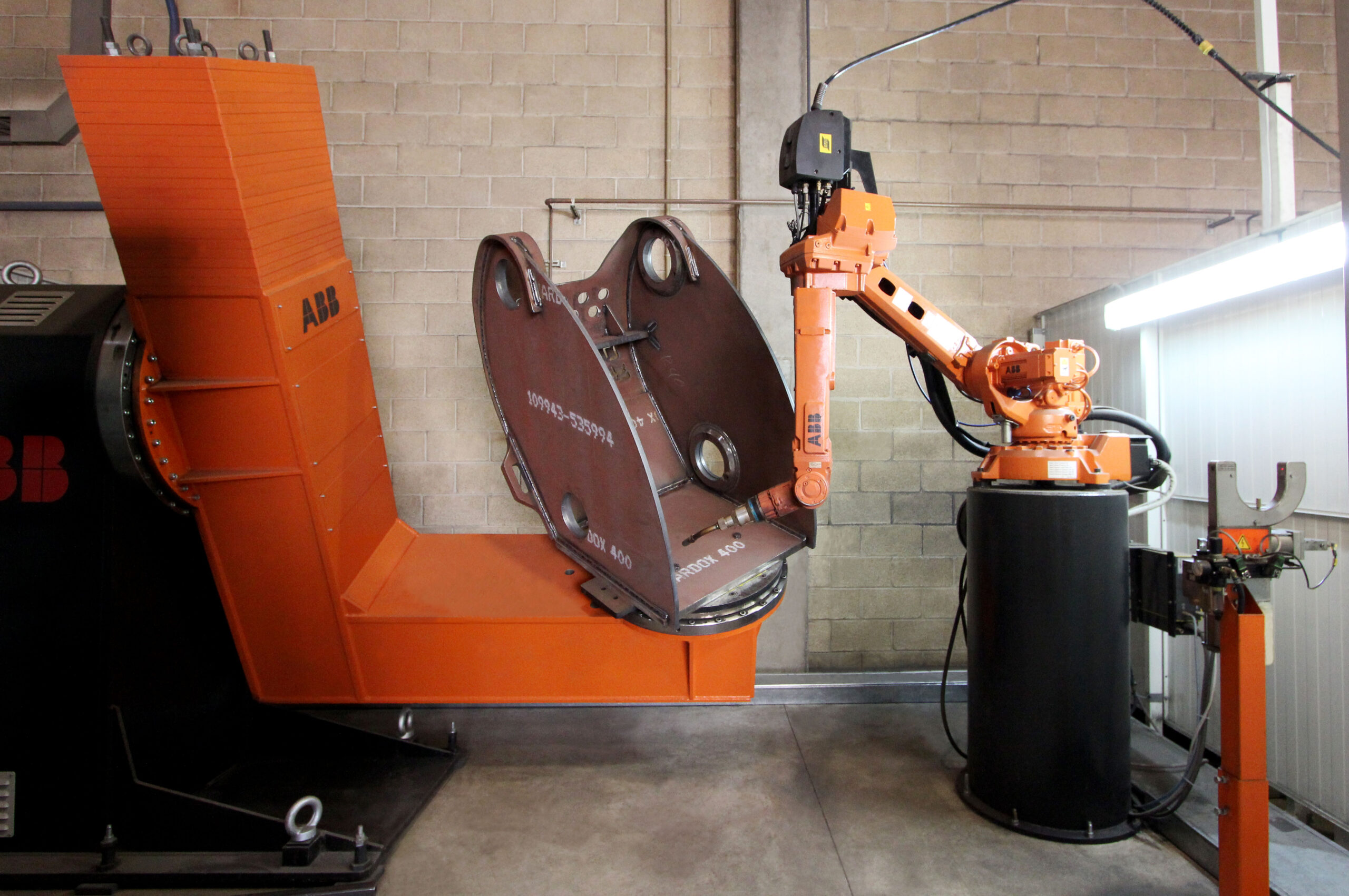
3. **Optimized Fit-Up:** When two beveled beams meet, the precision of the laser ensures a “zero-gap” fit-up. This is essential for robotic welding systems used in Rosario’s modern factories, as any inconsistency in the gap can lead to weld defects or the need for excessive filler material.
Specialized H-Beam Processing: Overcoming Geometric Challenges
Cutting an H-beam is significantly more complex than cutting a flat sheet. It requires a machine with a sophisticated “chuck” or “gripper” system and a 3D-capable laser head.
In a 6000W H-beam laser, the workpiece is typically fed through a rotary chuck system. As the beam moves through the machine, the laser head rotates around the profile. The software must account for the “radius” of the H-beam corners. Standard mechanical methods often struggle with the thickness variations at the junction of the web and the flange, but the 6000W laser uses capacitive height sensing to maintain a constant standoff distance. This allows for intricate cuts—such as circular “bolt holes” or “rat holes” for welding access—to be placed with sub-millimeter accuracy through both the flange and the web.
Applications within Wind Turbine Tower Infrastructure
In the context of the towers currently being deployed in the wind farms of Chubut and Santa Cruz, the 6000W laser is utilized for several critical components:
– **Internal Platforms:** These support the electrical switchgear and climbing systems. They require precise H-beam frames that must be lightweight yet structurally sound.
– **Foundation Inserts:** The massive steel sections that anchor the tower to its concrete base require complex beveling to ensure the integrity of the primary load-bearing welds.
– **Door Frame Reinforcements:** The access door at the base of the tower is a point of stress concentration. Laser-cut, beveled H-beams are used to reinforce these openings, ensuring the tower’s cylindrical geometry remains stable under wind pressure.
– **Cable Trays and Ladders:** While lighter than the main structure, these components are produced in vast quantities. The speed of the 6000W laser allows for mass production with zero variation between parts.
Economic and Operational Impact for Rosario’s Manufacturers
For a manufacturer in Rosario, investing in a 6000W H-beam laser with beveling capabilities is a strategic move toward “Industry 4.0.” The primary economic benefit is the consolidation of the workflow. What previously took four machines (saw, drill, plasma, and grinder) and six operators can now be accomplished by one machine and one operator.
Furthermore, the software integration allows for “nesting” on long structural profiles. By optimizing the arrangement of cuts on a 12-meter H-beam, the software reduces scrap rates by up to 15%. In an industry where steel prices fluctuate significantly, these material savings translate directly into more competitive bids for international wind energy tenders.
The environmental impact is also noteworthy. Fiber lasers are significantly more energy-efficient than older CO2 lasers or plasma systems. They require no laser gas and have fewer consumable parts, aligning the manufacturing process with the “green” goals of the wind energy sector itself.
Future Outlook: Shaping the Argentine Energy Landscape
As Argentina aims to increase the share of renewables in its energy matrix, the pressure on local supply chains will grow. The 6000W H-Beam Laser Cutting Machine is not just a tool; it is a catalyst for industrial maturity. In Rosario, this technology is enabling a transition from “basic fabrication” to “high-precision engineering.”
The ability to produce ±45° beveled components with the pull of a trigger allows local firms to compete with European and Chinese manufacturers. As wind turbines continue to grow in scale, the demand for thicker materials and more complex geometries will only increase. The 6000W fiber laser, with its blend of power, precision, and multi-axis flexibility, stands as the cornerstone of this new industrial era in Rosario, ensuring that the towers supporting Argentina’s future are built with the highest standards of modern technology.