
1.0 Introduction: The Evolution of Structural Steel Processing in Jakarta’s Transit Corridors
The rapid expansion of the Jakarta Mass Rapid Transit (MRT) and Light Rail Transit (LRT) networks has necessitated a shift from traditional mechanical fabrication methods—such as band sawing, radial drilling, and manual oxy-fuel cutting—to high-precision CNC laser integration. As a senior expert in structural steel fabrication, this field report examines the deployment of the 6000W CNC Beam and Channel Laser Cutter, specifically focusing on its implementation within the Jakarta infrastructure sector.
The primary challenge in Jakarta’s railway projects lies in the dual requirement for high-volume output and extreme dimensional accuracy to satisfy seismic resilience standards. Traditional methods often result in cumulative tolerances that complicate on-site assembly. The introduction of 6000W fiber laser technology, paired with advanced 3D kinematic heads and zero-waste nesting algorithms, represents a paradigm shift in how H-beams, I-beams, and C-channels are processed for overhead catenary systems, station frames, and track-side reinforcement.
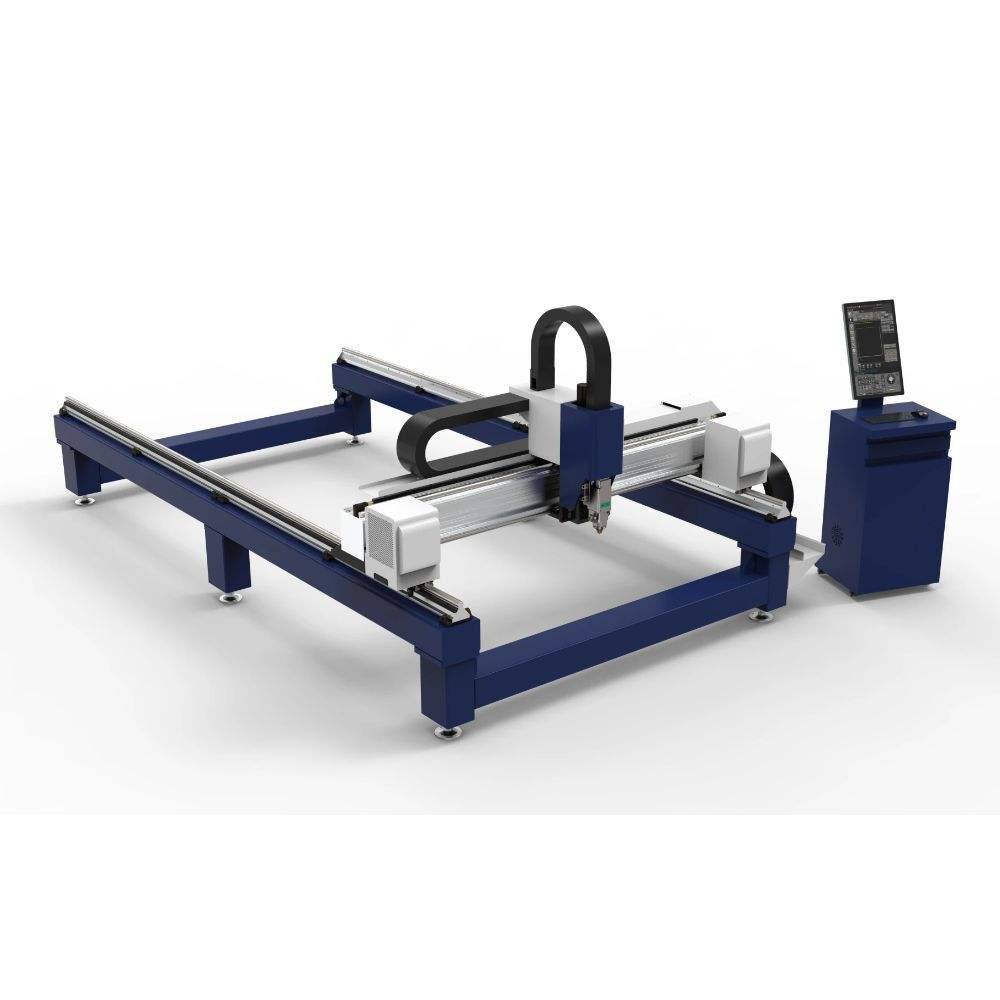
2.0 Technical Specifications of the 6000W Fiber Laser Source
The selection of a 6000W fiber laser source is strategic. While higher wattages exist, the 6000W threshold offers the optimal power density for the thickness ranges typically encountered in railway structural members (8mm to 20mm web and flange thicknesses).
2.1 Power Density and Kerf Characteristics
At 6000W, the laser achieves a high-quality beam parameter product (BPP), allowing for a narrow kerf width (typically 0.2mm to 0.4mm). This is critical for railway applications where interlocking joints and bird-mouth notches must fit with minimal gap variance to ensure high-integrity fillet and butt welds. The fiber source provides a wavelength of approximately 1.07 microns, which is more efficiently absorbed by carbon steel compared to legacy CO2 lasers, resulting in a significantly smaller Heat Affected Zone (HAZ).
2.2 Gas Dynamics in Heavy Section Cutting
In the Jakarta field application, the use of Oxygen (O2) as an assist gas is standard for carbon steel thicknesses exceeding 10mm. The 6000W source provides the necessary energy to maintain a stable molten pool while the CNC gas manifold modulates pressure to prevent dross accumulation on the lower flange of H-beams. This eliminates the need for secondary grinding, a major bottleneck in traditional railway fabrication shops.
3.0 Kinematics and Multi-Axis Structural Processing
Processing channels and beams requires more than simple X-Y movement. The 6000W CNC Beam Cutter utilizes a sophisticated 5-axis or 6-axis 3D cutting head capable of ±45-degree beveling. This functionality is vital for Jakarta’s railway bridges, where beams must be prepared with complex weld preparations (V, Y, and K-type bevels) directly on the machine.
3.1 Chuck Configuration and Material Handling
The system deployed utilizes a four-chuck (quad-chuck) configuration. This allows for the synchronized rotation and feeding of heavy profiles (up to 12 meters in length). The multi-chuck system provides rigid support, minimizing vibrations that would otherwise compromise the cutting precision of the laser beam, especially when processing asymmetric C-channels or heavy-duty railway sleepers.
4.0 Zero-Waste Nesting Technology: Engineering Logic
One of the most significant advancements discussed in this report is the “Zero-Waste Nesting” software integration. In heavy steel processing, “tailings” or the unworkable ends of a beam usually account for 3% to 7% of total material waste. In a large-scale project like the Jakarta MRT, this represents hundreds of tons of high-grade steel.
4.1 The Mechanism of Tailset Reduction
The Zero-Waste algorithm works in tandem with the four-chuck hardware. Conventional laser cutters require a safety distance for the chuck to hold the material, leaving a “dead zone” at the end of the beam. The Zero-Waste system utilizes a “chuck-over-chuck” transition logic. As the laser approaches the end of a beam, the third and fourth chucks take over the guiding and rotation, allowing the laser to cut right up to the edge of the material.
4.2 Nesting Optimization for Railway Components
The nesting engine analyzes the entire production queue—ranging from short gusset plates to long structural rafters—and calculates the most efficient sequence. It can perform “common line cutting” even on 3D profiles, where one cut serves as the edge for two distinct components. This level of optimization is managed via G-code generation that accounts for the beam’s cross-sectional geometry, ensuring that the structural integrity of the “skeleton” is maintained until the final cut is executed.
5.0 Application in Jakarta’s Railway Infrastructure
Jakarta’s specific environmental and geological conditions (high humidity, soft soil, and seismic activity) demand that railway steel structures be manufactured to ISO 12944 and EN 1090 standards. The 6000W CNC Beam Laser addresses these needs through several key applications.
5.1 Catenary Support Structures
The mast and boom structures for overhead electrification require precise hole patterns for insulators and tensioners. Traditional drilling creates mechanical stress around the hole. The laser, however, creates “bolt-ready” holes with zero mechanical deformation, ensuring that the galvanized coating applied post-fabrication adheres uniformly.
5.2 Interlocking Beam-to-Column Connections
For station mezzanines, the 6000W laser allows for “slot-and-tab” designs in heavy H-beams. This enables components to be dry-fitted with millimeter precision before welding. In the congested urban environment of Jakarta, where on-site space is limited, the ability to deliver pre-aligned, “Lego-like” structural components significantly reduces the time required for site assembly and minimizes the need for heavy lifting equipment on-site.
6.0 Challenges: Thermal Management and Humidity
Operating a 6000W fiber laser in Jakarta’s tropical climate introduces specific engineering challenges. High ambient temperatures and humidity levels can lead to condensation within the laser source and the optical path.
6.1 Advanced Chiller Integration
The field report confirms that a dual-circuit industrial chiller is mandatory. One circuit maintains the laser source at a constant 22°C (±1°C), while the second circuit manages the optics at a slightly higher temperature to prevent condensation. Furthermore, the CNC housing must be pressurized with filtered, dry air to protect the internal components from the saline-heavy air characteristic of Jakarta’s coastal geography.
6.2 Material Surface Conditions
Structural steel stored in Jakarta’s outdoor yards often develops a layer of mill scale and oxidation. The 6000W laser’s “Pre-Pierce” and “Burst-Power” functions are utilized to penetrate through heavy oxidation layers before the main cutting sequence begins, ensuring that the kerf remains clean and free of slag inclusions.
7.0 Economic Impact and Efficiency Metrics
Data gathered from current Jakarta-based operations indicate that the transition to 6000W CNC laser processing with Zero-Waste Nesting yields the following results:
- Throughput Increase: A 400% increase in processed tons per shift compared to manual/mechanical methods.
- Material Utilization: An improvement from 92% to 99.2% material yield through the elimination of tailing waste.
- Labor Reduction: A 60% reduction in man-hours, as the CNC system performs cutting, beveling, and hole-drilling in a single setup.
- Precision: Positional accuracy maintained within ±0.05mm over a 12-meter beam length.
8.0 Conclusion
The deployment of the 6000W CNC Beam and Channel Laser Cutter is a critical technical upgrade for Jakarta’s railway infrastructure sector. The synergy between high-wattage fiber laser sources and Zero-Waste Nesting software addresses the most pressing issues in heavy steel fabrication: precision, material cost, and production velocity. As the city continues its transit expansion, the standardization of laser-processed structural members will be the cornerstone of a more resilient and efficiently constructed railway network. Engineers must continue to focus on optimizing gas parameters and environmental controls to maximize the lifespan and accuracy of these high-performance systems in Southeast Asian conditions.
















