The Evolution of Structural Steel Fabrication in Jakarta
Jakarta’s skyline is a testament to rapid urbanization and the increasing complexity of architectural design. In recent years, the demand for large-scale sports infrastructure—stadiums that serve as both community hubs and national icons—has pushed local fabricators to seek technologies that move beyond the limitations of manual labor and conventional machining. The introduction of the 6000W 3D Structural Steel Processing Center marks the end of the “measure-cut-grind” era and the beginning of a digital, automated fabrication workflow.
Stadiums, characterized by their massive spans and unique aesthetic geometries, require steel components that are both incredibly strong and precisely shaped. In the humid, coastal environment of Jakarta, where corrosion and seismic activity are constant variables, the integrity of every weld and joint is paramount. The 6000W fiber laser offers a level of thermal control and edge quality that traditional oxy-fuel or plasma systems simply cannot match, providing a clean slate for superior weld penetration and structural longevity.
Understanding the 6000W Power Profile for Structural Heavyweights
In the realm of fiber lasers, 6000W (6kW) is often considered the “sweet spot” for structural steel applications. While higher wattages exist, the 6000W resonator provides the optimal balance of capital investment and operational capability for the thicknesses typically found in stadium trusses and support columns.
At 6000W, the laser can effortlessly pierce and cut carbon steel ranging from 10mm to 25mm with high speed and exceptional edge verticality. In stadium construction, where H-beams and thick-walled pipes are the primary building blocks, this power level ensures that the laser doesn’t just “melt” through the material, but creates a high-pressure vapor zone that results in a dross-free finish. This eliminates the need for secondary grinding—a process that historically consumes thousands of man-hours on a project of stadium-level scale.
Furthermore, the fiber laser source is significantly more energy-efficient than older CO2 technologies. In Jakarta, where industrial electricity costs and power stability can be concerns, the lower wall-plug efficiency of the 6000W fiber system provides a sustainable competitive advantage for local contractors.
The Infinite Rotation 3D Head: Engineering Without Limits
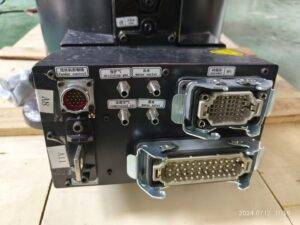
The true “brain” of the 6000W processing center is the Infinite Rotation 3D Head. Traditional laser heads are often limited by cable tangling, requiring them to “unwind” after a certain degree of rotation. An infinite rotation head, however, utilizes specialized slip-ring technology and advanced kinematics to rotate 360 degrees (and beyond) without interruption.
For stadium steel, this is revolutionary. Stadium roofs often utilize “space frame” designs—complex networks of tubes and beams meeting at various angles. These require “fish-mouth” cuts, saddle cuts, and complex bevels (K, V, Y, and X joints) to ensure that when two pipes meet, they fit perfectly with zero gaps.
The 3D head can tilt up to 45 degrees or more, allowing for precise beveling in a single pass. When a structural engineer in Jakarta designs a non-linear, flowing stadium roof, the 3D laser head can follow the contour of the beam or pipe, cutting the necessary weld prep angles simultaneously with the profile cut. This level of precision ensures that the structural integrity of the stadium is built into the components themselves, rather than relying on the “filling” capability of a welder’s bead.
Precision Cutting for Space Frames and Cantilevered Roofs
Stadiums are defined by their roofs. Whether it is a retractable system or a massive fixed cantilever, the weight-to-strength ratio is critical. Using a 6000W 3D laser allows for the use of High-Strength Low-Alloy (HSLA) steels, which can be cut with extreme precision without creating a large Heat Affected Zone (HAZ).
A large HAZ can embrittle the steel, a dangerous prospect in a seismic zone like Indonesia. The 3D laser’s concentrated energy beam ensures that the molecular structure of the surrounding steel remains stable.
In Jakarta, where projects like the Jakarta International Stadium (JIS) have set a high bar for engineering, the use of automated 3D processing allows for “bolt-ready” fabrication. This means that large truss sections can be cut, beveled, and hole-punched with such accuracy that they can be assembled on-site with minimal field adjustment. In the tight logistics of a crowded city like Jakarta, reducing on-site fabrication time is a massive logistical victory.
Optimizing Operations in Jakarta’s Tropical Climate
Operating high-powered fiber lasers in Jakarta presents unique environmental challenges, specifically high humidity and ambient temperatures that often exceed 30°C. A 6000W 3D Structural Steel Processing Center must be equipped with an oversized, dual-circuit industrial chiller system to maintain the resonator and the cutting head at a constant temperature.
Expert-level installations in Jakarta also include pressurized, dust-proof cabinets for the power source and CNC controllers. In a structural steel environment, metallic dust is constant. The use of a fiber laser—which has no moving parts or mirrors in its light generation path—is inherently more robust than CO2 lasers in these conditions. However, the infinite rotation head requires specialized bellows and seals to protect the high-precision gears and optical sensors from the Jakarta atmosphere.
Moreover, local expertise is vital. Implementing this technology in Jakarta requires a bridge between the high-tech machinery and the local workforce. The software interfaces (CAD/CAM) are now sophisticated enough to import BIM (Building Information Modeling) files directly, allowing Jakarta’s engineers to go from a 3D model of a stadium to a cut part with minimal manual intervention.
Economic ROI: Beyond the Initial Investment
The capital expenditure for a 6000W 3D Structural Steel Processing Center is significant, but the Return on Investment (ROI) in the context of stadium construction is found in the “Total Cost of Fabrication.”
1. **Reduction in Labor:** One laser processing center can replace the output of five to ten manual cutting and grinding stations.
2. **Material Savings:** Advanced nesting software for 3D profiles reduces scrap. In a project requiring 10,000 tons of steel, even a 2% improvement in material yield results in massive savings.
3. **Consumables:** Unlike plasma, which requires frequent replacement of nozzles and electrodes, fiber laser consumables have a much longer lifespan, reducing the “per-cut” cost.
4. **Speed to Market:** Stadium projects are often tied to international sporting deadlines. The ability to accelerate the fabrication phase by months can be the difference between a project’s success and failure.
For Jakarta-based fabricators, owning such a machine isn’t just about cutting steel; it’s about qualifying for tier-one international contracts. Many global architectural firms now mandate laser-cut precision for structural joints to guarantee safety and aesthetic requirements.
Conclusion: Setting a New Standard for Indonesia
The 6000W 3D Structural Steel Processing Center with Infinite Rotation is more than just a tool; it is a catalyst for Indonesian engineering excellence. As Jakarta continues to build world-class venues and infrastructure, the reliance on high-precision fiber laser technology will only grow.
By mastering the infinite rotation of the 3D head and the raw power of the 6000W source, local fabricators can produce stadium structures that are safer, more complex, and more cost-effective. This technology ensures that the next generation of Indonesian stadiums will not only stand as landmarks of design but also as masterpieces of modern manufacturing. For the fiber laser expert, the message is clear: the future of structural steel in Jakarta is 3D, it is precise, and it is powered by fiber.