The Technological Leap: 6000W Fiber Power in Structural Fabrication
In the realm of structural steel, power is the primary currency. A 6000W fiber laser source serves as the “sweet spot” for modern infrastructure projects. Unlike lower-wattage systems that struggle with thickness or CO2 lasers that demand immense maintenance, the 6000W fiber source provides the high energy density required to pierce and cut through structural carbon steels—such as A36 or A572—up to 25mm with ease.
For the construction of a major airport in Mexico City, where the sheer volume of steel is measured in tens of thousands of tons, speed is as critical as precision. The 6000W laser offers a significant increase in feed rates compared to traditional methods. More importantly, the fiber laser’s wavelength is absorbed more efficiently by the metal, resulting in a narrower kerf and a significantly reduced Heat-Affected Zone (HAZ). In structural engineering, maintaining the metallurgical properties of the steel near the cut is vital for the long-term fatigue resistance of the building’s skeleton.
The Infinite Rotation 3D Head: Redefining Geometry
Traditional laser cutters are often limited to 2D planes or restricted 3D movements that require the machine to “unwind” its cables after a certain degree of rotation. The “Infinite Rotation” 3D head is a mechanical marvel that utilizes advanced slip-ring technology and high-torque servo motors to allow the cutting nozzle to rotate indefinitely around the Z-axis.
In the context of airport construction, where vaulted ceilings, sweeping trusses, and complex interconnected nodes are common, this capability is revolutionary. The 3D head can tilt up to ±45 degrees (or more, depending on the specific model), enabling the machine to perform bevel cuts for weld preparations in a single pass. Instead of cutting a beam and then sending it to a manual station for grinding a V-groove, the 6000W laser executes the cut and the bevel simultaneously. This “ready-to-weld” output reduces labor costs by up to 60% and ensures that the penetration of the weld is theoretically perfect, a necessity for the massive spans found in airport terminals.
Mexico City Challenges: Altitude and Seismic Engineering
Deploying a 6000W laser center in Mexico City (CDMX) introduces unique environmental and engineering challenges. At an altitude of over 2,200 meters, the atmospheric pressure is lower, which affects the dynamics of the assist gases (Oxygen and Nitrogen) used in the cutting process. As a fiber laser expert, I have observed that high-altitude installations require recalibrated gas flow sensors and modified pressure settings to maintain the same dross-free finish achieved at sea level.
Furthermore, Mexico City is a high-seismic zone. The structural steel for an airport must be designed to flex and dissipate energy during an earthquake. This requires incredibly tight tolerances for bolt holes and interlocking joints. Traditional plasma cutting often leaves a tapered hole or a hardened edge that can lead to stress fractures. The 6000W fiber laser, guided by the precision of the 3D head, produces holes that are perfectly cylindrical and smooth, ensuring that every bolt in a seismic dampening brace fits with zero clearance issues. This precision isn’t just about aesthetics; it is a fundamental requirement for the safety of thousands of daily travelers.
Processing Structural Profiles: Beyond the Flat Sheet
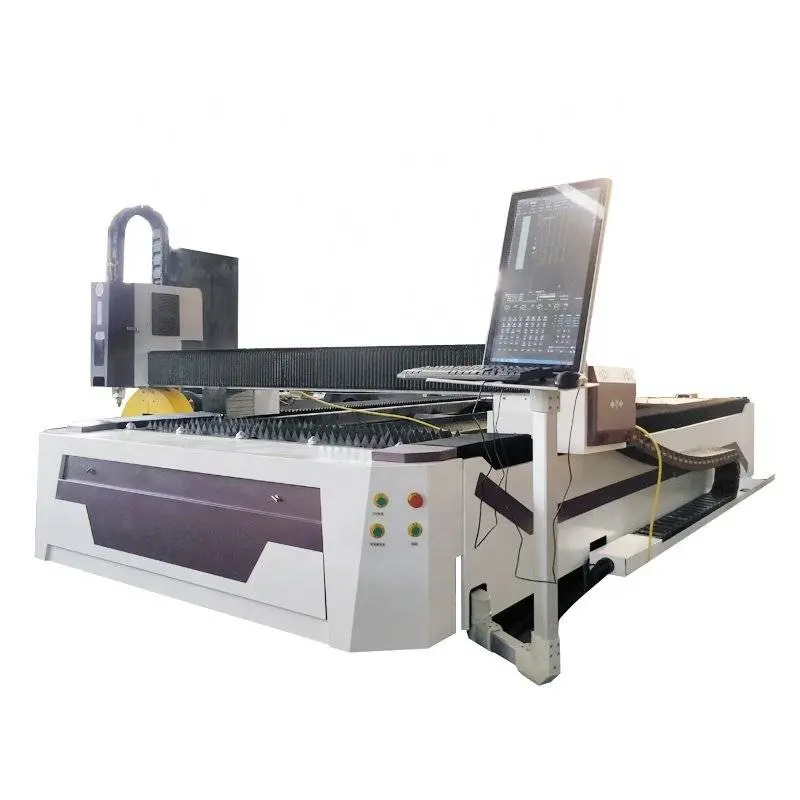
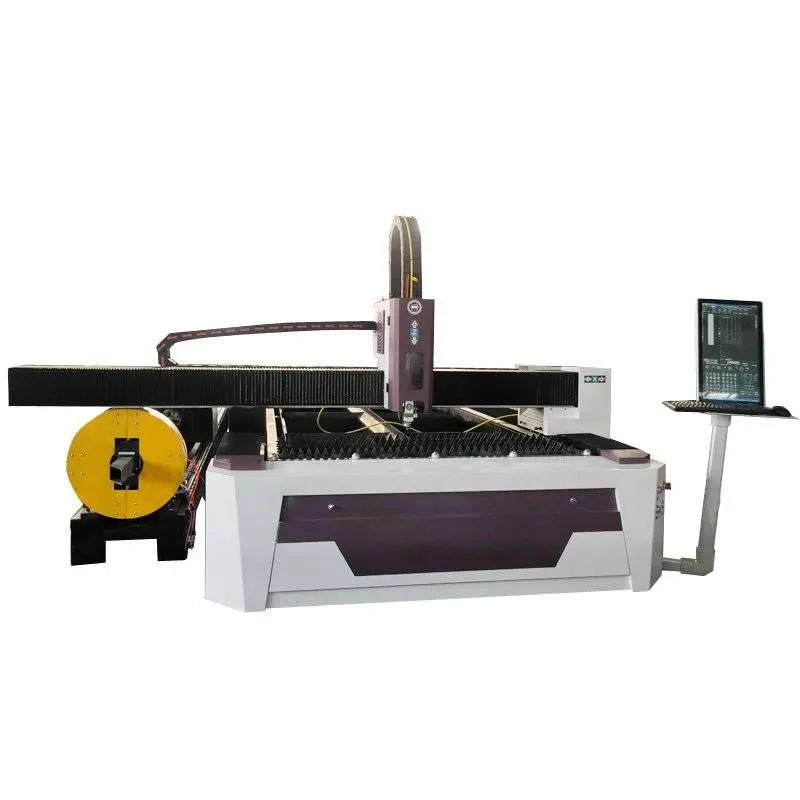
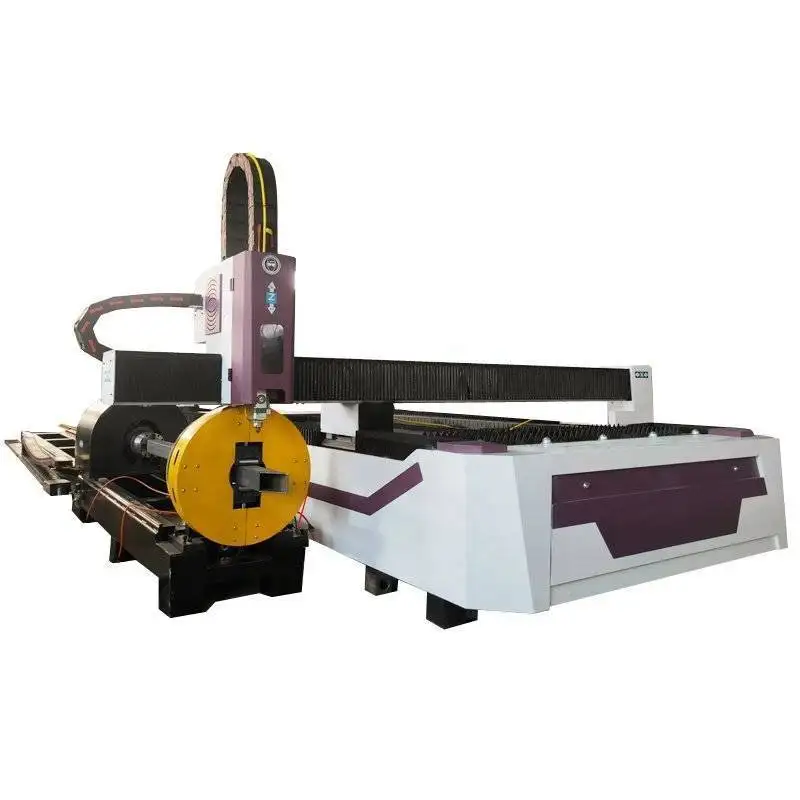
While many associate lasers with flat metal sheets, a 3D Structural Steel Processing Center is designed for the “big stuff.” This includes:
- H-Beams and I-Beams: Used for the primary columns and rafters of the terminal.
- Square and Rectangular Tubing: Often used in the architectural “tree” columns that support large airport canopies.
- C-Channels and Angle Iron: Essential for secondary framing and mezzanine supports.
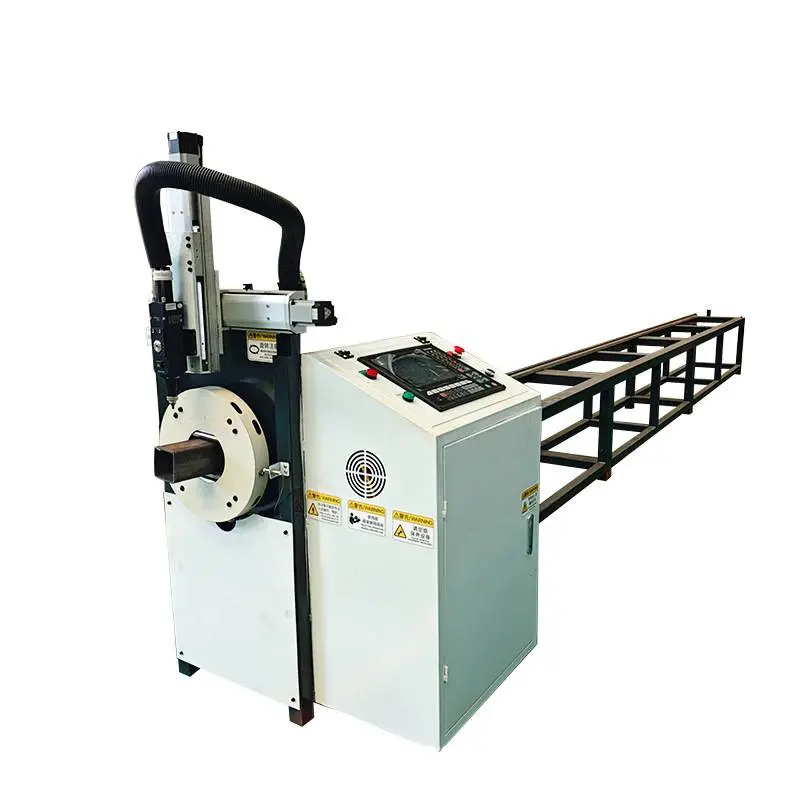
The 6000W system utilizes a specialized four-chuck (or three-chuck) system to stabilize these heavy profiles. As the beam moves through the machine, the 3D head dances around it, cutting slots for interconnecting plates and decorative apertures that would be impossible with traditional saws or drills. The software integration—usually via specialized BIM (Building Information Modeling) pipelines—allows the engineer’s 3D model to be translated directly into machine code, ensuring that what was designed in the office is exactly what is produced on the shop floor.
Economic Impact on Airport Infrastructure Projects
The sheer scale of airport construction projects in Mexico means that even a 5% increase in efficiency can result in millions of dollars in savings. The 6000W 3D Structural Steel Processing Center provides much more than a 5% gain. By consolidating multiple processes—marking, drilling, sawing, and beveling—into a single machine, the footprint of the fabrication facility is reduced, and the throughput is quadrupled.
In Mexico City’s competitive construction market, the ability to deliver a hangar or a terminal section weeks ahead of schedule provides a massive strategic advantage. Additionally, the reduction in material waste is significant. The nesting software for 3D profiles can optimize cuts on a 12-meter beam to ensure that scrap is minimized, which is both an economic and an environmental win in a country increasingly focused on sustainable “green” building practices.
Safety, Maintenance, and the Future of Mexican Steel
Operating a 6000W laser requires a sophisticated safety infrastructure. The machine is typically enclosed in a Class 1 laser-safe housing, which is crucial in a busy Mexican fabrication plant to protect workers from reflected infrared radiation. Advanced dust collection systems are also mandatory, especially when cutting galvanized steel often used in outdoor airport structures to prevent corrosion.
Looking forward, the adoption of this technology in Mexico City signals a maturation of the local manufacturing sector. It moves the industry away from “brawn-based” fabrication toward “brain-based” precision engineering. As more Mexican technicians become experts in operating these 3D infinite rotation systems, the region will become a hub for high-tech steel fabrication, not just for local airports, but for infrastructure projects across Latin America.
Conclusion: A New Horizon for CDMX Infrastructure
The deployment of a 6000W 3D Structural Steel Processing Center for airport construction in Mexico City is a testament to the power of light. By harnessing the precision of a fiber laser and the dexterity of an infinite rotation 3D head, engineers are building structures that are safer, more complex, and more efficient than ever before. In the thin air of the Valley of Mexico, the future of aviation is being carved out of steel, one perfect bevel at a time. This technology ensures that when the next earthquake shakes the ground, or the next tropical storm batters the terminal, the steel skeleton—processed with the highest level of expert technology—will stand firm.