The Industrial Evolution of Monterrey: A Gateway to Shipbuilding Excellence
Monterrey, often referred to as the “Sultana del Norte,” has long been the heart of Mexico’s heavy industry. While the city is located inland, its role as a primary supplier to the maritime and shipbuilding sectors on the Gulf Coast is indispensable. The introduction of a 6000W 3D Structural Steel Processing Center is not merely an equipment upgrade; it is a strategic response to the increasing complexity of modern vessel design.
In shipbuilding, the traditional methods of oxy-fuel or plasma cutting often require significant post-processing, including grinding and edge preparation. The transition to high-power fiber laser technology allows for a “one-and-done” approach. In the context of Monterrey’s industrial ecosystem—home to major steel producers like Ternium—having a cutting-edge processing center located at the source of the raw material minimizes logistics costs and maximizes the efficiency of the supply chain before components ever reach the coastal shipyards.
The Powerhouse: The 6000W Fiber Laser Source
At the core of this processing center is the 6000W fiber laser source. For structural steel, 6kW represents the “sweet spot” for balancing speed, thickness capacity, and operating cost. Unlike CO2 lasers of the past, fiber lasers operate at a wavelength that is more efficiently absorbed by steel, allowing for higher cutting speeds on medium to thick sections.
For a shipbuilding yard, this power level is critical. It enables the clean cutting of structural profiles with wall thicknesses of up to 20mm or more with high precision. The beam quality of a 6kW source ensures a narrow kerf (cut width), which is essential when fabricating interlocking joints or complex bolt-hole patterns in heavy beams. Furthermore, the energy efficiency of the fiber source significantly reduces the carbon footprint of the fabrication process—a growing priority for global maritime standards.
3D Structural Processing: Multi-Axis Precision
The “3D” designation in this processing center refers to its ability to manipulate the laser head or the workpiece across multiple axes. In structural steel fabrication, we are rarely dealing with flat sheets. Instead, we are processing H-beams for keels, I-beams for deck supports, and L-profiles for hull stiffeners.
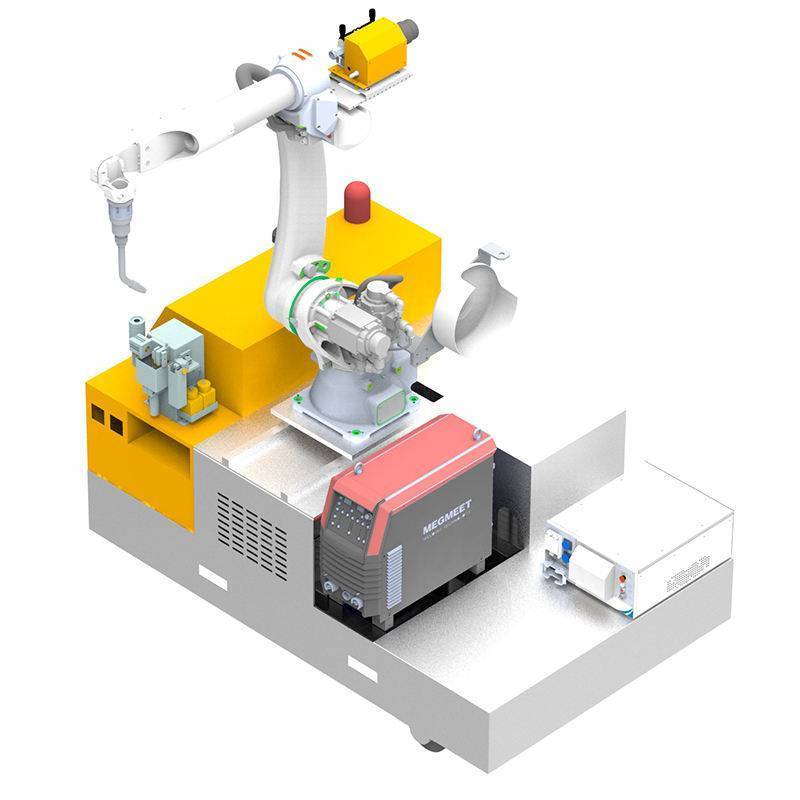
The 3D processing head is typically mounted on a robotic arm or a specialized 5-axis gantry system. This allows the laser to perform:
- Bevel Cutting: Creating V, Y, or K-shaped bevels for weld preparation directly on the beam edges.
- Intricate Cutouts: Precise holes for piping, electrical conduits, and structural lightening, all performed in a single pass.
- Coping and Notching: Complex geometry at the ends of beams to allow for flush fit-ups during assembly.
This level of precision is vital for shipbuilding. When large hull sections are assembled, a 1mm deviation can lead to massive delays. The 3D laser ensures that every component fits like a puzzle piece, drastically reducing the “gap-up” time during the welding phase.
Maximizing Throughput with Automatic Unloading
In a high-volume industrial hub like Monterrey, downtime is the enemy of profitability. A 6000W laser cuts so fast that manual unloading often becomes a bottleneck. The integration of an Automatic Unloading system transforms the machine from a standalone tool into a continuous production line.
The unloading system utilizes a series of synchronized conveyors and hydraulic lifters designed to handle the immense weight of structural steel. As the laser completes its final cut on a 12-meter beam, the unloading system gently supports the finished part, moves it out of the cutting zone, and organizes it onto a discharge rack.
This automation serves several purposes:
1. Safety: It removes human operators from the vicinity of heavy, moving steel and high-power laser radiation.
2. Surface Protection: Automated grippers and rollers prevent the scratching or “dross” damage that can occur during manual handling.
3. Continuous Operation: The machine can begin processing the next beam immediately, maintaining a high duty cycle that maximizes the Return on Investment (ROI).
Strategic Integration for Modern Naval Architecture
Modern shipbuilding relies on modular construction. Ships are built in “blocks” that are later joined together. The 6000W 3D Structural Steel Processing Center is the engine of this modularity. By using the precision of the laser, engineers can design complex structural interfaces that were previously impossible or too expensive to manufacture.
In Monterrey, this center serves as a “Pre-Fabrication Hub.” The ability to mark parts with the laser (etching part numbers, welding lines, and assembly instructions directly onto the steel) ensures that when these components arrive at the shipyard in Tampico or Veracruz, the assembly teams have a clear, error-free roadmap. This “smart fabrication” approach reduces the need for skilled layout personnel on-site and minimizes the risk of human error in the assembly of the vessel’s skeleton.
Environmental and Economic Impact in the Monterrey Region
Implementing such high-level technology has a ripple effect on the local economy. It necessitates a more highly skilled workforce, pushing Monterrey’s engineering talent to master advanced CAD/CAM software and laser physics.
From an environmental standpoint, the 6000W fiber laser is a significant improvement over plasma cutting. It produces fewer fumes and requires no secondary grinding, which reduces the amount of particulate matter in the factory environment. Furthermore, the precision of the nesting software used by the processing center ensures maximum material utilization. In a world where steel prices are volatile, reducing scrap by even 5% through better nesting on structural profiles can result in millions of pesos in annual savings.
Technical Specifications and Maintenance Excellence
To maintain peak performance in Monterrey’s climate, which can range from extreme heat to high humidity, the processing center is equipped with advanced industrial chillers and dust extraction systems. The fiber laser source is housed in a climate-controlled cabinet to ensure the stability of the laser diodes.
Key technical metrics for a system of this caliber include:
- Positioning Accuracy: ±0.05mm per meter.
- Max Beam Length: Typically up to 12,000mm.
- Rotational Speed: High-speed chucks capable of 60-90 RPM for rapid tube and profile rotation.
- Software Integration: Direct compatibility with Tekla, AutoCAD, and SolidWorks to bridge the gap between naval design and physical production.
The Future of Shipbuilding Fabricated in Monterrey
As the global maritime industry moves toward more efficient, lightweight, and durable vessels, the tools used to build them must evolve. The 6000W 3D Structural Steel Processing Center with Automatic Unloading represents the pinnacle of current fabrication technology.
By placing this capability in Monterrey, the shipbuilding industry gains a high-tech “engine room” that feeds the coastal yards with high-precision components. The synergy of 6kW power, 3D flexibility, and automated logistics creates a formidable competitive advantage, ensuring that Mexico remains a leader in heavy industrial fabrication. This investment is not just about cutting steel; it is about carving out a future where the ships of tomorrow are born from the precision and industrial might of Monterrey.