Introduction to 4kW Tube laser cutting in Tijuana’s Industrial Landscape
The manufacturing sector in Tijuana, Mexico, has undergone a radical transformation over the last decade. As a primary hub for the maquiladora industry, the region has transitioned from basic assembly to high-tech precision engineering. At the forefront of this evolution is the implementation of fiber laser technology, specifically the 4kW tube laser cutter. This specific power rating has become the industrial standard for processing stainless steel, offering a perfect equilibrium between capital investment and operational throughput.
For engineers and plant managers in the Tijuana-San Diego cross-border region, the 4kW tube laser cutter represents more than just a tool; it is a strategic asset. The ability to perform high-speed laser cutting on complex geometries—ranging from round and square tubes to open profiles like C-channels and angles—allows local manufacturers to compete on a global scale. Whether the end product is a medical-grade stainless steel frame or an aerospace component, the precision afforded by 4kW fiber sources is unmatched by traditional mechanical sawing or plasma methods.

The Technical Significance of 4kW Fiber Power
In the realm of laser cutting, wattage determines both the maximum thickness of the material and the speed at which it can be processed. A 4kW fiber laser source is particularly adept at handling stainless steel. Unlike CO2 lasers, which can struggle with the reflective properties of stainless alloys, fiber lasers operate at a wavelength that is more readily absorbed by the metal. This results in a more efficient energy transfer, allowing for a smaller heat-affected zone (HAZ) and superior edge quality.
For a typical 4kW system, stainless steel tube walls up to 8mm or 10mm can be cut with high precision, while thinner gauges (1mm to 3mm) can be processed at incredibly high velocities. In a high-volume manufacturing environment like Tijuana, where “time-to-market” is a critical metric, the rapid acceleration and cutting speeds of a 4kW system provide a significant competitive advantage. The integration of advanced CNC controllers ensures that the laser power is modulated in real-time as the cutting head navigates corners, preventing over-burning and maintaining structural integrity.
Processing Stainless Steel: Material Challenges and Solutions
Stainless steel is favored in Tijuana’s medical and food processing industries due to its corrosion resistance and aesthetic appeal. However, laser cutting this material requires a deep understanding of metallurgy and thermodynamics. The most common grades processed are 304 and 316 stainless steel. These alloys contain high levels of chromium and nickel, which affect how the material reacts under a high-intensity laser beam.
Assist Gas Dynamics: Nitrogen vs. Oxygen
One of the most critical factors in stainless steel laser cutting is the choice of assist gas. For high-quality industrial finishes, Nitrogen is the standard. Nitrogen acts as a shielding gas, blowing the molten metal out of the kerf without allowing it to react with oxygen in the atmosphere. This results in a “bright cut”—an edge that is free of oxidation and requires no secondary finishing before welding or painting.
In the Tijuana industrial corridor, the supply chain for high-purity Nitrogen is well-established, making it feasible to run 4kW machines at peak performance. While Oxygen can be used to cut thicker sections of stainless steel by initiating an exothermic reaction, it leaves a dark, oxidized layer on the edge. For the precision-oriented aerospace and medical sectors in Baja California, the Nitrogen-assisted bright cut is almost always the required specification.
Managing Reflectivity and Heat Dissipation
Stainless steel is more reflective than carbon steel, though less so than aluminum or copper. A 4kW fiber laser is designed with back-reflection protection to prevent damage to the resonator. Furthermore, the high thermal expansion coefficient of stainless steel means that heat management is vital. Modern tube laser cutters utilize sophisticated cooling systems and pulsed cutting techniques to ensure that the tube does not warp during long cutting cycles, especially when dealing with thin-walled architectural tubing.
The Advantages of Tube-Specific Laser Geometry
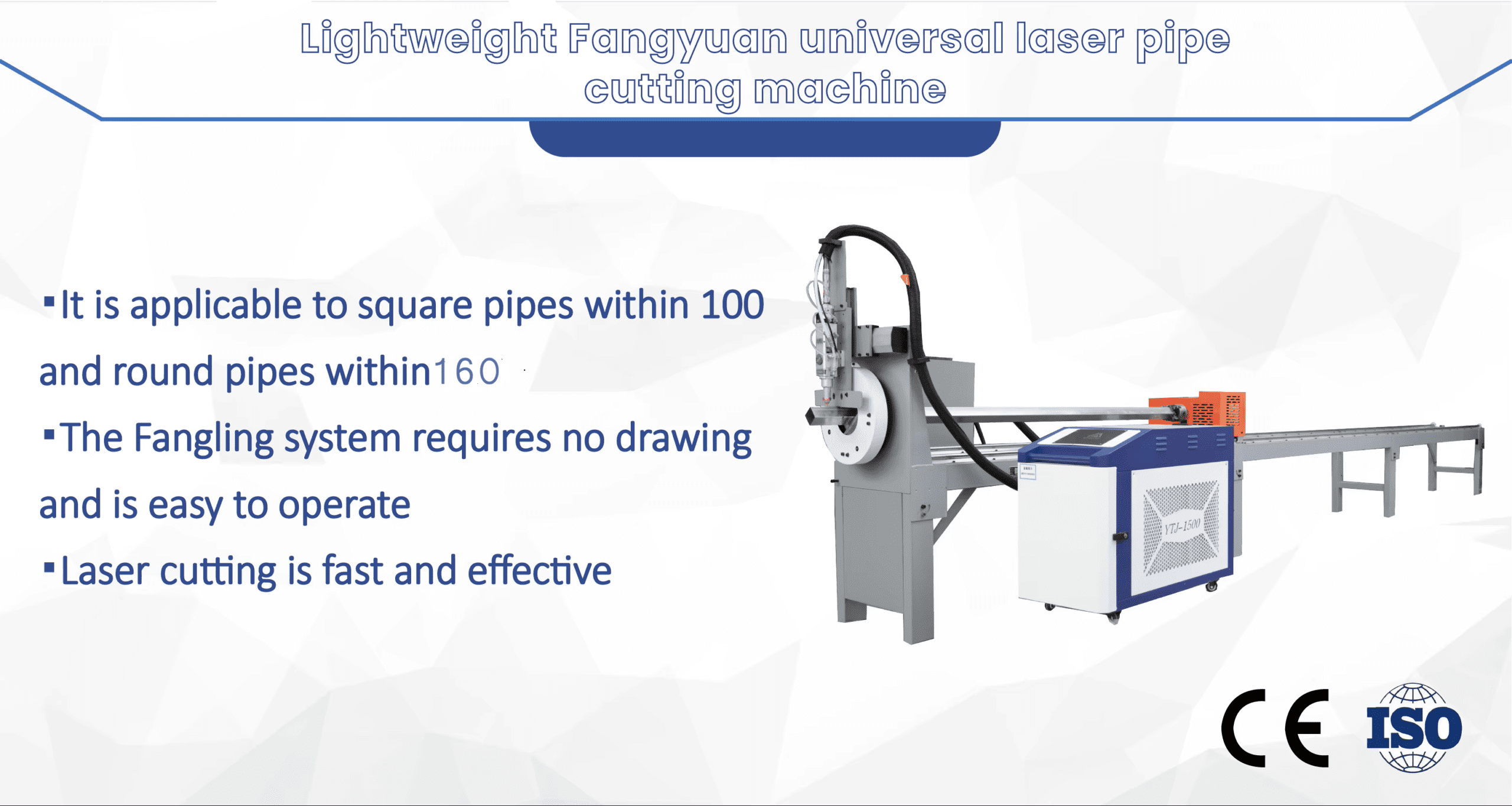
While flat-bed laser cutting is common, tube laser cutting involves unique challenges related to rotational physics and structural support. A 4kW tube laser cutter utilizes a rotary chuck system—often a pneumatic or hydraulic double-chuck design—to rotate the workpiece while the laser head moves along the X and Z axes. This allows for the creation of “fish-mouth” joints, intricate hole patterns, and miter cuts that would be nearly impossible to achieve with manual machining.
Complex Intersections and Nesting
In structural engineering, the intersection of two tubes is a complex geometric problem. Traditional methods require manual layout and grinding. With a 4kW tube laser, the software automatically calculates the intersection path, allowing for a perfect fit-up every time. This is particularly beneficial for Tijuana’s burgeoning automotive and custom chassis industries. Furthermore, nesting software for tube lasers optimizes the layout of parts along the length of a 6-meter or 12-meter raw tube, significantly reducing material waste—a vital consideration given the high cost of stainless steel alloys.
Automatic Loading and Unloading
To maximize the ROI of a 4kW system in a high-labor-cost environment, many Tijuana facilities opt for automatic bundle loaders. These systems can feed raw stainless steel tubes into the machine without operator intervention. As the laser cutting process completes, the finished parts are sorted and the scrap is ejected. This level of automation allows a single operator to manage multiple machines, driving down the cost per part and increasing the overall factory capacity.
Strategic Implementation in Tijuana’s Manufacturing Hub
The geographic location of Tijuana offers unique advantages for companies utilizing 4kW tube laser technology. Being adjacent to the United States allows for “just-in-time” (JIT) manufacturing cycles. A company can receive a CAD file from a designer in California in the morning, perform the laser cutting in Tijuana during the afternoon, and ship the finished stainless steel components back across the border by the next day.
Power Stability and Infrastructure
Operating a high-power 4kW fiber laser requires a stable electrical infrastructure. Modern industrial parks in Tijuana (such as those in Otay Mesa or Florido) provide the necessary voltage stability and amperage to run these machines 24/7. Engineers must ensure that the facility is equipped with proper voltage regulators and chillers, as the fiber source and the cutting head generate significant heat that must be dissipated to maintain a consistent beam quality.
Local Technical Expertise and Maintenance
One of the historical barriers to high-tech adoption in Mexico was the lack of localized technical support. However, the ecosystem in Tijuana has matured. There is now a robust network of field service engineers specialized in fiber laser cutting. Regular maintenance—such as cleaning the protective windows, calibrating the capacitive height sensor, and checking the alignment of the rotary chucks—is essential for maintaining the sub-millimeter tolerances required for stainless steel fabrication.
Economic Impact and Return on Investment (ROI)
Investing in a 4kW tube laser cutter is a significant capital expenditure. However, the ROI is realized through the elimination of secondary processes. In traditional fabrication, a stainless steel tube might be saw-cut, moved to a drill press, then to a milling machine for slotting, and finally deburred. A laser cutting system performs all these actions in a single setup, often in a fraction of the time.
Reducing Labor and Increasing Precision
In the competitive landscape of Tijuana, reducing the number of touches on a part is the key to profitability. By consolidating multiple operations into the laser cutting stage, manufacturers reduce the risk of human error and improve the repeatability of the parts. For stainless steel projects where aesthetic finish is paramount, the non-contact nature of laser cutting ensures that the surface of the tube remains free from scratches and mechanical deformation.
Expanding Market Reach
Facilities in Tijuana equipped with 4kW tube lasers are capable of taking on contracts that smaller shops cannot. The ability to cut thick-walled stainless steel for industrial pressure vessels or high-volume thin-walled tubing for furniture and medical carts opens up diverse revenue streams. As global supply chains continue to “near-shore” production to Mexico, the demand for high-precision laser cutting services is projected to grow exponentially over the next decade.
Conclusion: The Future of Fabrication in Baja California
The 4kW tube laser cutter has redefined what is possible in stainless steel fabrication. For the industrial sector in Tijuana, it represents the bridge between traditional manufacturing and Industry 4.0. By leveraging the speed, precision, and versatility of fiber laser cutting, local manufacturers are not only meeting the rigorous standards of international clients but are also setting new benchmarks for efficiency and quality.
As technology continues to advance, we may see higher wattages and even greater levels of AI-driven automation. However, for the current market, the 4kW system remains the “sweet spot” for stainless steel, providing the perfect blend of power and precision to keep Tijuana at the cutting edge of the global manufacturing industry.