
Precision Engineering: The 4kW Tube laser cutter in Mexico City’s Industrial Sector
The industrial landscape of Mexico City (CDMX) and its surrounding metropolitan areas, such as Tlalnepantla and Naucalpan, is undergoing a significant technological transformation. As the demand for high-precision components in the automotive, aerospace, and food processing industries grows, the adoption of advanced 4kW tube laser cutting technology has become a cornerstone for competitive manufacturing. For engineering firms working with stainless steel, the transition from traditional mechanical sawing and drilling to fiber laser systems represents a quantum leap in both throughput and geometric complexity.
A 4kW fiber laser source provides the optimal balance of power and precision for stainless steel applications. In an environment like Mexico City, where the industrial sector is characterized by a mix of high-volume production and specialized custom fabrication, the versatility of a 4kW system allows for the processing of a wide range of wall thicknesses while maintaining the edge quality required for high-end architectural and industrial projects.
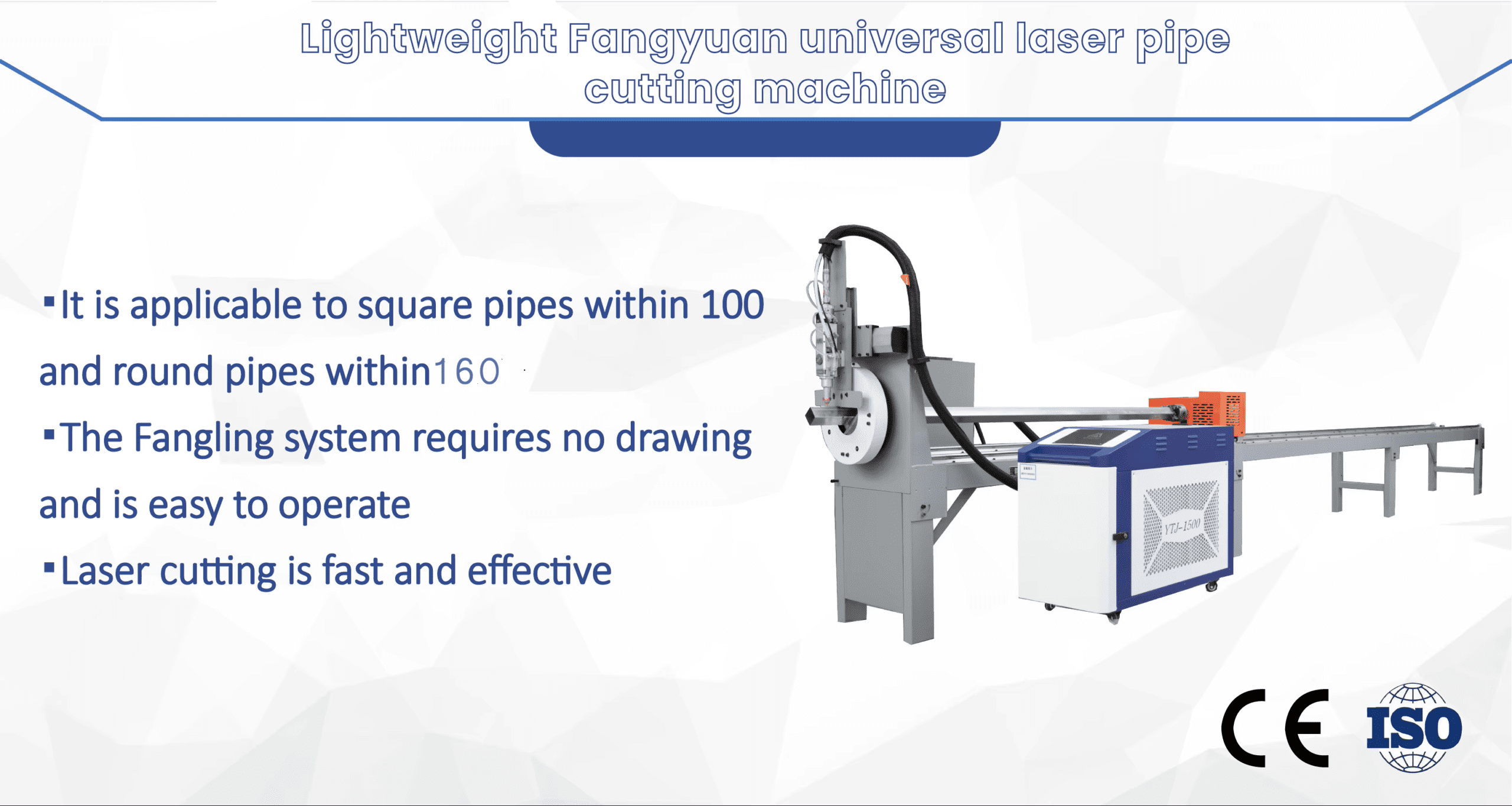
Technical Advantages of 4kW Fiber Laser Sources
The choice of a 4kW power rating is specifically advantageous for stainless steel tube processing. Stainless steel, known for its high reflectivity and thermal conductivity, requires a concentrated energy density to achieve a clean melt-and-blow transition. A 4kW fiber laser generates a beam with a wavelength of approximately 1.06 microns, which is more readily absorbed by stainless steel compared to the 10.6 microns of traditional CO2 lasers.
From an engineering perspective, the 4kW threshold allows for high-speed laser cutting of thin-walled tubes (1mm to 3mm) at rates exceeding 20 meters per minute, while still possessing the “punch” to penetrate thicker sections up to 8mm or 10mm in specialized applications. This power level ensures that the Heat Affected Zone (HAZ) is minimized, preserving the metallurgical properties of the stainless steel—a critical factor for components destined for the chemical or food industries where corrosion resistance is paramount.
Material Focus: Stainless Steel Grades 304 and 316
In the Mexico City market, the two most prevalent grades of stainless steel are AISI 304 and AISI 316. Each presents unique challenges that a 4kW tube laser is uniquely equipped to handle. Grade 304 is widely used in the local food and beverage sector, requiring clean, burr-free cuts to prevent bacterial growth in tubing systems. Grade 316, often utilized in pharmaceutical and marine applications, contains molybdenum, which slightly alters its thermal response during laser cutting.
The 4kW system utilizes high-pressure nitrogen as an assist gas when processing these materials. The nitrogen serves a dual purpose: it mechanically expels the molten metal from the kerf and acts as a cooling agent to prevent oxidation of the cut edge. This results in a “bright” finish that requires no secondary grinding or polishing before welding, significantly reducing labor costs for Mexico City fabricators.
Geometric Versatility and CNC Integration
Modern tube laser cutting machines are not limited to simple cylindrical profiles. The 4kW systems deployed in CDMX’s industrial parks are capable of handling square, rectangular, oval, and even open profiles like C-channels or L-angles. The integration of advanced CNC (Computer Numerical Control) software allows for complex intersections and “fish-mouth” cuts where two tubes meet at varying angles.
For engineers, this means the ability to design interlocking tabs and slots directly into the tube geometry. This “Lego-style” assembly method ensures that during the subsequent welding phase, the parts are self-fixturing. In a high-rent industrial environment like Vallejo or Iztapalapa, reducing the need for expensive physical jigs and fixtures provides a significant overhead advantage.

Environmental and Operational Considerations in Mexico City
Operating high-precision laser cutting equipment in Mexico City presents specific environmental challenges that engineers must address. The city’s altitude (approximately 2,240 meters above sea level) results in lower atmospheric pressure, which can affect the cooling efficiency of air-cooled chillers and the behavior of assist gases.
A 4kW system requires a robust industrial chiller to maintain the stability of the laser resonator and the cutting head. At higher altitudes, the air is thinner, meaning heat exchange is less efficient. Consequently, many facilities in CDMX opt for oversized cooling units or closed-loop liquid systems to ensure the 4kW source remains within its optimal operating temperature range (typically 20°C to 25°C). Furthermore, the power grid in certain industrial zones can be prone to fluctuations; the installation of high-capacity voltage stabilizers and surge protectors is a standard engineering requirement to protect the sensitive fiber optics and servo-drive electronics.
Optimizing Kerf and Precision in Tube Processing
The precision of a 4kW tube laser is measured not just by its speed but by its kerf width control. The kerf—the width of the material removed during the laser cutting process—is typically between 0.1mm and 0.3mm for a 4kW fiber system. This level of precision allows for tolerances as tight as +/- 0.05mm, which is essential for the automotive exhaust systems and chassis components manufactured in the State of Mexico (Edomex) belt surrounding the capital.
To maintain this precision, the machine employs a series of synchronized servo-driven chucks. These chucks rotate the tube with high angular accuracy while the laser head moves along the longitudinal axis. In 4kW systems, the acceleration rates of these axes are critical. High-speed processing of stainless steel requires the machine to maintain a constant feed rate even during complex rotations to ensure uniform heat distribution and avoid “over-burning” at the corners of square tubes.
Software and Nesting for Maximum Yield
With the price of stainless steel being a significant factor in a project’s bill of materials, maximizing material utilization is a priority for Mexico City manufacturers. Modern laser cutting systems are paired with sophisticated nesting software that calculates the most efficient layout of parts on a standard 6-meter or 9-meter tube.
This software accounts for the “dead zone” (the material held by the chuck that cannot be cut) and can implement “common line cutting” where a single laser pass separates two distinct parts. For a 4kW system, the software also manages the lead-in and lead-out strategies to ensure that the piercing point does not mar the aesthetic surface of the stainless steel tube. This is particularly important for architectural installations in areas like Polanco or Santa Fe, where the visual quality of the metalwork is a key project requirement.
Maintenance and Longevity of Fiber Systems
One of the primary reasons engineering firms in Mexico City are favoring 4kW fiber lasers over older technologies is the reduced maintenance requirement. Fiber lasers do not have the internal mirrors or bellows found in CO2 systems, which are prone to contamination in dusty industrial environments. The laser beam is delivered via a flexible fiber optic cable directly to the cutting head.
However, maintenance remains essential. The protective window (cover glass) of the cutting head must be inspected daily, as any dust or splatter from the stainless steel melt can cause the 4kW beam to overheat the lens. In the high-altitude, often high-pollution environment of CDMX, air filtration systems for the machine’s electrical cabinets are also vital to prevent the accumulation of conductive particulates on the circuit boards.
Economic Impact and Future Outlook
The investment in a 4kW tube laser cutter is a strategic move for Mexican companies looking to integrate into North American supply chains (nearshoring). By offering laser cutting capabilities that meet international standards for precision and finish, local shops can compete directly with overseas suppliers. The speed of the 4kW system allows for rapid prototyping, enabling engineers to iterate designs in hours rather than days.
As Mexico City continues to solidify its role as a high-tech manufacturing hub, the reliance on automated tube processing will only increase. The 4kW fiber laser stands at the center of this evolution, providing the power to tackle heavy-duty industrial tasks and the finesse to handle intricate decorative work. For the engineer, it is a tool that removes the traditional constraints of tube fabrication, allowing for lighter, stronger, and more complex stainless steel structures.
Conclusion
The 4kW tube laser cutter is more than just a piece of machinery; it is a catalyst for industrial efficiency in Mexico City. By mastering the nuances of stainless steel processing—from gas dynamics and altitude-related cooling to precision nesting and CNC control—local manufacturers can achieve world-class results. As the technology continues to evolve, the integration of laser cutting into the standard manufacturing workflow will remain a defining characteristic of the region’s engineering excellence.
















