
Maximizing Efficiency with 4kW Tube laser cutting for Stainless Steel in Guadalajara
The industrial landscape of Guadalajara, often referred to as the “Silicon Valley of Mexico,” has undergone a significant transformation over the last decade. As the region solidifies its position as a hub for electronics, automotive manufacturing, and aerospace, the demand for high-precision metal fabrication has skyrocketed. At the center of this manufacturing revolution is the 4kW tube laser cutting machine, a tool that has become indispensable for processing stainless steel with speed, accuracy, and cost-effectiveness. For engineering firms and fabrication shops in Jalisco, understanding the technical nuances of 4kW fiber laser technology is essential for maintaining a competitive edge in a global market.
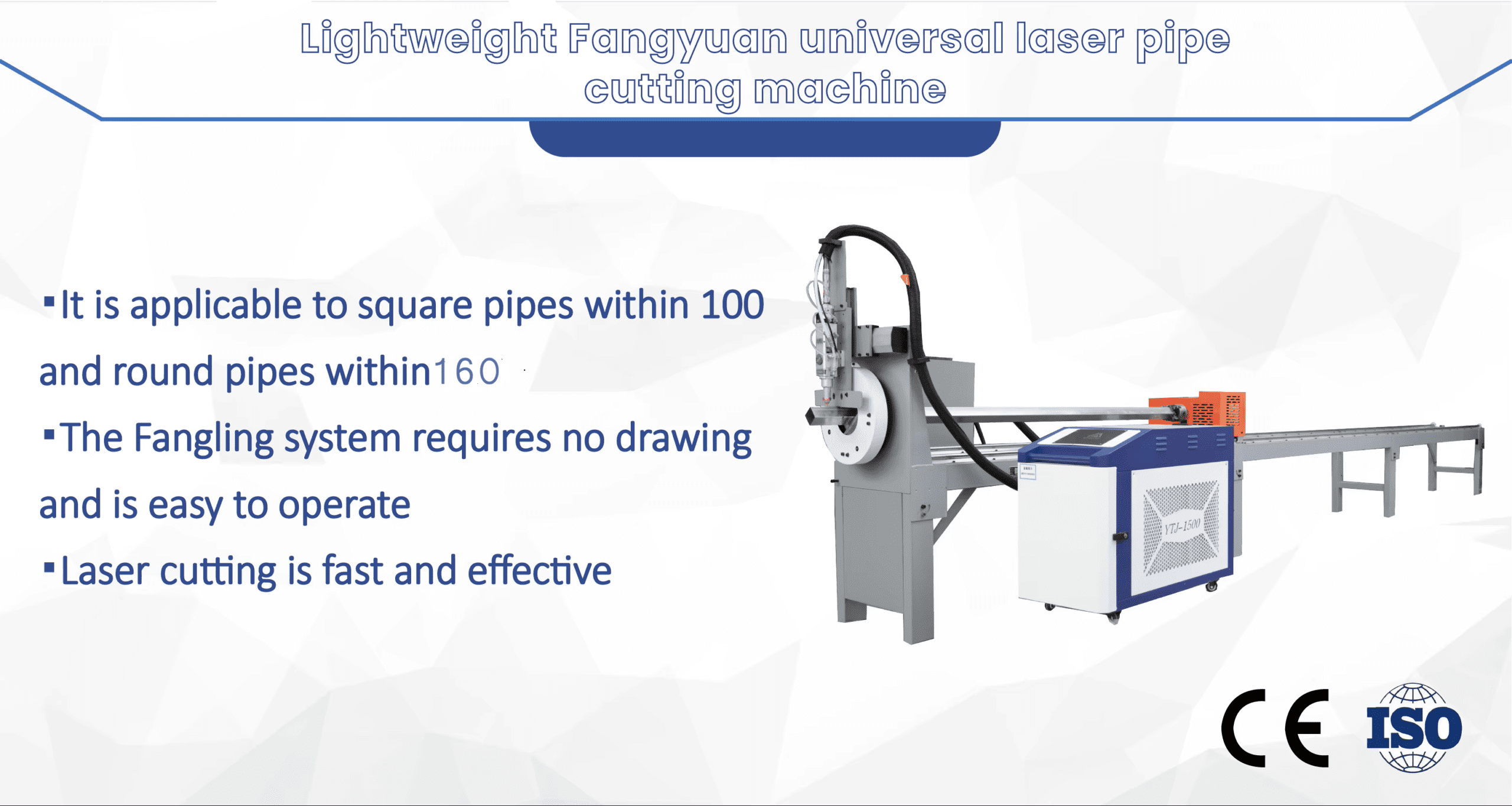
The Engineering Advantage of 4kW Fiber Laser Power
In the realm of laser cutting, power selection is a critical engineering decision. While 1kW or 2kW systems are suitable for thin-walled materials, the 4kW threshold represents a “sweet spot” for industrial applications involving stainless steel tubing. A 4kW fiber laser provides the necessary energy density to achieve high-speed vaporization and melting across a wide range of wall thicknesses, typically ranging from 0.5mm to 12mm for stainless steel alloys.
The primary advantage of the 4kW power level is the increase in feed rates. In stainless steel processing, speed is not merely a matter of productivity; it is a factor in heat management. Faster cutting speeds reduce the Heat Affected Zone (HAZ), preventing the warping and metallurgical changes that can compromise the structural integrity or corrosion resistance of the tube. This is particularly vital for Guadalajara’s food processing and pharmaceutical equipment manufacturers, where the surface finish and material properties of stainless steel must remain pristine after the laser cutting process.
Stainless Steel Processing: Technical Challenges and Solutions
Stainless steel, specifically the 300 and 400 series commonly used in Mexican industry, presents unique challenges for laser cutting. Its high reflectivity and thermal conductivity require a laser source with high beam quality (M2 factor) and a stable wavelength. Fiber lasers, operating at approximately 1.06 microns, are absorbed more efficiently by stainless steel than traditional CO2 lasers.
When using a 4kW system, the choice of assist gas becomes paramount. For stainless steel, Nitrogen is the industry standard. Nitrogen serves as a shielding gas that expels molten material from the kerf without reacting with the metal. This results in an oxide-free, bright cut edge that requires no secondary finishing before welding. In the high-humidity environment of Guadalajara during the rainy season, maintaining gas purity and optimizing nozzle pressure is essential to prevent dross accumulation on the bottom of the tube.
Precision Engineering in Tube Manipulation
The mechanical architecture of a 4kW tube laser is as important as the laser source itself. Unlike flat-bed lasers, tube laser cutting involves complex multi-axis synchronization. Modern machines utilize high-precision pneumatic or hydraulic chucks that must maintain a firm grip on the workpiece while rotating at high speeds. For Guadalajara-based shops handling long architectural sections or heavy industrial piping, the ability to handle various profiles—including round, square, rectangular, and oval tubes—is a significant operational advantage.
The 4kW systems often feature advanced “active” sensing technology. This allows the cutting head to compensate for tube deviations, such as bowing or twisting, in real-time. In engineering terms, this ensures that the focal point remains constant relative to the material surface, maintaining a consistent kerf width and preventing “lost cuts” that lead to material waste. For the automotive sector in Jalisco, where tolerances are measured in microns, this level of mechanical precision is non-negotiable.

Applications in the Guadalajara Industrial Corridor
Guadalajara’s diverse economy provides a wide array of applications for 4kW tube laser cutting technology. In the construction and architectural sectors, stainless steel handrails, structural supports, and decorative facades are produced with intricate geometries that were previously impossible or too expensive to achieve with mechanical sawing and drilling.
The region’s famous tequila and beverage industry also benefits significantly. Large-scale distilleries require complex stainless steel piping systems and heat exchangers. A 4kW laser can cut the precise apertures required for manifold connections and flanges, ensuring a perfect fit-up for robotic welding. This reduces the labor costs associated with manual grinding and fitting, which are traditional bottlenecks in heavy fabrication.
Furthermore, the furniture manufacturing industry in Zapopan and Tlaquepaque has embraced laser cutting to create modern, lightweight stainless steel frames. The ability to cut complex interlocking joints (tab-and-slot designs) directly into the tube eliminates the need for expensive jigs and fixtures during assembly, streamlining the entire production workflow.
Optimizing the Workflow: Software and Nesting
To fully realize the potential of a 4kW tube laser, sophisticated CAD/CAM software is required. Engineering teams in Guadalajara are increasingly adopting “smart nesting” algorithms that maximize material utilization. Because stainless steel is a high-cost commodity, reducing scrap by even 5% can result in thousands of dollars in annual savings.
Advanced software allows for the simulation of the laser cutting path, identifying potential collisions and optimizing the sequence of cuts to maintain tube stability. This is especially important when processing large diameter tubes or heavy-walled sections where the center of gravity shifts during the cutting process. By integrating the design phase with the manufacturing phase, engineers can design parts that are optimized for the laser’s capabilities, such as incorporating “micro-joints” to keep small parts from falling into the machine bed and causing damage.
Maintenance and Technical Support in Jalisco
Investing in a 4kW tube laser cutting system is a long-term commitment. For businesses in Guadalajara, local technical support and the availability of consumables (nozzles, protective windows, and ceramic rings) are critical factors. The fiber laser source itself is remarkably durable, often rated for 100,000 hours of operation, but the peripheral systems—such as the water chiller and the dust extraction unit—require regular maintenance to ensure peak performance.
Given Guadalajara’s industrial growth, several major machine tool manufacturers have established service centers in the region. Engineering managers must prioritize a preventative maintenance schedule that includes checking the alignment of the beam path, calibrating the chuck pressure, and ensuring the cleanliness of the optical components. A well-maintained 4kW system will deliver consistent cut quality and minimize unplanned downtime, which is essential for meeting the “just-in-time” delivery requirements of the automotive and electronics supply chains.
Conclusion: The Future of Metal Fabrication in Guadalajara
The adoption of 4kW tube laser cutting technology represents a significant leap forward for the manufacturing sector in Guadalajara. By combining high-power fiber laser sources with precision CNC controls, local fabricators can produce complex, high-quality stainless steel components that meet international standards. As the “Silicon Valley of Mexico” continues to attract high-tech investment, the ability to provide advanced laser cutting services will be a defining characteristic of the region’s most successful engineering firms.
Whether it is for the production of sanitary tubing for the food industry, structural components for aerospace, or aesthetic elements for modern architecture, the 4kW tube laser is the tool that bridges the gap between design vision and physical reality. By mastering the technical requirements of stainless steel processing and leveraging the efficiency of modern laser technology, Guadalajara’s industrial community is well-positioned to lead the way in the next era of global manufacturing.
















