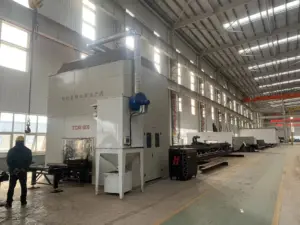
Introduction to 4kW Tube laser cutting in Puebla’s Industrial Sector
The industrial landscape of Puebla, Mexico, has undergone a significant transformation over the last decade. As a primary hub for automotive manufacturing, aerospace components, and heavy construction, the demand for precision-engineered metal components has never been higher. Among the various technologies driving this evolution, the 4kW tube laser cutter stands out as a critical asset for fabricators. This guide explores the technical nuances of utilizing 4kW fiber laser technology, specifically focusing on the challenges and advantages of processing galvanized steel within the unique environmental and economic context of the Puebla region.
Laser cutting technology has transitioned from a high-end luxury to an industrial necessity. For shops in Puebla—ranging from Tier 1 automotive suppliers to local structural steel fabricators—the ability to process tubing with high speed and micron-level accuracy is a competitive requirement. The 4kW power rating is widely considered the “sweet spot” for tube processing, offering a perfect balance between capital investment and high-speed throughput for materials up to 10mm or 12mm in wall thickness.

The Technical Advantages of 4kW Fiber Laser Power
A 4kW fiber laser source provides a high energy density that is particularly effective for tube applications. Unlike flat-sheet cutting, tube laser cutting involves complex geometries, including round, square, rectangular, and oval profiles. The 4kW threshold allows the beam to penetrate thicker wall sections while maintaining a narrow kerf width, which is essential for tight-tolerance assemblies. In the context of fiber technology, the wavelength is approximately 1.06 microns, which is more readily absorbed by metallic surfaces compared to traditional CO2 lasers, resulting in faster processing speeds and lower energy consumption.
For engineers in Puebla, the 4kW system offers the versatility to handle a wide range of production schedules. Whether the task involves thin-walled exhaust components for the automotive sector or heavy-duty structural frames for construction projects near the Cholula or industrial zones, the 4kW power level ensures that the machine is rarely underpowered. This overhead in power also contributes to cleaner cuts, as the laser can maintain a stable plasma state during the cutting process, reducing the need for secondary finishing operations.
Processing Galvanized Steel: Challenges and Engineering Solutions
Galvanized steel is a staple material in Puebla’s construction and automotive industries due to its superior corrosion resistance. However, laser cutting galvanized material presents unique metallurgical challenges. The primary issue is the zinc coating, which has a much lower melting point (approx. 419°C) than the base steel (approx. 1500°C). During the laser cutting process, the zinc vaporizes before the steel melts, often creating high-pressure gas that can interfere with the laser beam’s stability or cause “spatter” on the nozzle and the workpiece.
Managing Zinc Vaporization and Fume Extraction
When cutting galvanized tubes, the vaporization of zinc creates toxic fumes (zinc oxide). In an industrial setting like Puebla, adherence to environmental and occupational health standards is paramount. A high-performance 4kW tube laser must be equipped with a robust, localized fume extraction system. Engineers must ensure that the extraction velocity is sufficient to capture these heavy particles before they settle on the machine’s precision optical components or are inhaled by operators. Furthermore, the use of high-pressure nitrogen as an assist gas is mandatory. Nitrogen acts as a mechanical force to blow away the molten zinc and steel, preventing the zinc from oxidizing and creating a “burr” or “dross” on the underside of the cut.
Optimizing Assist Gas Selection
In the 4kW range, the choice of assist gas significantly impacts the quality of galvanized steel processing. While oxygen can be used to increase cutting speeds through an exothermic reaction, it often results in a charred, oxidized edge that compromises the integrity of the galvanized layer near the cut. For high-quality industrial applications in Puebla, Nitrogen is the preferred choice. It provides a “cold cut” that leaves a clean, weld-ready edge. The 4kW power provides enough thermal energy to compensate for the lack of exothermic reaction from oxygen, allowing for high-speed nitrogen cutting even on thicker-walled galvanized tubes.

Environmental Considerations for Laser Cutting in Puebla
Puebla’s geography introduces specific variables that engineers must account for when operating a 4kW tube laser. Situated at an altitude of approximately 2,135 meters above sea level, the atmospheric pressure is lower than at sea level. This can affect the cooling efficiency of the laser’s chiller system and the behavior of assist gases. At higher altitudes, air is less dense, which may require adjustments to the pneumatic systems and the cooling parameters to prevent the laser source from overheating during long production cycles.
Climate Control and Humidity Management
While Puebla generally enjoys a temperate climate, the rainy season can bring significant humidity. Fiber lasers are sensitive to environmental conditions; condensation on the cutting head or the internal optics can lead to catastrophic failure. A professional shop setup in Puebla should include a climate-controlled enclosure for the laser source and a high-quality air filtration and drying system for the pneumatic lines. Maintaining a consistent temperature and low humidity ensures that the 4kW beam remains stable and that the machine’s electronic components are protected from corrosion.
Impact of Altitude on Assist Gas Dynamics
The lower atmospheric pressure in Puebla can influence the fluid dynamics of the assist gas as it exits the nozzle. Engineers may find that slightly higher gas pressures are required to achieve the same “clearing force” as a machine operated at sea level. When laser cutting galvanized steel, this is particularly important, as any residual zinc that is not cleared from the kerf will solidify and create a difficult-to-remove slag. Calibration of the gas delivery system should be performed on-site to account for these regional atmospheric variables.
Operational Excellence and Maintenance Protocols
To maximize the ROI of a 4kW tube laser cutter, a rigorous maintenance schedule is required. The complexity of tube-feeding mechanisms—including the front and rear chucks, the loading racks, and the centering rollers—means there are more moving parts than a standard flat-bed laser. In Puebla’s high-output environments, these machines often run multiple shifts, making preventative maintenance the difference between profit and downtime.
Optical Integrity and Nozzle Calibration
The 4kW beam is delivered through a fiber optic cable to the cutting head, where it is focused by a series of lenses. In galvanized steel applications, the risk of “back-reflection” and “spatter” is high. Operators must inspect the protective window (cover glass) frequently. Even a microscopic speck of dust or zinc can absorb the 4kW energy, causing the lens to crack or explode. Furthermore, nozzle centering and height sensor calibration are critical. Because tube surfaces are not always perfectly concentric, the height sensor must react instantaneously to maintain a constant focal point, ensuring the laser cutting process remains uniform around the entire circumference of the tube.
Mechanical Calibration of the Chuck System
Precision laser cutting of tubes relies on the synchronization of the chucks. The 4kW power allows for fast travel speeds, but if the chucks are not perfectly aligned or if the clamping pressure is incorrect, the tube may vibrate or slip. This is especially true for galvanized tubes, which may have a slightly slicker surface due to the zinc coating. Regular lubrication of the chuck tracks and calibration of the rotational axis are essential for maintaining the +/- 0.1mm tolerances expected in modern manufacturing.
Economic Impact and Future of Fabrication in Puebla
The integration of 4kW tube laser cutting technology provides Puebla-based companies with a significant edge in the North American market. With the “nearshoring” trend bringing more manufacturing back to Mexico, the ability to produce complex, high-quality galvanized steel components quickly is invaluable. A 4kW laser replaces multiple traditional steps—sawing, drilling, milling, and deburring—into a single automated process.
Cost-Benefit Analysis for Local Shops
While the initial investment in a 4kW tube laser is substantial, the reduction in labor costs and material waste provides a rapid return on investment. In the galvanized steel sector, the precision of laser cutting means that parts fit together perfectly for welding, reducing the time spent on jigs and manual adjustments. For the automotive clusters in Puebla and nearby Tlaxcala, this level of repeatability is non-negotiable. The efficiency of the 4kW fiber source also results in lower electricity bills compared to older CO2 technology, which is a vital consideration given the rising energy costs in industrial zones.
Conclusion
The 4kW tube laser cutter represents the pinnacle of efficiency for processing galvanized steel in Puebla’s demanding industrial environment. By understanding the specific requirements of zinc-coated materials, accounting for the regional altitude, and maintaining strict operational protocols, fabricators can achieve world-class results. As Puebla continues to grow as a global manufacturing center, those who master the art of precision laser cutting will lead the way in innovation and productivity.