
Comprehensive Engineering Guide: 4kW Tube laser cutting for Carbon Steel in Tijuana
The manufacturing landscape in Tijuana, Baja California, has undergone a significant transformation over the last decade, evolving from basic assembly to high-precision engineering. Central to this evolution is the implementation of advanced fiber laser technology. Among the various power configurations available, the 4kW tube laser cutter has emerged as the industry standard for processing carbon steel. This guide explores the technical intricacies, operational advantages, and regional considerations for deploying a 4kW system within the Tijuana industrial corridor.
The Technical Advantage of 4kW Fiber Sources
A 4kW (4000-watt) fiber laser source represents a critical “sweet spot” in modern fabrication. For carbon steel, which is the backbone of the automotive, construction, and aerospace industries in the Cali-Baja region, this power level offers an optimal balance between speed, edge quality, and operational cost. Unlike lower-wattage systems that may struggle with thicker walls, a 4kW laser provides the energy density required to maintain a stable melt pool at high feed rates.
The 1.06-micron wavelength of fiber laser cutting is particularly effective for carbon steel. The material’s absorption rate at this wavelength allows for efficient energy transfer, resulting in a narrow kerf and a minimal heat-affected zone (HAZ). This is crucial for Tijuana-based manufacturers who must adhere to strict tolerances required by international clients in the United States and beyond.
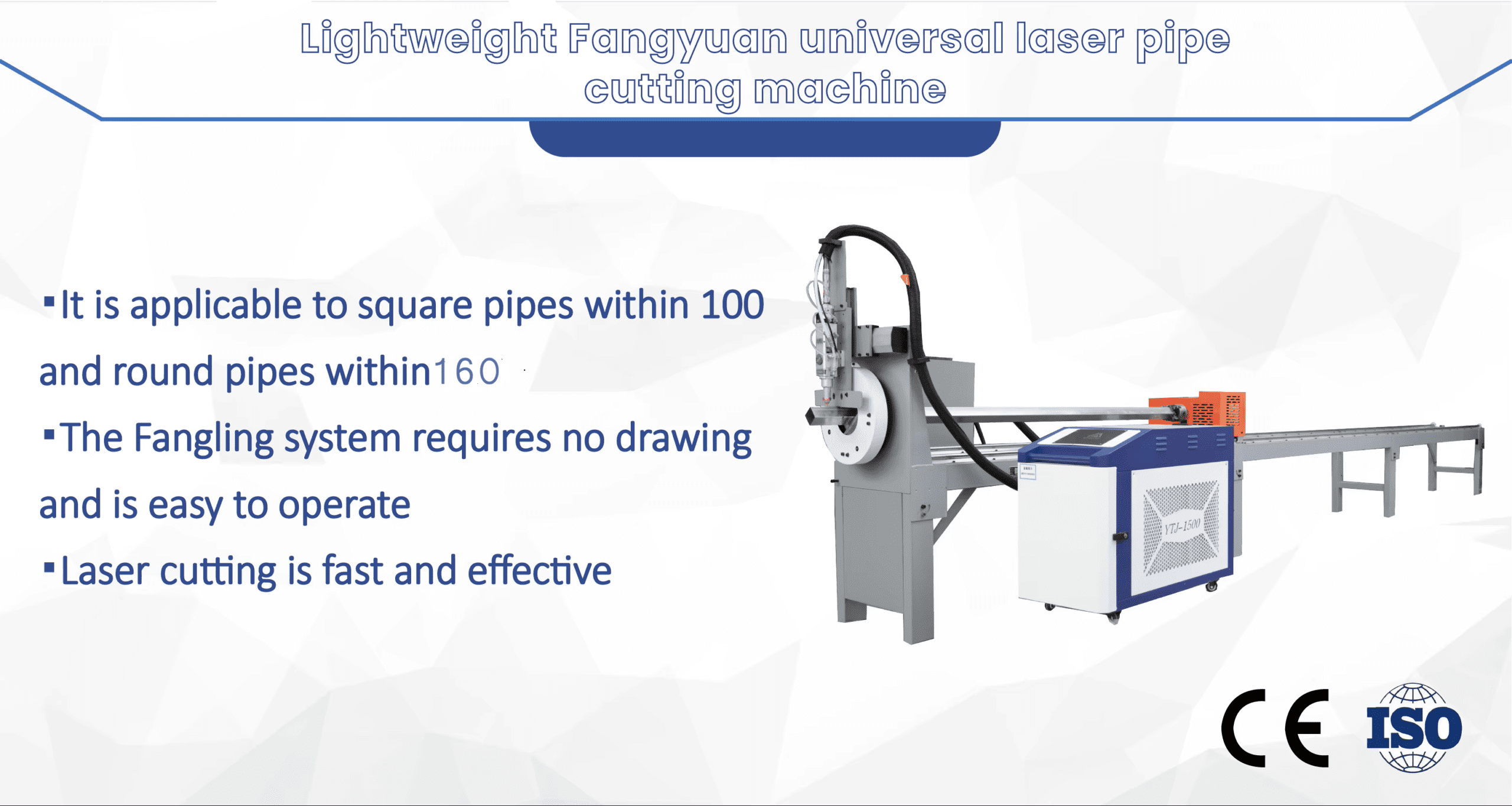
Material Specifics: Processing Carbon Steel
Carbon steel remains the most widely used material in tube fabrication due to its structural integrity and cost-effectiveness. When utilizing a 4kW tube laser cutter, engineers can expect high-performance results across various grades, including A36, A513, and high-strength low-alloy (HSLA) steels.
For wall thicknesses ranging from 1mm to 10mm, the 4kW system excels. In the 1mm to 4mm range, the laser cutting speed is exceptionally high, often limited more by the mechanical movement of the chucks than the laser’s ability to melt the metal. As the thickness increases to 6mm or 8mm, the 4kW source provides the “punch” necessary to maintain a clean exit at the bottom of the cut, preventing the accumulation of dross or slag. This reduces the need for secondary finishing processes, which is a significant factor in reducing labor costs in high-volume Tijuana maquiladoras.
The Tijuana Manufacturing Ecosystem
Operating a 4kW tube laser cutter in Tijuana offers unique geographic and economic advantages. As a primary hub for the “nearshoring” movement, Tijuana provides proximity to the U.S. market while maintaining a competitive cost structure. However, this environment also presents specific engineering challenges that must be addressed.
Power stability is a primary concern for high-wattage CNC machinery. In industrial zones like Otay Mesa or El Florido, fluctuations in the electrical grid can impact the sensitive electronics of a fiber laser. It is standard engineering practice in the region to install industrial-grade voltage stabilizers and uninterruptible power supplies (UPS) to protect the 4kW resonator and the CNC control system. Furthermore, the coastal humidity of Tijuana requires robust air filtration and drying systems for the assist gases to prevent contamination of the optical path.
Operational Dynamics: Assist Gas Selection
In the laser cutting of carbon steel, the choice of assist gas is a fundamental variable. For a 4kW system, the two primary options are Oxygen (O2) and Nitrogen (N2).
Oxygen is traditionally used for carbon steel because it triggers an exothermic reaction, adding thermal energy to the cutting process. This allows for the cutting of thicker sections with lower laser power. However, it leaves an oxide layer on the cut edge that must be removed if the part is to be painted or powder-coated.
Nitrogen, on the other hand, relies solely on the 4kW laser’s energy to melt the metal, using high pressure to blow the molten material away. This results in a “bright” or oxide-free edge. With 4kW of power, manufacturers in Tijuana can effectively use Nitrogen for carbon steel tubes up to 4mm or 5mm thick, significantly increasing throughput for parts destined for immediate finishing or welding.

Automation and Throughput in Tube Fabrication
The 4kW tube laser cutter is rarely a standalone unit in a modern Tijuana facility. To maximize the ROI of such a high-performance machine, integration with automated loading and unloading systems is essential. Tube laser cutting involves complex movements: the rotation of the chucks must be perfectly synchronized with the linear movement of the laser head.
Advanced 4kW systems feature high-speed chucks capable of handling various profiles, including round, square, rectangular, and even open profiles like C-channels or L-angles. In the context of Tijuana’s diverse manufacturing base—ranging from furniture to heavy machinery—the ability to switch between different tube geometries with minimal setup time is a competitive necessity. Automatic nesting software further optimizes material usage, reducing scrap rates in carbon steel processing, which is vital given the global fluctuations in raw material prices.
Maintenance Protocols for the 4kW System
To ensure 24/7 uptime in a demanding Tijuana production environment, a rigorous preventative maintenance schedule is mandatory. The 4kW fiber laser source itself is solid-state and requires relatively little maintenance compared to older CO2 technology. However, the delivery optics and the cutting head are susceptible to the harsh conditions of a metal fabrication shop.
Key maintenance tasks include:
- Optical Inspection: Daily checks of the protective window to prevent dust or spatter from damaging the focus lens.
- Chiller Maintenance: The 4kW source generates significant heat. The water cooling system must be kept clean, with biocide levels monitored to prevent algae growth which can clog internal channels.
- Lubrication: The high-speed rails and rack-and-pinion systems that drive the laser cutting head require consistent lubrication to maintain the ±0.03mm positioning accuracy expected of these machines.
- Calibration: Periodic calibration of the capacitive height sensor ensures the nozzle maintains a constant distance from the tube surface, which is critical when dealing with tubes that may have slight geometric deviations.
Economic Impact and ROI for Local Fabricators
For a fabrication shop in Tijuana, investing in a 4kW tube laser cutter is a strategic move toward higher-margin contracts. The speed of a 4kW system allows a single machine to replace multiple traditional processes, such as sawing, drilling, and milling. By consolidating these operations into a single laser cutting pass, the “cost per part” drops dramatically.
Furthermore, the precision of the laser allows for the design of “tab-and-slot” assemblies. This engineering technique enables parts to self-fixture, reducing the need for expensive welding jigs and lowering the skill level required for final assembly. In the competitive Tijuana labor market, reducing the reliance on highly specialized fitters can provide a significant operational advantage.
Future-Proofing with 4kW Technology
As the industry moves toward Industry 4.0, the 4kW tube laser cutter serves as a data-rich node in the factory network. Modern CNC controllers provide real-time feedback on power consumption, gas usage, and cutting time. For Tijuana manufacturers, this data is invaluable for accurate quoting and for meeting the traceability requirements of the ISO 9001 and IATF 16949 standards common in the region.
In conclusion, the 4kW tube laser cutter is a powerhouse of versatility for carbon steel fabrication in Tijuana. Its ability to deliver high-precision cuts at industrial speeds makes it an indispensable tool for any facility looking to compete on a global scale. By understanding the technical nuances of the fiber source, the material properties of carbon steel, and the specific environmental requirements of the Baja California region, engineers can maximize the potential of this technology to drive innovation and efficiency in their manufacturing processes.
















