
The Evolution of Industrial Fabrication: The 4kW Tube laser cutter in Leon
The industrial landscape in Leon has undergone a significant transformation over the last decade, transitioning from traditional mechanical fabrication methods to high-precision automated systems. At the forefront of this revolution is the 4kW fiber laser cutting technology. For engineering firms and manufacturing plants specializing in carbon steel, the adoption of a 4kW tube laser cutter represents a strategic leap in production capacity, precision, and cost-efficiency.
A 4kW power rating is widely considered the “sweet spot” for industrial tube processing. It provides sufficient energy density to maintain high feed rates on thin-walled sections while possessing the raw power required to penetrate thick-walled carbon steel profiles. In Leon’s competitive industrial sector—ranging from automotive component manufacturing to structural engineering—the ability to deliver clean, dross-free cuts on complex geometries is no longer an advantage; it is a requirement.
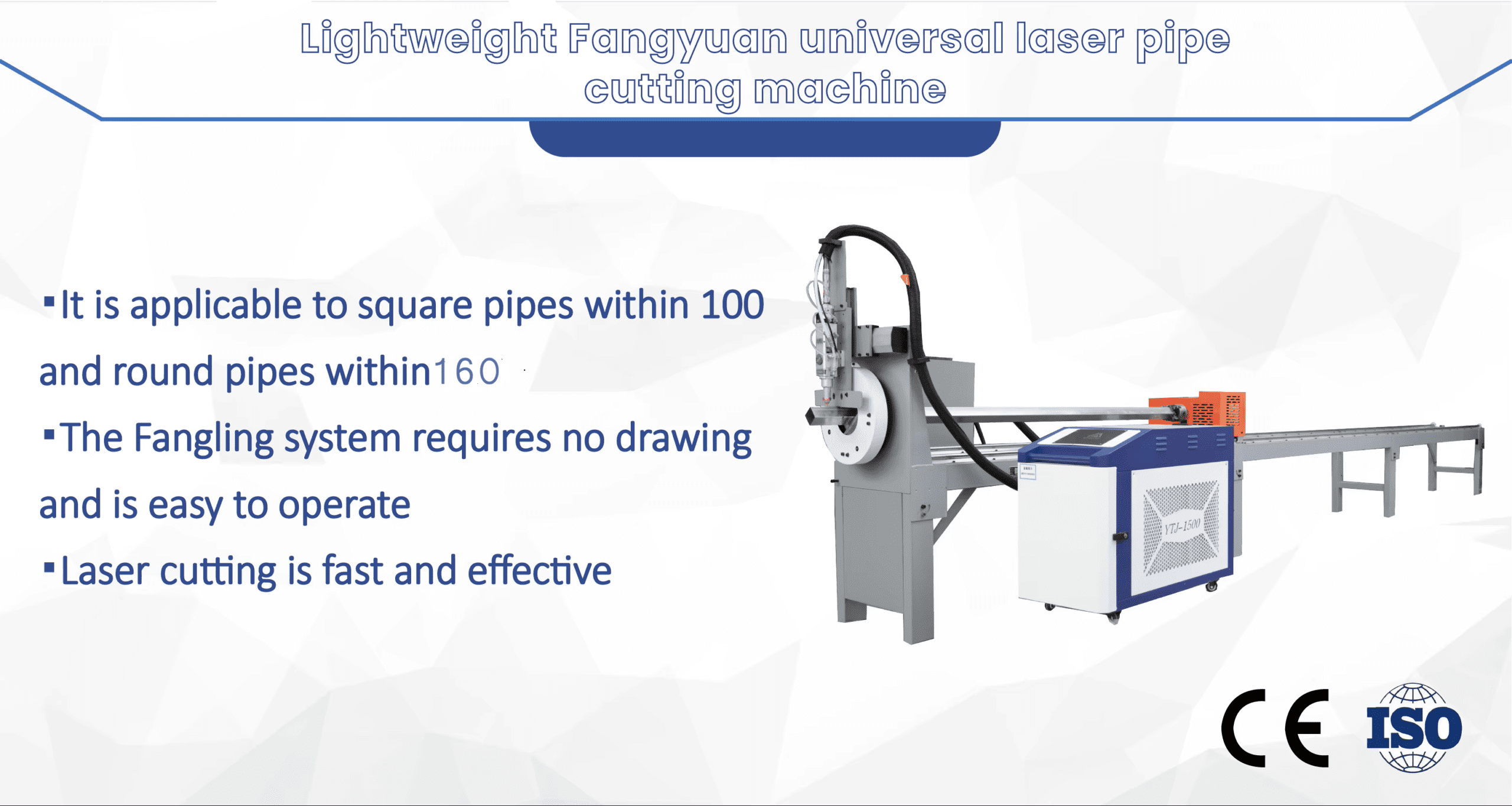 laser cutting machine MAK160″>
Technical Specifications and Fiber Laser Architecture
The 4kW tube laser cutter utilizes fiber laser technology, where the laser beam is generated by a bank of diodes and transmitted through a flexible fiber optic cable. This architecture is inherently more efficient than older CO2 systems. For the engineers in Leon, this translates to a wall-plug efficiency of approximately 30-35%, significantly reducing operational overheads.
The wavelength of a fiber laser (typically around 1.06 microns) is absorbed much more readily by carbon steel than the longer wavelength of CO2 lasers. This high absorption rate allows for faster laser cutting speeds, especially in the 1mm to 8mm thickness range. The 4kW source provides the necessary intensity to maintain a stable melt pool, ensuring that the kerf width remains narrow and the heat-affected zone (HAZ) is minimized. This is critical for maintaining the structural integrity of carbon steel tubes intended for load-bearing applications.
Processing Carbon Steel: Metallurgical Considerations
Carbon steel is the backbone of the Leon industrial sector. Whether it is square, rectangular, or circular tubing, the material’s response to laser cutting depends heavily on the assist gas and the power modulation of the 4kW source.
When processing carbon steel, two primary methods are employed:
1. Oxygen-Assisted Cutting
For thicker carbon steel walls (6mm and above), oxygen is the preferred assist gas. The oxygen reacts exothermically with the iron in the steel, adding thermal energy to the process. This allows a 4kW machine to cut through thicknesses that would otherwise require much higher power levels. However, this process creates a thin oxide layer on the cut edge. For manufacturers in Leon who require subsequent welding or painting, this oxide layer must often be removed to ensure proper adhesion.
2. Nitrogen-Assisted High-Pressure Cutting
For thinner sections or when a weld-ready finish is required, nitrogen is used. Nitrogen acts as a shielding gas, blowing the molten material out of the kerf without reacting with the metal. While this requires more power to achieve the same speed as oxygen cutting, the 4kW output is more than sufficient to maintain high velocities on carbon steel tubes up to 4mm or 5mm. The result is a bright, clean edge that requires no post-processing.

The Leon Industrial Context: Applications and Impact
Leon has established itself as a hub for heavy machinery and structural steel fabrication. The integration of 4kW tube laser cutting systems has directly impacted several key local sectors:
Automotive and Transport: The production of chassis components and safety cages requires extreme precision. The 4kW laser can process high-strength carbon steel tubes with tolerances as tight as +/- 0.1mm, ensuring that every part fits perfectly in the assembly jig, reducing the need for manual adjustment.
Agricultural Machinery: Leon’s surrounding agricultural regions rely on robust machinery. Laser cutting allows for the creation of complex interlocking joints (tabs and slots) in heavy-duty carbon steel frames. This “Lego-style” assembly reduces welding time and increases the overall structural rigidity of the equipment.
Construction and Infrastructure: From architectural features to structural supports, the ability to cut large diameter tubes with intricate patterns has opened new design possibilities for Leon-based architects and civil engineers. The 4kW source handles the heavy-wall carbon steel used in these sectors with ease.
Precision Engineering: The Role of the Chuck and Loading Systems
While the 4kW laser source is the heart of the machine, the mechanical delivery system is equally vital. High-end tube laser cutting machines feature pneumatic or hydraulic chucks that can compensate for the slight irregularities often found in carbon steel tubing (such as “banana” bowing or twisting).
In a high-throughput environment like Leon, manual loading is a bottleneck. Modern 4kW systems are often equipped with automated bundle loaders. These systems measure the tube length, detect the orientation, and feed the material into the machine without operator intervention. This maximizes the “beam-on” time, ensuring that the 4kW source is consistently generating value. For carbon steel, which is often sourced in 6-meter or 12-meter lengths, these automated systems are essential for maintaining a competitive edge.
Optimizing the Laser Cutting Process for Maximum ROI
To achieve the best results with a 4kW tube laser in Leon, operators must focus on three critical variables: nozzle selection, focal point positioning, and gas pressure.
Nozzle Selection: A double nozzle is often used for carbon steel when cutting with oxygen to stabilize the gas flow. For nitrogen cutting, a larger diameter single nozzle is used to allow for the high volume of gas required to clear the melt.
Focal Point: For carbon steel, the focal point is usually set at or slightly above the material surface when using oxygen. When using nitrogen for high-speed laser cutting, the focus is often buried deep within the material to ensure the widest possible kerf at the bottom, facilitating dross removal.
Nesting Software: Advanced software is used to optimize the layout of parts on a single tube. In Leon, where material costs for carbon steel can fluctuate, minimizing scrap through intelligent nesting and “common line cutting” (where one cut serves the edge of two parts) can save thousands of euros annually.
Maintenance and Longevity of 4kW Fiber Lasers
One of the primary reasons Leon’s engineering firms are moving toward 4kW fiber systems is the reduced maintenance compared to CO2 lasers. There are no internal mirrors to align and no bellows to maintain. However, “maintenance-free” does not mean “service-free.”
The protective window (cover glass) is the most critical consumable. It protects the expensive focusing lens from back-splatter during the piercing process. In carbon steel laser cutting, especially with oxygen, piercing can be violent. Utilizing “staged piercing” techniques—where the laser ramps up power and changes frequency during the initial hole—can extend the life of the cover glass and ensure consistent cut quality.
Furthermore, the chiller system must be meticulously maintained. A 4kW laser generates significant heat, and the fiber source and cutting head must be kept within a narrow temperature range to prevent thermal drift, which can affect the accuracy of the laser cutting process.
Conclusion: The Future of Fabrication in Leon
The 4kW tube laser cutter is more than just a tool; it is a catalyst for industrial growth in Leon. By providing the power to handle thick carbon steel and the precision to execute complex designs, it allows local manufacturers to compete on a global stage. As the industry moves toward further automation and Industry 4.0 integration, the data generated by these machines—tracking cut times, gas consumption, and material yield—will become the foundation of smart factories across the region.
For any facility in Leon looking to modernize its workflow, the 4kW fiber tube laser represents the most versatile investment available today. It bridges the gap between heavy-duty industrial capacity and high-tech precision, ensuring that “Made in Leon” remains a mark of engineering excellence in the world of carbon steel fabrication.
















