
The Strategic Implementation of 4kW Tube laser cutting for Brass in Tijuana’s Manufacturing Sector
The industrial landscape of Tijuana, Baja California, has undergone a significant transformation, evolving from basic assembly plants to sophisticated high-tech manufacturing hubs. At the center of this evolution is the adoption of advanced fiber laser technology. Specifically, the 4kW tube laser cutter has emerged as a critical tool for processing non-ferrous metals like brass. This guide explores the engineering nuances, operational requirements, and economic advantages of utilizing 4kW laser cutting systems for brass tubing within the unique context of the Tijuana manufacturing corridor.
Understanding the 4kW Fiber Laser Advantage
In the realm of laser cutting, power selection is a critical engineering decision. A 4kW fiber laser represents a “sweet spot” for many industrial applications. Unlike CO2 lasers of the past, fiber lasers operate at a wavelength of approximately 1.06 microns, which is much more readily absorbed by metals, especially those with high thermal conductivity and reflectivity like brass.
For brass tubing, 4kW of power provides sufficient energy density to overcome the material’s initial reflectivity while maintaining high feed rates. This power level allows for the processing of wall thicknesses ranging from 0.5mm up to 8mm or more, depending on the specific alloy and the assist gas used. In the fast-paced production environments of Tijuana’s maquiladoras, this speed translates directly into lower part costs and higher throughput.

The Technical Challenge of Cutting Brass
Brass is a copper-zinc alloy characterized by its excellent electrical conductivity, corrosion resistance, and aesthetic appeal. However, from a laser cutting perspective, it is classified as a “highly reflective” material. In the early days of laser technology, cutting brass was hazardous to the machine itself; the laser beam would bounce off the surface of the metal and travel back into the delivery fiber or the resonator, causing catastrophic damage.
Modern 4kW fiber systems are equipped with advanced back-reflection protection. These systems use optical isolators and sensors that can detect reflected light in microseconds, shutting down the beam before damage occurs. Furthermore, the high energy density of a 4kW beam quickly transitions the brass from a solid to a molten state, at which point the reflectivity drops significantly, and the laser cutting process becomes stabilized.
Tijuana: A Hub for Precision Brass Components
Tijuana’s proximity to the United States and its established supply chains make it an ideal location for precision metal fabrication. The demand for brass components in this region is driven by several key sectors:
- Electronics and Telecommunications: Connectors, housings, and RF shielding often require the precision of laser cutting.
- Medical Devices: Brass is used in various diagnostic and surgical instruments where antimicrobial properties and machinability are required.
- Decorative and Architectural Hardware: High-end fixtures for the Southern California construction market are frequently produced in Tijuana.
- Automotive: Specialized bushings and fluid handling connectors.
The ability to perform high-speed laser cutting on-site in Tijuana allows manufacturers to reduce lead times significantly compared to overseas sourcing, providing a competitive edge in the “just-in-time” manufacturing environment.
Operational Parameters for 4kW Brass Tube Cutting
Achieving a clean, burr-free cut in brass requires precise control over several variables. Engineering teams must calibrate the machine specifically for the alloy grade (such as C260 or C360).
Assist Gas Selection: Oxygen vs. Nitrogen
The choice of assist gas is paramount in laser cutting. For brass, two primary options exist:
1. Oxygen (O2): Oxygen acts as an exothermic reactant, adding heat to the cutting process. This allows for faster speeds on thicker brass tubes but often results in an oxidized edge that may require post-processing if the part is to be plated or welded.
2. Nitrogen (N2): Nitrogen is used as a high-pressure shielding gas. It blows the molten metal out of the kerf without reacting with it. This results in a “bright” or “clean” cut edge, which is essential for decorative applications or parts requiring high-quality finishes. A 4kW system provides the necessary power to maintain productivity even when using Nitrogen, which lacks the thermal boost of Oxygen.
Nozzle Geometry and Focal Position
For tube processing, the focal point must be accurately maintained relative to the tube’s surface. Because tubes can have slight dimensional deviations or “bowing,” 4kW machines used in Tijuana are typically equipped with “auto-focus” cutting heads. These heads use capacitive sensors to maintain a constant standoff distance, ensuring that the laser cutting remains consistent as the tube rotates.
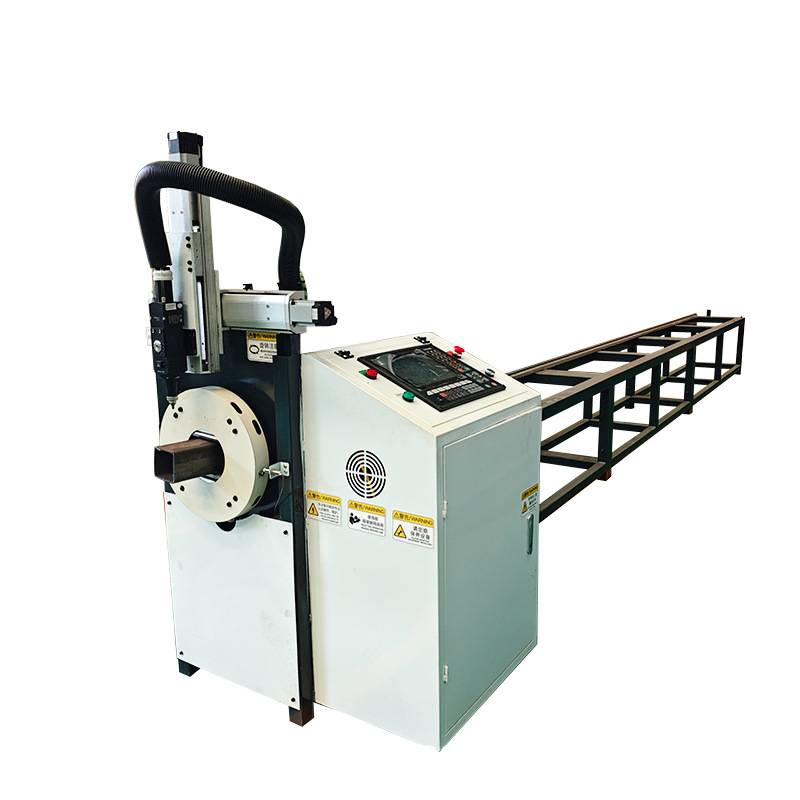
Tube Handling and Geometric Versatility
The “tube” aspect of the 4kW tube laser cutter refers to its ability to handle various profiles beyond simple round pipes. This includes square, rectangular, oval, and even custom extruded shapes. In the context of Tijuana’s diverse manufacturing base, this versatility is invaluable.
Advanced Chucking Systems
Modern machines utilize pneumatic or hydraulic chucks that can automatically adjust to the diameter and shape of the brass tube. For thin-walled brass, which is prone to deformation, “soft-clamping” technologies are employed. This ensures the tube is held securely for precision laser cutting without crushing or marking the delicate surface of the brass.
Nesting and Waste Reduction
Software plays a vital role in the efficiency of laser cutting. Advanced CAD/CAM systems allow for “tube nesting,” where multiple parts are arranged on a single length of brass tubing to minimize scrap. Given the high cost of brass as a raw material, reducing waste by even a few percentage points can result in thousands of dollars in annual savings for a Tijuana-based shop.
Maintenance and Safety Protocols in the Tijuana Climate
Tijuana’s coastal environment and industrial dust levels necessitate a rigorous maintenance schedule for 4kW laser systems. High-reflectivity materials like brass put additional stress on the optical components.
Optics and Chiller Maintenance
The protective windows (cover slips) in the cutting head must be inspected daily. Any dust or brass splatter on the lens can absorb the 4kW energy, leading to thermal cracking. Additionally, the chiller system—which cools both the fiber resonator and the cutting head—must be maintained to handle the ambient temperatures of the region, ensuring the laser frequency remains stable.
Fume Extraction
Laser cutting brass produces fine metal particulates and zinc oxide fumes. High-efficiency dust collection and filtration systems are mandatory in Tijuana facilities to comply with environmental regulations and protect operator health. These systems must be sized correctly to handle the volume of fumes generated by high-speed 4kW operations.
Economic Impact and Future Outlook
The integration of 4kW tube laser cutting technology is a cornerstone of Tijuana’s “Industry 4.0” initiative. By moving away from traditional mechanical sawing and drilling toward automated laser processes, local manufacturers are achieving tolerances of +/- 0.1mm. This precision is vital for the assembly of complex sub-systems used in the aerospace and defense industries located across the border in San Diego and beyond.
As the cost of fiber laser technology continues to become more accessible, we expect to see an even higher density of these machines in the Baja California region. The 4kW power level remains the industrial standard for brass, providing the perfect balance of speed, capability, and operational cost.
Conclusion
For engineers and facility managers in Tijuana, the 4kW tube laser cutter is more than just a tool; it is a gateway to high-value contract manufacturing. By mastering the complexities of laser cutting brass—from managing back-reflections to optimizing gas pressures—local shops can position themselves as essential partners in the North American supply chain. The combination of local labor expertise and world-class laser technology ensures that Tijuana will remain a leader in precision metal fabrication for years to come.
















