
The Strategic Advantage of 4kW Precision Laser Systems in Queretaro
The industrial landscape of Queretaro, Mexico, has undergone a radical transformation over the last decade, evolving into a premier hub for aerospace, automotive, and high-tech manufacturing. At the heart of this evolution is the demand for extreme precision in metal fabrication. The 4kW precision laser system represents the current “gold standard” for medium-to-high thickness processing, particularly when dealing with the rigorous demands of stainless steel. As Queretaro-based enterprises strive to meet international quality standards such as AS9100 and IATF 16949, the integration of advanced laser cutting technology is no longer optional—it is a strategic necessity.
A 4kW fiber laser offers a unique balance of power, beam quality, and operational efficiency. Unlike lower-wattage systems that may struggle with thicker gauges or higher-wattage systems that incur significantly higher utility costs, the 4kW variant provides the versatility required for the diverse industrial portfolio found in the Bajío region. From intricate medical components to robust structural elements for the automotive sector, this power class ensures clean edges, minimal dross, and high throughput.

Technical Specifications and the 4kW Power Band
Understanding the physics of a 4kW fiber laser is essential for engineering teams in Queretaro. Fiber lasers utilize an optical fiber doped with rare-earth elements as the active gain medium. This configuration allows for a beam that is significantly more concentrated than traditional CO2 lasers. In a 4kW system, the energy density at the focal point is sufficient to vaporize stainless steel almost instantaneously, allowing for high-speed laser cutting without compromising the integrity of the material.
For stainless steel applications, the 4kW threshold is particularly significant. It allows for efficient nitrogen-assisted cutting of stainless steel up to 12mm or even 15mm with high edge quality. The wavelength of a fiber laser—typically around 1.06 microns—is absorbed more readily by metals compared to the 10.6 microns of a CO2 laser. This increased absorption rate translates directly into faster processing speeds and a reduced heat-affected zone (HAZ), which is critical for maintaining the corrosion resistance and mechanical properties of stainless steel alloys.
Optimizing Stainless Steel Fabrication in the Bajío Region
Stainless steel is prized for its corrosion resistance and aesthetic appeal, but it presents specific challenges during the laser cutting process. In Queretaro’s competitive market, fabricators must manage the high thermal expansion coefficient of stainless steel to prevent warping. A 4kW precision system addresses this through advanced thermal management and high-speed piercing cycles. By reducing the time the laser dwells on a single point, the total heat input into the workpiece is minimized.
The choice of assist gas is another critical factor. While oxygen can be used for carbon steel, stainless steel almost exclusively requires high-purity nitrogen for precision applications. The nitrogen acts as a shielding gas, blowing away the molten metal before it can react with atmospheric oxygen. This results in a “bright cut” edge that requires no secondary finishing or oxide removal before welding or painting—a major cost-saver for high-volume production lines in the El Marqués or Santa Rosa Jáuregui industrial parks.
Precision Engineering and Motion Control
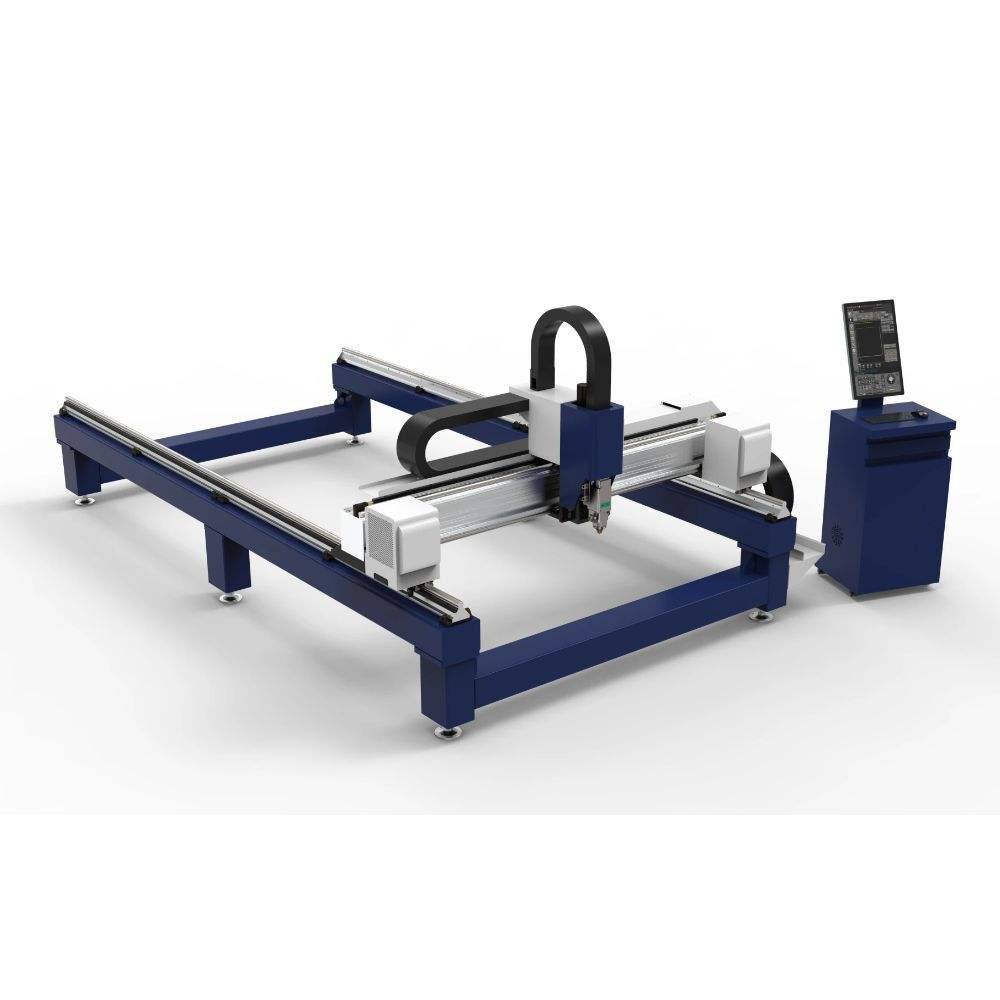
A 4kW laser source is only as effective as the motion control system that directs it. Precision laser cutting requires a machine frame with high structural rigidity and vibration damping. In Queretaro’s high-precision shops, machines are often equipped with helical rack and pinion systems and high-torque AC servo motors. These components allow for accelerations of up to 1.5G or 2.0G, ensuring that the laser can navigate complex geometries without slowing down excessively at corners.
The CNC controller serves as the brain of the operation. Modern systems utilize sophisticated algorithms for “look-ahead” path planning, which adjusts the laser power and gas pressure in real-time based on the cutting speed. This is vital when cutting intricate patterns in stainless steel, as it prevents over-burning at sharp angles. For engineers in Queretaro, selecting a system with an intuitive interface and compatibility with industry-standard CAD/CAM software (like Lantek or SigmaNEST) is crucial for minimizing the “art-to-part” cycle time.
The Role of Assist Gas Dynamics
In the context of 4kW laser cutting, the nozzle design and gas pressure regulation are often overlooked but are fundamentally important. To achieve a dross-free finish on 6mm or 8mm stainless steel, the gas flow must be laminar and centered perfectly with the laser beam. High-pressure nitrogen (often exceeding 15-20 bar) is required to ensure the melt is ejected cleanly. Many top-tier shops in Queretaro are now investing in nitrogen generation systems to reduce their reliance on external gas suppliers, thereby stabilizing their overhead costs and improving their environmental footprint.
Precision nozzles with chrome plating or specialized geometries help focus the gas stream and protect the internal optics from back-spatter. In a 4kW system, the focal position is also highly sensitive. Auto-focus cutting heads are standard in this power range, allowing the machine to automatically adjust the focus point for different material thicknesses, ensuring consistent quality throughout a mixed-production run.
Operational Excellence in Queretaro’s Industrial Ecosystem
Queretaro’s manufacturing sector is characterized by its integration into global supply chains. When a Tier 1 automotive supplier requires a batch of stainless steel brackets, they expect zero-defect quality and just-in-time delivery. The 4kW laser system facilitates this through high reliability and low maintenance requirements. Fiber lasers have no moving parts or mirrors in the light-generation source, which significantly reduces the maintenance intervals compared to older technology.
Furthermore, the energy efficiency of a 4kW fiber laser is roughly 3-4 times higher than that of a CO2 laser. Given the rising energy costs in Mexico, this efficiency provides a direct competitive advantage. Smaller workshops in Queretaro can now compete with larger firms by leveraging the lower operating costs of fiber technology to offer more aggressive pricing on stainless steel laser cutting contracts.
Maintenance and Longevity of High-Precision Systems
To maintain the precision of a 4kW system in the dusty or humid environments sometimes found in industrial zones, a strict maintenance protocol is required. The chiller unit, which cools both the laser source and the cutting head, must be maintained with deionized water and anti-corrosive additives. Any fluctuation in temperature can cause the laser wavelength to shift slightly or lead to thermal expansion in the optics, which degrades the laser cutting quality.
Optical cleanliness is the most critical factor in precision. Even a microscopic dust particle on the protective window can absorb laser energy, leading to “thermal lensing” where the beam becomes distorted. Operators in Queretaro’s leading facilities are trained in “clean-room” techniques for handling optics, ensuring that the 4kW system operates at peak performance for years. Regular calibration of the bed’s squareness and the Z-axis height sensor further ensures that the precision advertised by the manufacturer is the precision delivered on the shop floor.
Conclusion: The Future of Laser Technology in Central Mexico
As Queretaro continues to position itself as a global leader in advanced manufacturing, the adoption of 4kW precision laser systems will only accelerate. The ability to process stainless steel with speed, accuracy, and cost-effectiveness is the cornerstone of modern metal fabrication. By investing in high-quality laser cutting equipment, local companies are not just buying a machine; they are investing in the capability to meet the world’s most demanding engineering challenges.
The synergy between Queretaro’s skilled workforce and state-of-the-art fiber laser technology creates a powerhouse of productivity. Whether it is for the aerospace corridors of Colón or the automotive plants in Jurica, the 4kW laser remains the most versatile and powerful tool in the fabricator’s arsenal, driving the region toward a future of unprecedented precision and industrial growth.
















