Introduction to 4kW Precision Laser Systems in Tijuana’s Manufacturing Sector
The industrial landscape of Tijuana, Baja California, has undergone a massive transformation over the last decade, evolving into a global hub for aerospace, medical device manufacturing, and automotive assembly. Central to this evolution is the implementation of high-power fiber laser technology. The 4kW precision laser system represents the “sweet spot” of industrial efficiency, offering a perfect balance between raw cutting power and fine-tuned accuracy. For manufacturers working with galvanized steel—a staple in the region’s construction and automotive sectors—the 4kW system provides the necessary energy density to overcome the unique metallurgical challenges posed by zinc coatings.
In the context of the Tijuana-San Diego binational mega-region, speed and precision are not merely advantages; they are requirements. The 4kW fiber laser allows for high-velocity laser cutting across a variety of thicknesses, ensuring that local maquiladoras can meet the rigorous “Just-in-Time” delivery schedules demanded by international partners. This guide explores the technical nuances of operating these systems specifically for galvanized materials within the unique environmental and economic climate of Tijuana.
Technical Specifications of the 4kW Fiber Laser
A 4kW precision laser system utilizes a fiber-optic delivery method where the laser beam is generated within an active optical fiber and delivered via a flexible cable to the cutting head. Unlike traditional CO2 lasers, the 1.06-micron wavelength of a fiber laser is more readily absorbed by metals, particularly reflective ones. This increased absorption rate translates to faster processing speeds and a smaller heat-affected zone (HAZ).
Beam Quality and Power Density
The “precision” aspect of a 4kW system is defined by its beam parameter product (BPP). A lower BPP indicates a beam that can be focused into a smaller spot size, resulting in higher power density. When processing galvanized steel, this high power density is critical for vaporizing the zinc layer and the steel substrate simultaneously, preventing the zinc from melting and flowing into the kerf, which often causes slag or dross formation.
 laser cutting machine” style=”width: 100%; max-width: 800px; height: auto; margin: 20px 0;”>
Structural Integrity and Motion Control
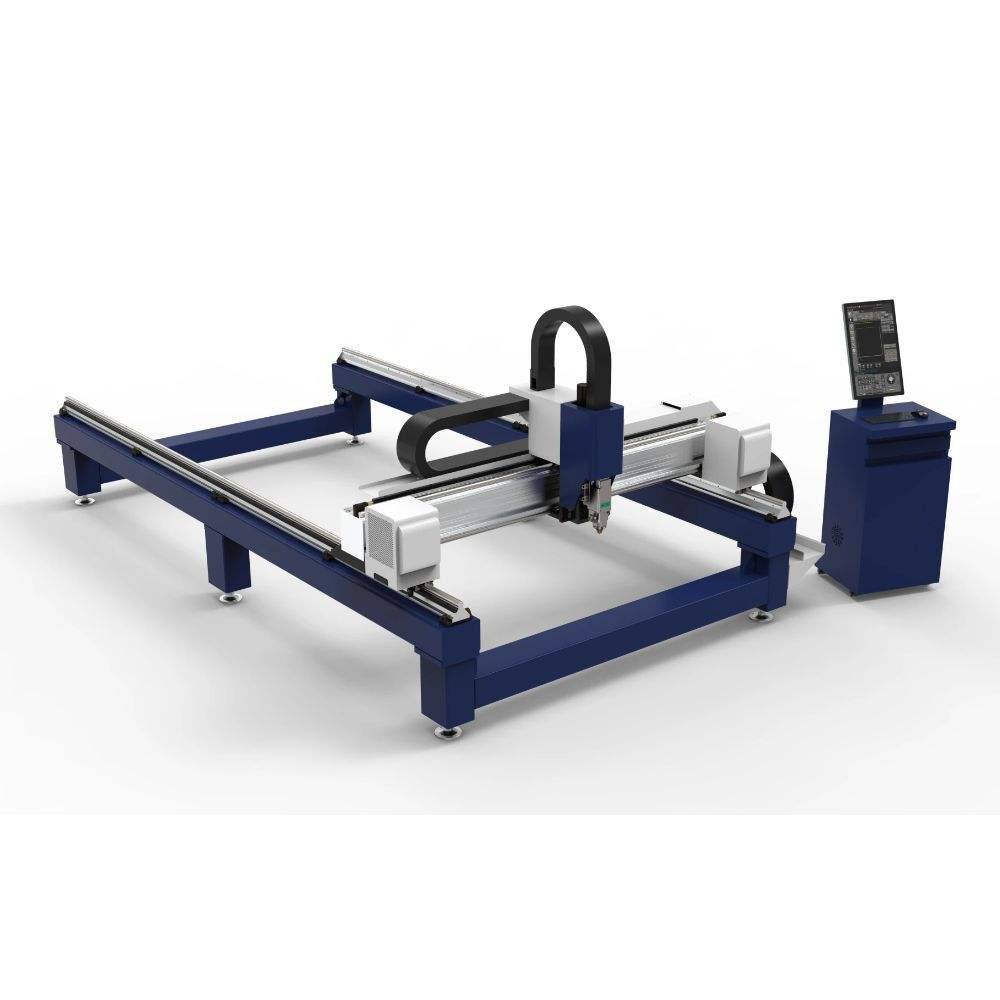
To achieve precision at 4kW, the machine frame must be exceptionally rigid. Most high-end systems utilized in Tijuana’s heavy industries employ a gantry-style design with high-torque servo motors and helical rack-and-pinion drives. This ensures that even at high acceleration rates (often exceeding 1.2G), the laser cutting head maintains a positional accuracy within microns. This is vital for complex geometries required in medical housing or aerospace bracketry.
Challenges of Cutting Galvanized Steel
Galvanized steel is carbon steel coated with a protective layer of zinc. While excellent for corrosion resistance, it presents specific hurdles for laser cutting. The boiling point of zinc (approx. 907°C) is significantly lower than the melting point of steel (approx. 1370°C-1500°C). As the laser interacts with the material, the zinc coating vaporizes before the steel melts, creating high-pressure gas that can interfere with the stability of the laser beam and the assist gas flow.
Managing Zinc Vapor and Dross
One of the primary issues in galvanized processing is “dross” or “burr” formation on the underside of the cut. This occurs when the vaporized zinc becomes trapped in the molten steel. A 4kW system provides sufficient energy to maintain a wide enough kerf to allow these vapors to escape, provided the assist gas pressure is optimized. In Tijuana’s humid coastal environment, the management of these vapors is also a health and safety priority, requiring robust filtration systems to handle zinc oxide particles.
Reflectivity and Internal Optics
While fiber lasers are better at handling reflections than CO2 lasers, galvanized coatings can still be highly reflective during the initial piercing phase. Modern 4kW systems are equipped with back-reflection isolators that protect the laser source from returning photons. This is especially important for the high-volume production environments found in Tijuana, where equipment downtime can lead to significant financial losses in the supply chain.
Optimization Strategies for Tijuana Manufacturers
Operating a 4kW laser in Tijuana requires a localized strategy that accounts for material sourcing, power stability, and environmental factors. The region often sources galvanized sheets from both Mexican and US suppliers, leading to slight variations in coating thickness (e.g., G60 vs. G90). Precision laser cutting requires adjusting parameters to account for these differences.
Assist Gas Selection: Nitrogen vs. Oxygen
The choice of assist gas is the most critical factor in 4kW laser cutting of galvanized steel.
- Nitrogen: Used for high-pressure cutting (15-20 bar). Nitrogen acts as a mechanical force to blow away molten material without reacting with the metal. This results in a clean, oxide-free edge that is ready for immediate welding or painting—a huge advantage for Tijuana’s automotive suppliers.
- Oxygen: Used as a chemical catalyst to speed up the cutting process in thicker sections. However, oxygen can cause excessive burning of the zinc layer, leading to a wider HAZ and potential corrosion issues at the edge.
For most precision applications in the 4kW range, Nitrogen is the preferred choice to maintain the integrity of the galvanized protection near the cut edge.
Nozzle Selection and Stand-off Distance
A double-nozzle configuration is often recommended for galvanized steel. This design helps stabilize the assist gas flow and protects the protective window of the laser head from zinc splatter. Maintaining a consistent stand-off distance (the gap between the nozzle and the workpiece) is essential; even a 0.1mm deviation can result in poor cut quality or a “lost” cut in the middle of a high-speed run.
Environmental and Operational Considerations in Tijuana
Tijuana’s geography presents specific challenges for high-precision machinery. The proximity to the Pacific Ocean introduces salt air, which can accelerate corrosion on non-protected machine components. Furthermore, the local power grid can experience fluctuations that are detrimental to sensitive fiber laser resonators.
Climate Control and Filtration
A 4kW laser generates significant heat. In Tijuana, where temperatures can fluctuate, using a high-efficiency dual-circuit chiller is mandatory. One circuit cools the laser source, while the other cools the cutting head optics. Additionally, because laser cutting galvanized steel produces toxic zinc oxide fumes, high-capacity dust collectors with HEPA filtration are necessary to comply with Mexican environmental regulations (PROFEPA) and ensure worker safety.
Power Conditioning
Precision laser cutting depends on a stable voltage. Many facilities in the Otay Mesa or Florido industrial zones invest in industrial voltage regulators and Uninterruptible Power Supplies (UPS). This prevents “micro-stuttering” in the laser beam, which can cause striations on the cut surface of the galvanized steel, leading to rejected parts during quality control inspections.
Economic Impact and Competitive Advantage
The adoption of 4kW precision laser systems provides Tijuana-based manufacturers with a distinct competitive edge in the North American market. The ability to process galvanized steel with high speed and minimal post-processing reduces the “Cost Per Part.”
Reduction in Secondary Operations
Traditional methods of cutting galvanized steel, such as mechanical shearing or plasma cutting, often damage the zinc coating or leave heavy burrs that require manual grinding. The precision of a 4kW fiber laser minimizes the heat-affected zone, preserving the galvanic protection as close to the edge as possible. By eliminating the need for secondary deburring, shops can increase their throughput by up to 40%.
Nesting and Material Efficiency
Advanced CNC software integrated with 4kW systems allows for incredibly tight nesting of parts. Given the rising costs of raw materials, the ability to reduce scrap by even 5% can result in thousands of dollars in monthly savings for a high-volume manufacturer. In the competitive landscape of Tijuana’s maquiladora industry, these margins often determine who wins the next major contract.
Maintenance Protocols for Longevity
To maintain “precision” over the lifespan of a 4kW laser, a rigorous maintenance schedule is required. Galvanized steel is particularly “dirty” compared to stainless or cold-rolled steel. The vaporization of zinc creates a fine dust that can settle on the machine’s linear guides and optical components.
Daily and Weekly Procedures
Operators should perform daily inspections of the protective window (cover slide). Any speck of zinc dust on the lens can absorb laser energy, heat up, and eventually crack the optic. Weekly cleaning of the slats and the scrap drawers is also necessary to prevent fire hazards and ensure proper airflow for the vacuum system. In Tijuana’s industrial environment, checking the chiller’s pH levels and conductivity is also vital to prevent internal corrosion of the laser source.
The Role of Local Support
For businesses in Tijuana, having access to local technical support and spare parts (such as nozzles, ceramics, and lenses) is a strategic necessity. Downtime in a 4kW system can halt an entire assembly line. Many regional distributors now offer specialized training for local operators, focusing on the specific parameters needed for the various grades of galvanized steel used in Mexican manufacturing.
Conclusion: The Future of Laser Processing in the Region
The 4kW precision laser system is more than just a tool; it is a cornerstone of modern industrial capability in Tijuana. By mastering the complexities of laser cutting galvanized steel—balancing gas pressures, power settings, and environmental factors—local manufacturers can continue to provide world-class components to the global market. As fiber laser technology continues to advance, the integration of AI-driven sensors and real-time monitoring will further enhance the precision of these machines, ensuring that Tijuana remains at the forefront of the international manufacturing stage.
Investing in a 4kW system is a commitment to quality and efficiency. For the engineers and floor managers in Baja California, understanding the synergy between the laser’s power and the material’s properties is the key to unlocking the full potential of this remarkable technology.