Mastering the 4kW Precision Laser System for Carbon Steel Fabrication in Tijuana
The industrial landscape of Tijuana has undergone a radical transformation over the last decade. As one of the most significant manufacturing hubs in North America, the city’s “maquiladora” sector has shifted from basic assembly to high-precision engineering. Central to this evolution is the implementation of advanced fiber laser technology. Specifically, the 4kW precision laser system has emerged as the gold standard for processing carbon steel, offering a perfect equilibrium between cutting speed, edge quality, and operational cost. For engineers and plant managers in the Otay Mesa and Valle de las Palmas industrial zones, understanding the technical nuances of 4kW laser cutting is essential for maintaining a competitive edge in the global supply chain.
The Technical Superiority of 4kW Fiber Lasers
A 4kW fiber laser system operates by generating a high-intensity beam through a series of laser diodes, which is then amplified in a fiber optic cable doped with rare-earth elements. This beam is delivered via a flexible transport fiber to the cutting head. Unlike CO2 lasers, which require complex mirror alignments, the fiber system is solid-state, making it significantly more robust in the vibrating environments of a busy Tijuana workshop. The 4kW power rating is particularly significant for carbon steel because it provides the necessary energy density to achieve high-speed melt-expulsion without excessive heat accumulation in the surrounding material.
 laser cutting machine” style=”width: 100%; max-width: 800px; height: auto; margin: 20px 0;”>
Carbon Steel: The Backbone of Tijuana’s Manufacturing
Carbon steel remains the most utilized material in the region’s automotive, aerospace, and construction sectors. Whether it is A36 structural steel or 1018 cold-rolled sheets, the material’s response to laser cutting is highly dependent on its carbon content and surface finish. A 4kW system excels here, as it can efficiently process carbon steel thicknesses ranging from 0.5mm up to 22mm. In the thinner ranges (1mm to 6mm), the 4kW system provides lightning-fast feed rates, often exceeding 30 meters per minute. When moving into thicker plates (12mm to 20mm), the precision optics of a 4kW head ensure that the kerf remains narrow and the taper is minimized, which is critical for parts destined for high-tolerance assemblies.
Optimizing Assist Gases: Oxygen vs. Nitrogen
In the context of laser cutting carbon steel, the choice of assist gas is a critical engineering decision. For most carbon steel applications in Tijuana, oxygen (O2) is the primary choice. The oxygen reacts exothermically with the heated steel, adding thermal energy to the cutting process and allowing for the separation of thicker plates at lower power levels. However, this results in an oxide layer on the cut edge. For industries such as medical device manufacturing or high-end electronics enclosures located in the Tijuana-San Diego corridor, nitrogen (N2) may be used as a “fusion cutting” gas. While nitrogen requires more power (making the 4kW capacity essential) and results in slower speeds for thick materials, it produces a clean, oxide-free edge that is immediately ready for powder coating or welding without secondary grinding.
Precision Engineering and Motion Control
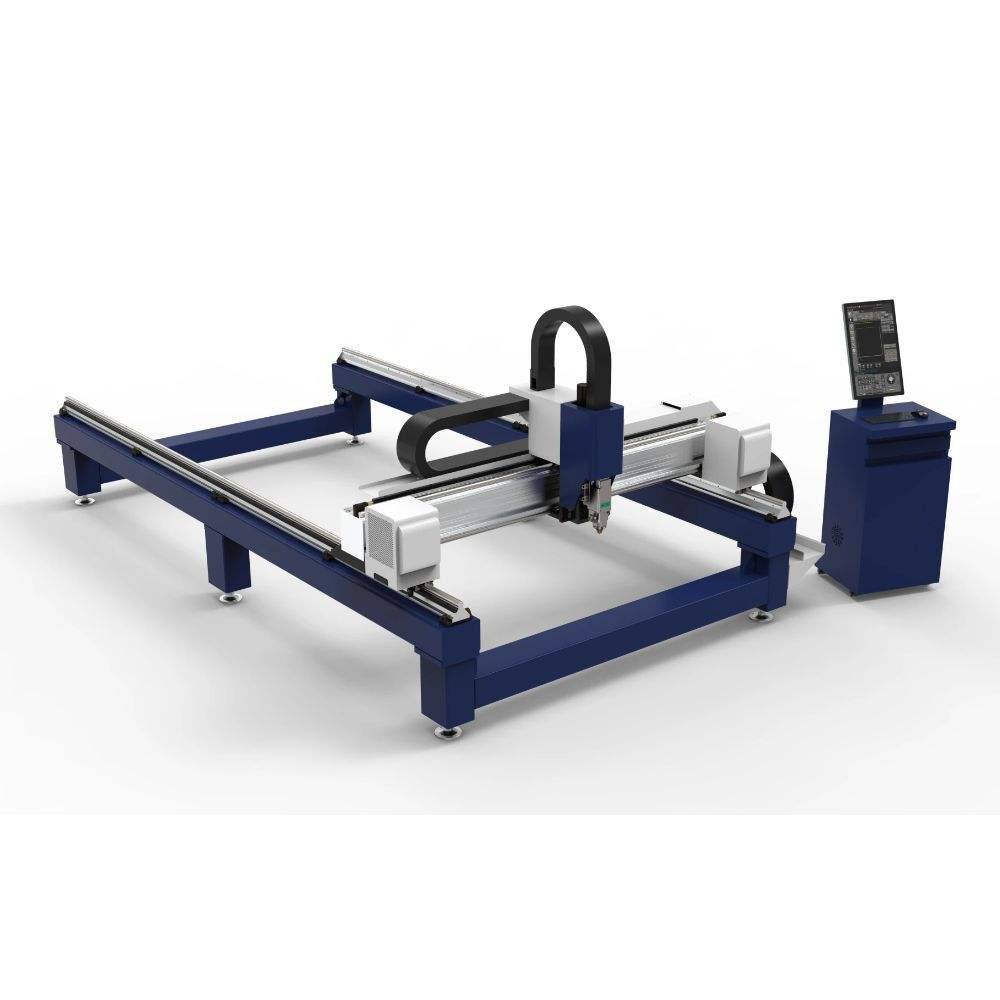
The efficacy of a 4kW laser is only as good as the gantry system that carries it. Precision laser cutting requires a motion control system capable of micron-level repeatability. In high-output environments, the machine must handle rapid acceleration and deceleration without introducing vibrations that could mar the cut surface. Most 4kW systems utilize high-torque AC servo motors and precision rack-and-pinion drives. In Tijuana’s humid coastal environment, the stability of these mechanical components is vital. Protecting the linear guides and ensuring the bellows are intact prevents airborne particulates—common in industrial zones—from interfering with the machine’s accuracy.
The Impact of Local Infrastructure on Laser Performance
Operating a high-precision 4kW system in Tijuana requires a deep understanding of local infrastructure. Power stability is a known variable; therefore, many facilities install industrial voltage regulators and surge protectors to shield the sensitive laser diodes and CNC controllers. Furthermore, the 4kW system requires a robust chilling unit. Since fiber lasers are highly efficient, they still generate significant heat at the diode level. A dual-circuit chiller is necessary to maintain the laser source and the cutting head at constant temperatures, ensuring that thermal expansion does not shift the focal point during long production runs of carbon steel components.
Software Integration and Nesting Strategies
To maximize the ROI of a 4kW laser cutting system, Tijuana-based fabricators rely on sophisticated CAD/CAM software. Modern nesting algorithms are used to minimize material waste, which is crucial given the fluctuating costs of raw steel. Advanced software features like “common line cutting”—where two parts share a single cut path—can reduce processing time by 20% and gas consumption by 15%. Additionally, “fly-cutting” capabilities allow the 4kW laser to perforate thin sheets without stopping the cutting head, drastically increasing throughput for perforated panels or ventilation grilles.
Maintenance Protocols for High-Uptime Environments
In a 24/7 manufacturing cycle, maintenance cannot be an afterthought. For a 4kW system, the most critical maintenance points are the protective windows and the nozzle. Carbon steel laser cutting with oxygen creates significant “spatter.” If the protective window becomes contaminated, the laser energy will be absorbed by the debris, potentially cracking the lens or damaging the cutting head. Regular inspection of the beam quality and the centering of the nozzle is required. In Tijuana, where technical support can sometimes be delayed by border crossings, having a local team trained in basic optics cleaning and sensor calibration is a major operational advantage.
Safety Standards and Regulatory Compliance
Safety is paramount when dealing with Class 4 laser systems. The 1070nm wavelength of a fiber laser is invisible to the human eye and can cause permanent retinal damage instantaneously. A 4kW precision system must be housed in a fully light-tight enclosure with laser-rated viewing windows. In Mexico, adherence to NOM (Normas Oficiales Mexicanas) and international ISO standards for machine safety is not just a legal requirement but a prerequisite for partnering with multinational corporations. Proper fume extraction is also vital when cutting carbon steel, as the process releases fine particulate matter and iron oxide dust that must be filtered before the air is recirculated or exhausted.
Economic Outlook: Why 4kW is the Strategic Choice
When comparing 2kW, 4kW, and 12kW systems, the 4kW variant offers the most compelling economic case for the average Tijuana fabricator. While 12kW machines offer incredible speed on very thick plate, their capital expenditure and utility requirements are often prohibitive for mid-sized shops. Conversely, a 2kW system may struggle with 15mm+ carbon steel, leading to slower production and poorer edge quality. The 4kW system sits in the “sweet spot,” providing the versatility to handle thin gauge sheet metal for electronics and thick plate for heavy machinery components. This versatility allows shops to diversify their client base, serving both the aerospace sector and the general construction industry.
Future-Proofing Tijuana’s Fabrication Shops
As Industry 4.0 continues to permeate the manufacturing sector, the 4kW laser cutting system is becoming more “intelligent.” IoT-enabled sensors can now monitor the health of the laser source in real-time, predicting failures before they occur. For companies in Tijuana, adopting these smart technologies means fewer “dead days” and more consistent delivery schedules for their US-based partners. The integration of robotic loading and unloading systems further enhances the 4kW laser’s productivity, allowing for “lights-out” manufacturing that can compete with any facility in the world.
Conclusion
The 4kW precision laser system is more than just a tool; it is a catalyst for industrial growth in Tijuana. By mastering the complexities of carbon steel processing—from gas dynamics to motion control—local manufacturers can produce world-class components with unmatched efficiency. As the demand for high-precision, locally-sourced metal parts continues to rise, the 4kW fiber laser will remain the cornerstone of the region’s fabrication excellence, bridging the gap between traditional craftsmanship and the future of automated engineering.