
Engineering Guide: Optimizing 4kW Precision Fiber Laser Systems for Carbon Steel Fabrication in the Puebla Automotive Sector
The industrial landscape of Puebla, Mexico, represents one of the most sophisticated automotive manufacturing hubs in North America. Home to major OEMs like Volkswagen and Audi, alongside a dense network of Tier 1 and Tier 2 suppliers, the region demands manufacturing equipment that balances high throughput with extreme dimensional accuracy. For engineers and factory owners in this corridor, the 4kW precision fiber laser system has emerged as the industry standard for carbon steel processing. This guide provides a technical analysis of the 4kW system, focusing on the structural advantages of the tube-welded standard bed and the metallurgical considerations of high-precision carbon steel cutting.
Structural Integrity: The Engineering of the Tube-Welded Standard Bed
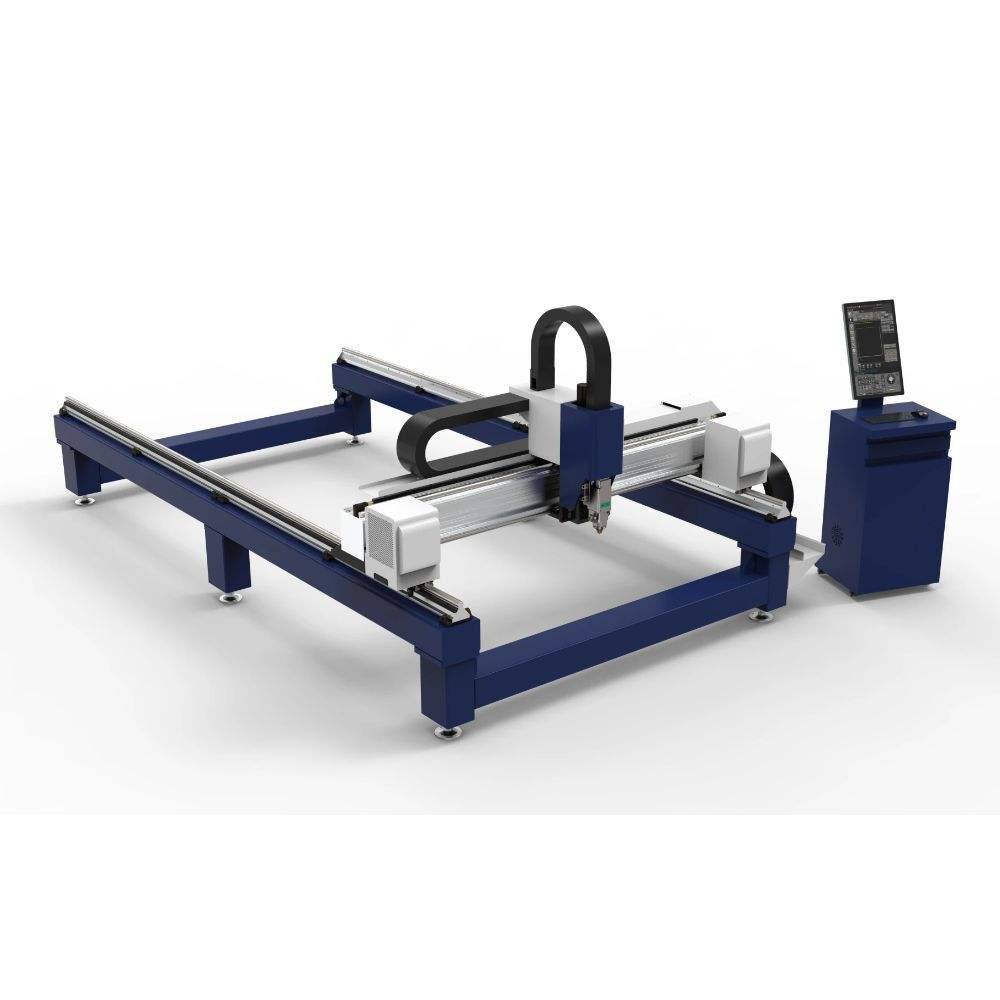
The foundation of any high-precision laser system is its bed. In the 4kW category, the tube-welded standard bed is engineered to provide the optimal strength-to-weight ratio required for high-acceleration motion. Unlike cast iron beds, which offer high damping but significant thermal inertia, or simple plate-welded frames that may lack internal rigidity, the tube-welded structure utilizes a honeycomb-style internal framework.
Technical Specifications of the Bed:
The bed is constructed from high-grade industrial rectangular tubes. During the fabrication process, internal reinforcement plates are welded within the tubes to enhance torsional resistance. Following the welding process, the entire frame undergoes a stress-relief annealing cycle. This involves heating the bed to approximately 600°C and cooling it at a controlled rate to eliminate internal residual stresses. This ensures that the machine maintains its geometric tolerances (within ±0.02mm per meter) over years of continuous operation in a high-cycle factory environment.
For Puebla’s automotive suppliers, this stability is critical. The high-speed movement of the gantry—often reaching accelerations of 1.0G to 1.2G—generates significant kinetic energy. The tube-welded structure effectively absorbs these vibrations, preventing “ghosting” or serrated edges on the cut surface of carbon steel components.
4kW Power Dynamics: The Sweet Spot for Carbon Steel
While 6kW and 12kW systems are available, the 4kW fiber laser remains the “sweet spot” for the majority of automotive carbon steel applications, which typically range from 1mm to 20mm in thickness. The 4kW source provides sufficient power density to maintain high feed rates while minimizing the Heat Affected Zone (HAZ).
Carbon Steel Thickness and Feed Rate Benchmarks:
1. Thin Gauge (1mm – 3mm): At 4kW, the system can achieve cutting speeds exceeding 35m/min. This is essential for high-volume production of brackets and interior structural reinforcements.
2. Medium Gauge (6mm – 12mm): This is where the 4kW system excels. It maintains a stable “keyhole” welding effect during the cut, resulting in a smooth, dross-free finish. A 10mm carbon steel plate can be processed at approximately 2.2 – 2.8m/min depending on the gas mixture.
3. Heavy Plate (16mm – 20mm): The 4kW system utilizes oxygen-assisted cutting for thicker sections. The precision of the 4kW beam allows for narrow kerf widths, which is vital for maintaining the integrity of interlocking mechanical parts.
The wavelength of a fiber laser (typically 1.06μm) is highly absorbed by carbon steel. This energy efficiency translates to lower operational costs per part compared to legacy CO2 systems, a factor that directly impacts the competitiveness of Puebla-based shops bidding on international contracts.
Precision Motion Control and Optical Path Protection
In the automotive sector, repeatability is as important as absolute accuracy. Our 4kW systems utilize high-precision rack and pinion drive systems coupled with Japanese or European servo motors. The integration of a dual-drive gantry system ensures that even at high speeds, the laser head maintains a constant distance from the material surface via a capacitive height sensor.
The optical path is another critical engineering focus. In the dusty environments typical of large-scale fabrication shops, the protection of the fiber delivery system is paramount. The 4kW system features a fully enclosed beam path and a pressurized cutting head. By maintaining a positive pressure of clean, dry air or nitrogen within the head, the system prevents the ingress of metallic dust and smoke, which could otherwise contaminate the protective windows and lead to thermal lensing or beam deviation.

Metallurgical Considerations: Oxygen vs. Nitrogen in Carbon Steel Cutting
For Puebla’s engineers, the choice of assist gas in a 4kW system is a strategic decision based on the final application of the carbon steel part.
Oxygen-Assisted Cutting:
When cutting carbon steel with oxygen, an exothermic reaction occurs. This adds thermal energy to the process, allowing for the cutting of thicker materials with less laser power. However, this creates a thin oxide layer on the cut edge. For parts that require subsequent painting or powder coating—common in automotive chassis components—this oxide layer must be removed to ensure coating adhesion.
Nitrogen-Assisted (High-Pressure) Cutting:
For precision components where edge quality and weldability are paramount, nitrogen is used to “blow” the molten metal out of the kerf without oxidation. While this requires more laser power (making the 4kW source necessary for thicknesses above 4mm), it produces a bright, clean edge that is ready for immediate robotic welding without secondary cleaning processes.
Integration with Industry 4.0 in the Puebla Market
The Puebla industrial sector is rapidly moving toward Industry 4.0. Modern 4kW precision laser systems are equipped with CNC controllers that support real-time monitoring and data logging. For a factory owner, this means the ability to track gas consumption, power usage, and “beam-on” time per shift.
These systems integrate seamlessly with ERP and MES software. By using automated nesting algorithms, engineers can maximize material utilization of carbon steel sheets, which is a significant cost-saving measure given the volatility of raw material prices. The ability to import DXF/DWG files directly and apply “Fly-Cutting” logic allows the 4kW system to move between pierce points without stopping, significantly reducing cycle times for complex geometries.
Maintenance and Longevity in High-Volume Environments
The transition to a tube-welded standard bed also simplifies long-term maintenance. The rigidity of the frame reduces the wear and tear on the linear guides and ball screws. In a 24/7 automotive production environment, downtime is the single greatest cost.
Key Engineering Maintenance Protocols:
1. Lubrication Systems: Automated centralized lubrication ensures that the high-speed motion components are always protected, reducing friction-induced heat.
2. Dust Extraction: A multi-zone dust extraction system, integrated into the bed, removes particulates at the source. This protects the machine’s mechanical components and ensures a safer working environment for operators.
3. Chiller Calibration: The 4kW fiber source and the cutting head require precise thermal management. Dual-circuit water chillers maintain the temperature within ±0.5°C, preventing frequency drift in the laser source.
Conclusion: Strategic ROI for Automotive Manufacturing
For automotive factory owners in Puebla, investing in a 4kW precision laser system with a tube-welded bed is a decision rooted in long-term engineering logic. The 4kW power level provides the versatility to handle the diverse range of carbon steel thicknesses found in modern vehicle platforms, from lightweight structural components to heavy-duty suspension mounts.
The tube-welded bed provides the mechanical “spine” necessary to translate 4kW of photonic energy into high-precision parts with micron-level tolerances. By reducing secondary processing needs through superior edge quality and ensuring 24/7 reliability through robust structural engineering, this system offers a clear path to increased throughput and higher profit margins in Mexico’s competitive automotive landscape. As the industry evolves toward electric vehicles and high-strength steel alloys, the precision and control offered by the 4kW fiber laser will remain the cornerstone of the modern fabrication shop.
















