
Introduction to 4kW Precision Laser Systems in Queretaro’s Industrial Hub
The industrial landscape of Queretaro, Mexico, has undergone a massive transformation over the last decade, establishing itself as a premier destination for aerospace, automotive, and electronic manufacturing. At the heart of this evolution is the adoption of high-precision fabrication technology. The 4kW precision laser system represents a critical threshold in power and versatility, specifically designed to meet the rigorous demands of modern engineering. For facilities operating within the Bajío region, particularly those handling non-ferrous metals like brass, the integration of 4kW fiber laser technology is no longer an option—it is a competitive necessity.
Brass fabrication presents unique challenges that traditional CO2 lasers struggled to overcome. However, the 1.06-micron wavelength of a 4kW fiber laser is ideally suited for the absorption characteristics of “yellow metals.” This guide explores the technical intricacies of utilizing a 4kW system for brass processing, the specific advantages for the Queretaro manufacturing sector, and the operational parameters required to achieve world-class results in laser cutting.
 laser cutting machine” style=”width: 100%; max-width: 800px; height: auto; margin: 20px 0;”>
The Physics of 4kW Fiber Lasers and Brass Interaction
Brass is an alloy of copper and zinc, known for its high thermal conductivity and high reflectivity. In the context of laser cutting, these properties are traditionally problematic. Reflectivity can cause back-reflections that damage the laser source, while thermal conductivity pulls heat away from the cut zone, requiring higher power densities to maintain a stable melt pool.
Wavelength Absorption and Efficiency
A 4kW fiber laser operates in the near-infrared spectrum. Unlike CO2 lasers, which are largely reflected by the surface of brass, the fiber laser’s energy is absorbed more efficiently. At 4,000 watts, the power density is sufficient to instantaneously transition the brass from a solid to a molten state, minimizing the window for reflection. This allows for faster piercing and more consistent edge quality across various thicknesses, typically ranging from 1mm up to 8mm for high-precision applications.
Thermal Management in Queretaro’s Climate
Queretaro’s altitude and semi-arid climate can affect the cooling efficiency of high-power industrial equipment. A 4kW system requires a robust dual-circuit chilling unit. One circuit cools the laser source to maintain wavelength stability, while the second circuit cools the cutting head and optics. Precision in brass cutting depends heavily on maintaining a constant temperature in the collimating lens and the focus lens to prevent “thermal shift,” which can alter the focal point during long production runs.
Strategic Advantages for Queretaro’s Manufacturing Sectors
Queretaro is home to major industrial parks like El Marqués, Balvanera, and Aerotech. These hubs service global OEMs that demand tight tolerances and rapid turnaround times. The 4kW precision laser system is uniquely positioned to serve these industries.
Aerospace and Defense Applications
The aerospace cluster in Queretaro requires components that meet AS9100 standards. Brass components, often used in electrical connectors, bushings, and decorative interior trim for business jets, must be burr-free. The precision of a 4kW system ensures that the Heat Affected Zone (HAZ) is kept to a minimum, preserving the structural integrity and electrical conductivity of the brass alloy.
Automotive and Electronics
In the automotive sector, brass is frequently used for sensors, radiator components, and specialized terminals. The high-speed laser cutting capabilities of a 4kW system allow for high-volume production that rivals traditional stamping but without the high cost of tooling. This flexibility is essential for Queretaro-based suppliers who must pivot between different component designs for various vehicle platforms.
Optimizing the Laser Cutting Process for Brass
Achieving a “mirror-like” finish on brass requires more than just raw power; it requires the synchronization of gas dynamics, motion control, and beam modulation.
Assist Gas Selection: Nitrogen vs. Oxygen
For brass, Nitrogen is the preferred assist gas. It acts as a mechanical force to eject molten metal from the kerf without causing oxidation. When laser cutting brass with a 4kW source, high-pressure Nitrogen (typically 15-20 bar) ensures a clean, dross-free bottom edge. While Oxygen can be used for thicker sections to add exothermic energy, it often results in a darkened, oxidized edge that requires secondary cleaning—a step most Queretaro manufacturers aim to eliminate to reduce costs.
Nozzle Technology and Beam Alignment
The use of chrome-plated, double-layer nozzles is recommended for brass. These nozzles are more resistant to the spatters common when piercing reflective alloys. Furthermore, the 4kW system must feature an automated beam alignment check. Even a slight deviation in the beam’s centering through the nozzle can result in asymmetrical edges or increased dross on one side of the part, which is unacceptable for precision engineering components.
Technical Specifications of a Precision 4kW System
When evaluating a 4kW system for a facility in Queretaro, several mechanical specifications are paramount to ensuring long-term reliability and accuracy.
Gantry Dynamics and Linear Motors
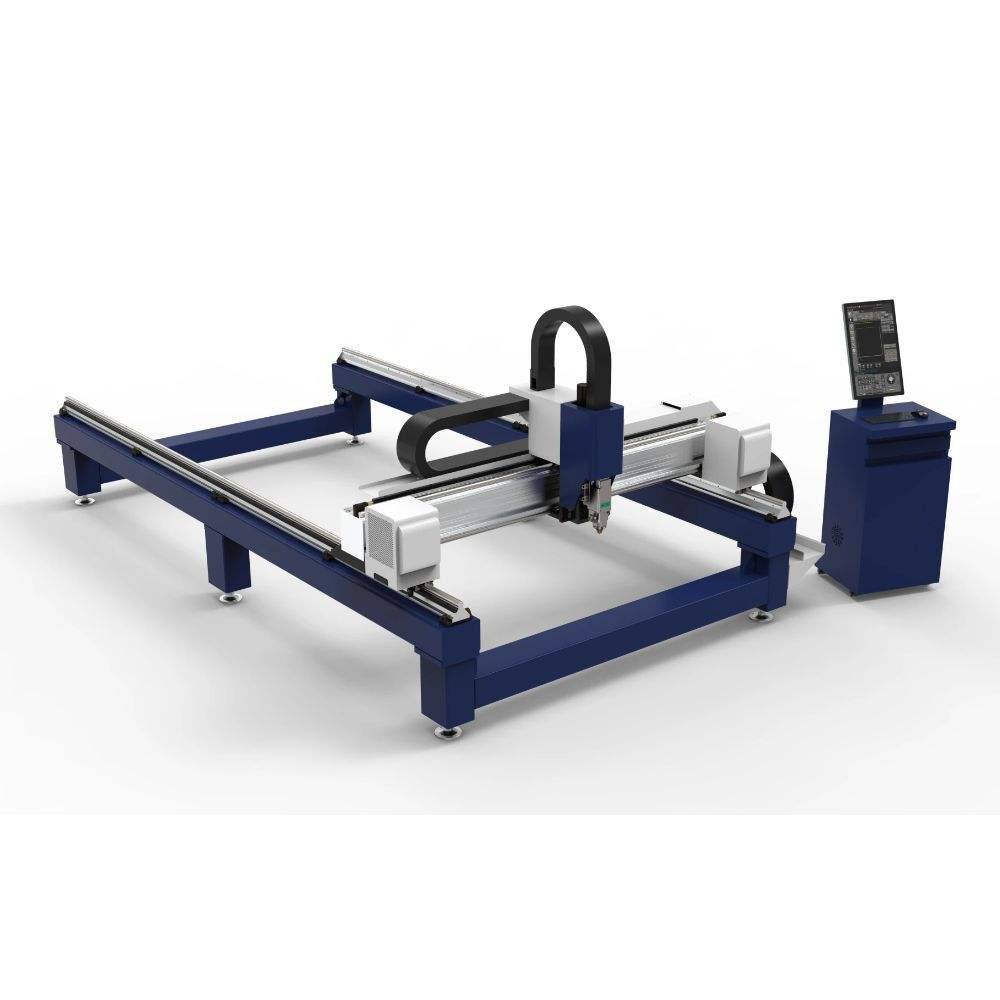
To leverage the speed of a 4kW laser, the machine frame must be capable of high acceleration (up to 1.5G or 2.0G). Precision laser cutting in brass often involves intricate geometries. Linear motors provide the necessary responsiveness and positioning accuracy (within ±0.03mm) to execute these paths without the backlash associated with traditional rack-and-pinion systems, although high-end helical rack systems remain a viable and robust alternative for larger formats.
Software Integration and Nesting
Advanced CNC controllers now include specific “Brass Modes.” These software parameters automatically adjust the power frequency and duty cycle during cornering to prevent over-burning. In Queretaro’s competitive market, material utilization is key. Sophisticated nesting software reduces scrap rates of expensive brass alloys, directly impacting the bottom line of the fabrication shop.
Maintenance and Safety Protocols in the Mexican Industrial Context
Operating a Class 4 laser system in Mexico requires adherence to both international standards and local safety regulations (NOM – Norma Oficial Mexicana). The 4kW power level is high enough to cause permanent eye damage or fire hazards if not managed correctly.
Optical Integrity and Dust Extraction
Brass cutting generates a fine metallic dust that is more conductive than steel dust. A high-efficiency dust extraction system with spark arrestors is mandatory. In Queretaro’s industrial parks, environmental regulations are strictly enforced; therefore, ensuring that the filtration system meets HEPA standards is both a safety and a compliance requirement. Furthermore, regular inspection of the protective window (cover glass) is critical, as any brass spatter can quickly lead to lens failure under 4kW of pressure.
Local Technical Support and Training
One of the advantages of the Queretaro region is the density of technical expertise. When deploying a 4kW laser cutting system, it is vital to ensure that operators are trained in “Reflective Material Protocols.” This includes understanding the “Back-Reflection Protection” features of the fiber laser source, which automatically shuts down the beam if it detects reflected light returning into the transport fiber.
Economic Impact and ROI for Local Manufacturers
The transition to a 4kW precision system involves significant capital expenditure, but the Return on Investment (ROI) in the Queretaro market is often realized within 18 to 24 months. The primary drivers are increased throughput and the ability to take on complex brass and copper contracts that lower-powered shops cannot handle.
Reducing Secondary Operations
By achieving high-quality laser cutting edges directly from the machine, manufacturers eliminate the need for deburring, grinding, or polishing. In the labor market of Queretaro, where skilled technicians are in high demand, reallocating labor from manual finishing to high-value machine operation optimizes the entire production floor.
Energy Efficiency
Modern 4kW fiber lasers are significantly more energy-efficient than their 4kW CO2 predecessors. The wall-plug efficiency of fiber technology is approximately 30-35%, compared to 10% for CO2. For a high-duty-cycle operation in a Queretaro industrial park, this translates to thousands of dollars in annual electricity savings.
Conclusion: The Future of Precision Fabrication in Queretaro
The 4kW precision laser system is a cornerstone of the “Industry 4.0” movement within Mexico’s central corridor. Its ability to master difficult materials like brass allows local manufacturers to move up the value chain, transitioning from simple part suppliers to integrated engineering partners for global firms. As the aerospace and electric vehicle (EV) sectors continue to expand in Queretaro, the demand for precise, efficient, and reliable laser cutting will only grow. Investing in 4kW technology today ensures that a facility is prepared for the complex metallurgical challenges of tomorrow’s manufacturing landscape.
















