
Engineering Excellence: The 4kW Fiber Laser Solution for Queretaro’s Elevator Industry
The industrial landscape of Queretaro, Mexico, has evolved into a sophisticated hub for precision engineering, particularly within the aerospace, automotive, and vertical transportation sectors. For elevator factory owners and lead engineers in the Bajío region, the demand for high-aesthetic, high-precision brass components—ranging from control panels and handrails to decorative cabin inlays—has never been higher. Meeting these demands requires more than just standard machinery; it requires a specialized 4kW Fiber Laser Cutting Machine designed to handle the unique reflective properties of non-ferrous metals while maintaining structural rigidity through a tube-welded standard bed.
This guide explores the technical architecture of the 4kW fiber laser system, focusing on why the tube-welded bed is the superior choice for the Queretaro market and how the 4kW power threshold optimizes brass processing for the elevator industry.
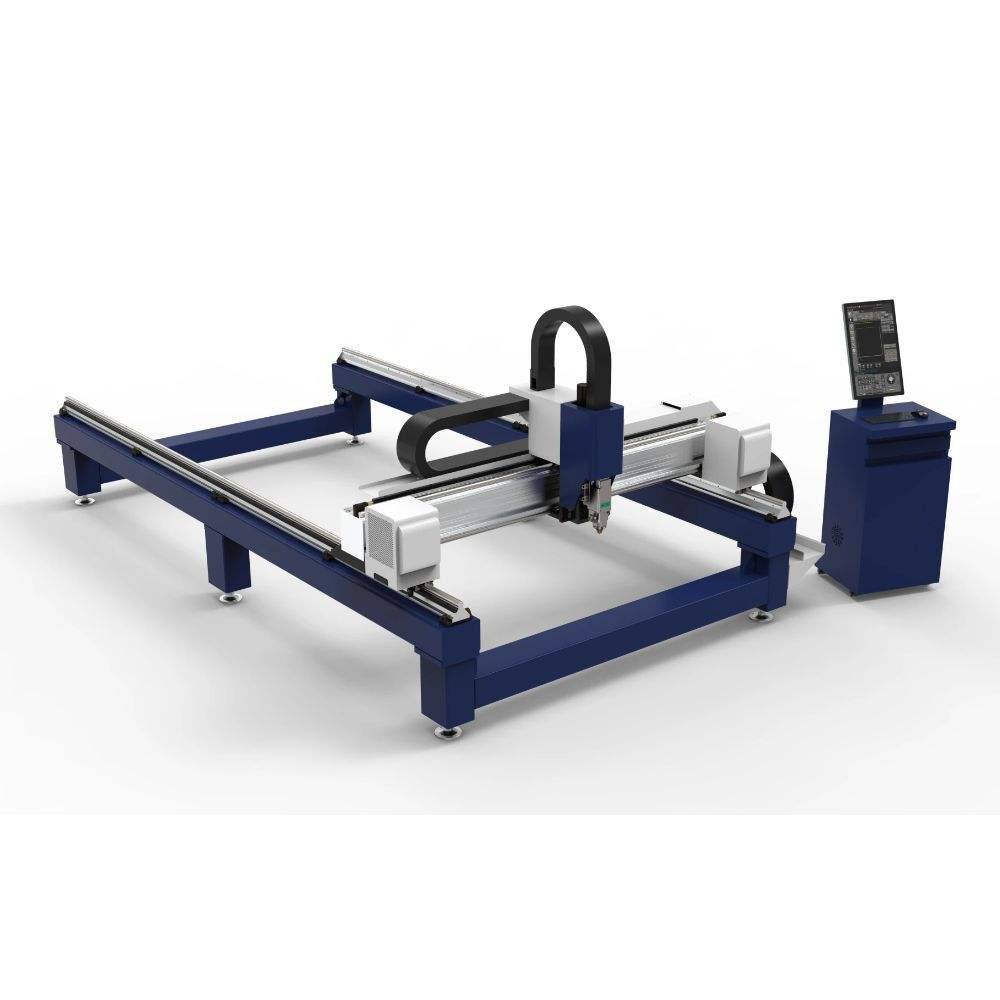
The Architecture of Stability: Tube-Welded Standard Bed Engineering
In the realm of CNC fiber lasers, the machine bed is the foundation of all accuracy. For Queretaro-based factories, where ambient temperatures can fluctuate and high-volume production is the norm, the structural integrity of the bed is paramount. The tube-welded standard bed is engineered using high-quality industrial rectangular tubes with a wall thickness optimized for vibration damping.
Unlike lighter, bolt-together frames, the tube-welded structure undergoes a rigorous manufacturing process:
1. Stress Relief Annealing: After welding, the bed is subjected to high-temperature annealing. This process removes the internal stresses generated during welding, ensuring that the frame will not deform over years of operation.
2. Precision Milling: The guide rail and rack seats are processed by a large-scale gantry milling machine in a single setup. This ensures a parallelism and straightness tolerance of within 0.02mm.
3. Triangular Reinforcement: The internal structure of the tube-welded bed utilizes triangular reinforcement patterns, which provide a higher strength-to-weight ratio compared to solid cast iron beds, allowing for faster acceleration and deceleration of the gantry without compromising precision.
For elevator manufacturers, this means that the intricate patterns cut into brass elevator doors or the precise holes for call buttons remain consistent from the first sheet to the thousandth, regardless of the gantry’s movement speed.
Optimizing 4kW Power for Brass Processing
Brass is a highly reflective and thermally conductive material, making it one of the most challenging alloys to cut with a laser. A 4kW fiber laser source is the “sweet spot” for elevator component fabrication for several data-driven reasons.
Reflectivity Management: Brass reflects a significant portion of laser energy back into the cutting head. Modern 4kW systems are equipped with back-reflection isolation technology. At 4kW, the energy density is high enough to instantly melt the surface, creating a “keyhole” that absorbs the beam, thereby protecting the optical resonators from damage that lower-power machines (1kW-2kW) often suffer when processing brass.
Cutting Speed and Thickness: In the elevator industry, brass sheets typically range from 1.5mm for decorative cladding to 6mm for structural fixtures. A 4kW laser provides the following performance metrics:
– 2mm Brass: Cutting speeds of up to 15-18 m/min.
– 5mm Brass: Cutting speeds of approximately 3-4 m/min.
– Maximum Piercing Capability: Efficiently handles up to 8mm or 10mm brass for specialized architectural elements.
The 4kW output ensures that the Heat Affected Zone (HAZ) is kept to a minimum. This is critical for brass, as excessive heat can lead to discoloration or “burning” of the edges, which would require expensive secondary polishing—a cost that Queretaro’s competitive manufacturers must avoid.
High-Precision Cutting for Elevator Aesthetics
Elevator interiors are high-touch environments where the quality of the finish is a direct reflection of the brand. The 4kW fiber laser specialized for brass utilizes advanced gas pressure control and focal point positioning to achieve “mirror-finish” edges.
Precision Requirements in Elevator Engineering:
– Tolerance: Elevator button panels require tolerances within +/- 0.05mm to ensure a flush fit for electronic components.
– Edge Quality: The use of Nitrogen as an auxiliary gas at high pressures (up to 20 bar) prevents oxidation, leaving a clean, bright edge on brass that requires zero post-processing before assembly.
– Intricate Geometries: Fiber lasers can execute complex logos, floor numbers, and filigree patterns that would be impossible or prohibitively expensive with mechanical punching or waterjet cutting.
By integrating a high-precision gantry system with the tube-welded bed, the machine maintains a positioning accuracy of 0.03mm and a repeatability of 0.02mm. This level of precision is essential when fabricating long brass handrails or large-format wall panels where any deviation would be visible to the naked eye.

Technical Advantages of Fiber over CO2 for Brass
While older Queretaro workshops may still house CO2 lasers, the transition to 4kW Fiber technology offers a quantum leap in efficiency and capability for brass.
1. Electrical Efficiency: A 4kW fiber laser consumes approximately 70% less electricity than a CO2 laser of equivalent cutting power. In the context of Queretaro’s industrial electricity tariffs, this represents a significant reduction in Opex.
2. Maintenance: Fiber lasers have no moving parts or mirrors in the light-generating source, eliminating the need for laser gas and frequent mirror alignments.
3. Beam Quality: The wavelength of a fiber laser (1.06 microns) is ten times shorter than that of a CO2 laser. This shorter wavelength is much more readily absorbed by brass, allowing for faster cutting speeds and better control over the melt pool.
Operational Considerations for the Queretaro Market
Queretaro’s high altitude (approx. 1,820 meters) and semi-arid climate impact industrial cooling systems. A 4kW fiber laser specialized for this market must be equipped with a dual-circuit industrial chiller. One circuit cools the laser source, while the other cools the cutting head.
Furthermore, the local supply chain for auxiliary gases is robust. For brass cutting, the 4kW system should be paired with a high-pressure Nitrogen generation system or a liquid Nitrogen tank. Using Nitrogen ensures that the brass does not tarnish during the cut, maintaining the golden luster required for luxury elevator cabins.
The “Standard Bed” configuration is also a strategic choice for Queretaro’s logistics. A 3015 format (3 meters by 1.5 meters) is the industry standard for elevator panels, fitting perfectly into the standard sheet sizes provided by local metal service centers. This minimizes material waste and simplifies the nesting process.
Data-Driven ROI for Elevator Manufacturers
When evaluating the acquisition of a 4kW fiber laser, engineers must look at the “Cost Per Part.”
– Labor Reduction: Automating the cutting of brass trim reduces the need for manual sawing and deburring by 80%.
– Material Utilization: Advanced nesting software, paired with the narrow kerf width of the 4kW laser (approx. 0.1mm), allows for tighter part spacing, saving up to 15% in brass material costs annually.
– Throughput: For a typical elevator factory in Queretaro producing 50 cabins per month, a 4kW fiber laser can process all required brass and stainless steel components in less than 10 working days, leaving the remaining machine time for external job-shop services or increased production capacity.
Conclusion: The Future of Vertical Transportation Fabrication
The 4kW Fiber Laser Cutting Machine with a tube-welded standard bed represents the pinnacle of reliability for brass processing. For the elevator industry in Queretaro, it offers the perfect balance of structural durability, high-speed performance, and aesthetic precision. By investing in a machine foundation that resists vibration and a power source that masters reflective alloys, manufacturers can ensure their components meet the highest international standards of safety and luxury.
As Queretaro continues to grow as a center for manufacturing excellence, the adoption of specialized fiber laser technology will be the differentiating factor for factories seeking to optimize their production lines and deliver superior architectural products to the global market.
















