
Engineering Guide: 4kW Fiber Laser Integration for High-Precision Brass Fabrication in the León Industrial Sector
The industrial landscape of León has seen a significant shift toward high-efficiency manufacturing, particularly within the elevator and architectural metalwork sectors. For elevator factory owners and lead engineers, the transition from traditional mechanical punching or CO2 laser systems to high-power fiber laser technology is no longer optional—it is a strategic necessity for maintaining competitive margins. The 4kW Fiber Laser Cutting Machine represents the optimal equilibrium between capital investment and operational throughput, specifically when processing non-ferrous, highly reflective materials like brass.
This guide explores the structural engineering of the tube-welded standard bed and the specific thermophysical interactions of a 4kW beam with brass alloys, providing a data-driven roadmap for implementation in the León market.
Structural Foundation: The Engineering Logic of the Tube-Welded Standard Bed
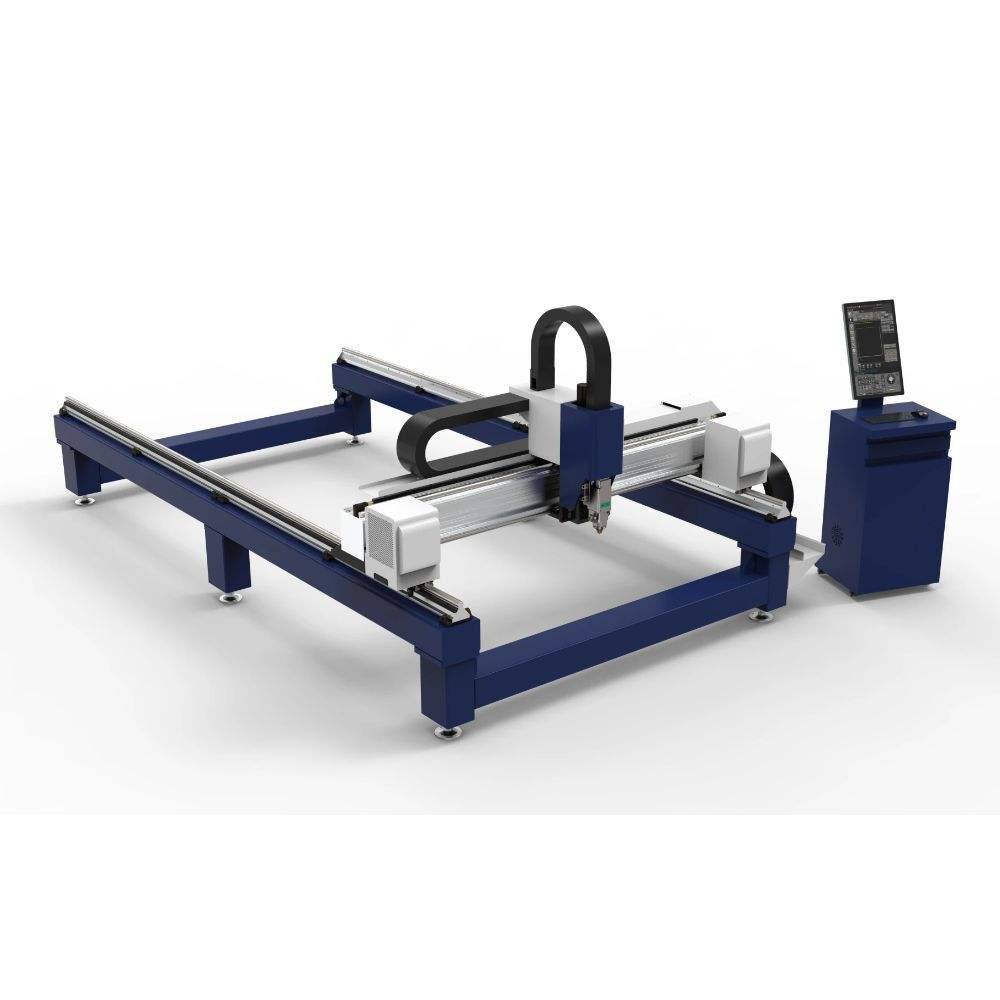
In high-precision laser cutting, the bed is the most critical component for long-term accuracy. For the 4kW power class, the tube-welded standard bed offers a specific set of mechanical advantages tailored to the needs of elevator component manufacturing.
The bed is constructed from high-quality industrial rectangular tubes, which are welded using a multi-segment reinforcement technique. Unlike lighter aluminum frames or excessively heavy cast-iron beds that may exceed the budget requirements of medium-scale factories, the tube-welded structure provides an ideal strength-to-weight ratio.
1. Stress Relief and Annealing: After the welding process, the bed undergoes a high-temperature annealing process. This is crucial for the León climate, where temperature fluctuations can impact metal stability. Annealing removes the internal stresses generated during welding, ensuring that the bed does not deform over 10 to 15 years of continuous operation.
2. Vibration Damping: The hollow structure of the rectangular tubes, when engineered with internal stiffeners, provides excellent vibration damping. During high-speed gantry movements (accelerations of 1.0G to 1.2G), the bed absorbs the kinetic energy, preventing “ghosting” or serrated edges on the cut surface of the brass.
3. Precision Machining: The mounting surfaces for the guide rails and racks are milled using large-scale 5-axis CNC machining centers in a single setup. This ensures a parallelism tolerance of within ±0.02mm, which is essential for the high-precision requirements of elevator control panels and decorative inlay work.
Optimizing 4kW Power for Brass: Overcoming Reflectivity Challenges
Brass (an alloy of copper and zinc) is notoriously difficult to cut due to its high thermal conductivity and high reflectivity. In the early days of laser cutting, back-reflection could easily destroy a laser source. However, modern 4kW fiber lasers are engineered with optical isolators and specific beam profiles that make brass cutting as reliable as carbon steel.
For an elevator factory in León, brass is typically used for premium cabin interiors, handrails, and floor indicators. A 4kW source provides the necessary power density to overcome the “reflection barrier” instantaneously.
Technical Parameters for Brass Processing:
– Maximum Cutting Thickness: A 4kW system can comfortably cut brass up to 8mm or 10mm with a clean edge finish. For the 2mm to 5mm range common in elevator trims, the cutting speed can exceed 6-8 meters per minute.
– Piercing Technology: The 4kW system utilizes multi-stage piercing, which prevents “blowouts” on the reflective surface. By modulating the frequency and duty cycle of the laser during the initial pierce, the machine ensures a clean entry point without damaging the surrounding mirror-finish brass.
– Auxiliary Gas Selection: While Oxygen can be used for thicker brass, Nitrogen is the standard for elevator components. Nitrogen provides a high-pressure “shield” that prevents oxidation, resulting in a bright, golden edge that requires zero post-processing or polishing.
The Elevator Industry Context: Precision and Aesthetics
In the León market, elevator manufacturers often differentiate themselves through the quality of their finishes. The 4kW Fiber Laser allows for intricate geometric patterns that were previously impossible or too expensive to produce.
Consider the fabrication of an elevator operating panel (COP). These panels require precise cutouts for buttons, keypads, and emergency displays. Any thermal deformation during the cutting process would result in a panel that is not perfectly flat, leading to assembly issues. The 4kW fiber laser’s narrow kerf width (typically 0.1mm to 0.15mm) and the stability of the tube-welded bed ensure that even large 2-meter tall panels remain perfectly planar.
Furthermore, the high-precision motion control system allows for “micro-joint” technology. This enables the cutting of small, intricate logos or decorative motifs into the brass without the parts falling through the slats or becoming tilted and causing a collision with the laser head.

Data-Driven ROI: Why 4kW is the Strategic Choice for León Factories
When evaluating a laser purchase, engineers must look beyond the initial sticker price and calculate the Total Cost of Ownership (TCO).
1. Speed vs. Power: A 4kW laser cuts 3mm brass approximately 40% faster than a 3kW laser. In a high-volume elevator factory, this 40% increase in throughput translates to a significantly faster amortization of the machine cost.
2. Energy Efficiency: Modern fiber lasers have a wall-plug efficiency of over 35%. Compared to older CO2 lasers (8-10% efficiency), the 4kW fiber laser significantly reduces the monthly electricity bill, a major factor in the competitive León industrial sector.
3. Maintenance Cycles: The tube-welded standard bed requires minimal maintenance compared to complex hydraulic punching systems. With no mirrors to align and a laser source rated for 100,000 hours, the downtime is reduced by nearly 70%.
4. Material Utilization: Advanced nesting software paired with the 4kW laser’s precision allows for tighter spacing between parts. In the case of expensive materials like brass, a 5% improvement in material utilization can save thousands of dollars annually.
Technical Specifications Table for 4kW Brass Specialist
To assist engineers in the technical vetting process, the following specifications represent the industry standard for a 4kW machine optimized for the León elevator market:
– Laser Source: Fiber Laser (IPG or Raycus) with back-reflection protection.
– Bed Type: Stress-relieved, tube-welded standard bed.
– Cutting Head: Auto-focus head (e.g., Raytools or Precitec) with high-speed capacitive sensing.
– Positioning Accuracy: ±0.03mm.
– Repositioning Accuracy: ±0.02mm.
– Max Acceleration: 1.2G.
– Control System: FSCUT series or similar high-end bus-type system.
Implementation and Local Support in León
For factory owners in León, the proximity of technical support and the availability of consumables (nozzles, protective windows, ceramic rings) are vital. When integrating a 4kW system, it is recommended to ensure the machine is equipped with a dual-temperature water chiller. Brass cutting generates significant heat at the nozzle; a dedicated cooling circuit for the cutting head and a separate one for the laser source are mandatory for 24/7 operation.
The local electrical grid stability should also be assessed. While the 4kW system is efficient, a regulated power supply is recommended to protect the sensitive fiber optics and CNC electronics from voltage spikes common in heavy industrial zones.
Conclusion: Elevating Production Standards
The 4kW Fiber Laser Cutting Machine, characterized by its robust tube-welded standard bed and its proficiency in handling reflective brass, is the definitive tool for the modern elevator factory. By prioritizing structural stability and high-power density, manufacturers in León can achieve a level of precision and finish that meets international standards.
For the engineer, it offers a reliable, low-maintenance platform capable of executing complex designs. For the owner, it provides the throughput and material efficiency necessary to dominate the regional market. As the industry moves toward more customized and luxurious elevator designs, the ability to process brass with speed and surgical precision will remain the primary differentiator of market leaders.
















