
The Evolution of Industrial laser cutting in Monterrey
Monterrey, Nuevo León, has long been recognized as the industrial capital of Mexico. As the city continues to solidify its position as a global hub for nearshoring and advanced manufacturing, the demand for high-precision metal fabrication has reached unprecedented levels. Among the most significant technological leaps in recent years is the adoption of ultra-high-power fiber lasers. Specifically, the 40kW tube laser cutter has emerged as a transformative tool for the region’s heavy industry, automotive, and architectural sectors.
The transition from traditional mechanical sawing and lower-wattage laser systems to 40kW fiber technology represents a paradigm shift. For engineers and facility managers in Monterrey, this power level is not merely about cutting faster; it is about expanding the boundaries of what materials can be processed with precision. When dealing with non-ferrous metals like brass, which are notorious for their reflectivity and thermal conductivity, the 40kW threshold provides the stability and “brute force” necessary to maintain high-quality edges without compromising the integrity of the machine’s internal optics.
 laser cutting machine“>
The 40kW Fiber Laser Revolution
The core of a 40kW system lies in its ability to deliver an incredibly dense energy beam. In the context of laser cutting, power is directly correlated with the speed of the piercing process and the maximum thickness of the material. While 10kW or 20kW machines are common, the 40kW variant is designed for 24/7 industrial environments where throughput is the primary KPI. In Monterrey’s competitive landscape, the ability to process heavy-walled tubes—ranging from circular and square to complex elliptical profiles—gives manufacturers a distinct advantage.
The 40kW power source utilizes multiple fiber laser modules combined into a single beam. This redundancy ensures that even if one module underperforms, the machine can continue to operate, albeit at a slightly lower capacity, which is critical for maintaining production schedules in the fast-paced Monterrey industrial parks like Santa Catarina or Apodaca. Furthermore, the beam quality (BPP) of modern 40kW sources is optimized to ensure that the focal point remains consistent even when cutting through the thickest brass sections.
Material Focus: Processing Brass with High-Power Fiber Sources
Brass is a favored material in Monterrey’s decorative and electrical industries due to its aesthetic appeal and conductivity. However, from a laser cutting perspective, brass presents unique challenges. As a “yellow metal,” brass is highly reflective. In lower-power systems, the laser beam can bounce off the surface of the brass and travel back into the cutting head, potentially destroying the fiber cable or the resonator.
A 40kW tube laser cutter mitigates this risk through two primary mechanisms. First, the sheer power of the beam ensures an instantaneous “pierce,” transitioning the material from a solid to a molten state before significant reflection can occur. Second, modern 40kW heads are equipped with advanced back-reflection sensors and protective optical coatings. In Monterrey, where brass is often used for heavy-duty electrical busbars and high-end architectural tubing, the ability to cut through 15mm or 20mm brass walls with a clean, burr-free finish is a capability that only ultra-high-power systems can reliably provide.
Technical Specifications of 40kW Tube Laser Systems
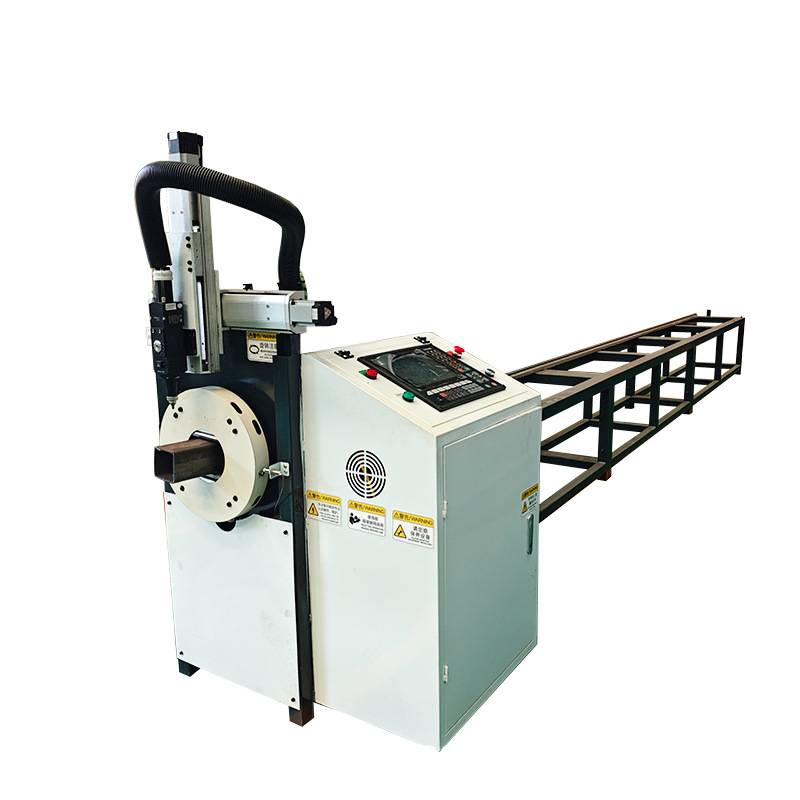
To handle 40kW of power, the physical architecture of the tube laser must be significantly more robust than standard models. The bed must be constructed from high-tensile steel, often heat-treated to relieve internal stresses, ensuring that the machine maintains sub-millimeter precision over years of heavy use. In Monterrey’s climate, where temperature fluctuations can affect metal expansion, the thermal stability of the machine frame is paramount.
Advanced Motion Control and Chuck Mechanics
Precision in tube laser cutting is heavily dependent on the synchronization between the laser head and the chucks. A 40kW machine typically features a three-chuck or four-chuck system. This allows for “zero-tailing” cutting, meaning the machine can process the tube to the very end, minimizing material waste. Given the high cost of brass per kilogram, reducing scrap is a significant factor in the Return on Investment (ROI) for Monterrey-based shops.
The motion control systems utilize high-speed servo motors capable of rapid acceleration. When cutting intricate patterns in brass tubes—common in the luxury lighting or furniture industries—the machine must maintain a constant velocity to ensure the heat-affected zone (HAZ) remains minimal. If the head moves too slowly, the high power of the 40kW beam will melt the edges; if it moves too fast, the cut will not penetrate. The CNC software compensates for these variables in real-time, adjusting power output based on the instantaneous speed of the cutting head.
Software Integration and Nesting for Brass Profiles
Modern tube lasers are integrated with sophisticated CAD/CAM software that allows for complex nesting. For a manufacturer in Monterrey, this means being able to import a 3D model of a brass assembly and automatically calculate the most efficient way to cut the required tubes from a standard 6-meter or 12-meter length. The software also manages the “micro-joints,” which hold the cut pieces in place until the process is finished, preventing damage to the delicate brass surfaces during the rotation of the chucks.
Strategic Advantages for Monterrey’s Manufacturing Sector
The industrial ecosystem in Monterrey is characterized by its proximity to the United States and its deep integration into the global supply chain. The 40kW tube laser cutter serves as a bridge between traditional fabrication and “Industry 4.0.” By automating the laser cutting process, companies can reduce their reliance on manual labor, which is increasingly scarce in specialized technical roles.
Nearshoring and the Demand for Precision Brass Components
As American companies move their manufacturing from Asia to Mexico, the demand for high-quality metal components has spiked. Brass, used extensively in plumbing, electrical connectors, and marine hardware, requires a level of precision that traditional methods cannot match. A 40kW system allows Monterrey shops to bid on high-volume contracts that require both speed and extreme accuracy. The ability to deliver “ready-to-assemble” parts directly from the laser cutter—eliminating the need for secondary deburring or finishing—significantly reduces lead times for international clients.
Best Practices for 40kW Laser Cutting Operations
Operating a 40kW machine requires a higher level of expertise than standard equipment. In Monterrey, technical training for operators is a critical component of successful implementation. Safety protocols must be strictly enforced, as a 40kW beam is capable of causing catastrophic damage if not properly contained within the machine’s protective enclosure.
Optimizing Gas Selection for Brass
The choice of assist gas is vital when laser cutting brass. Most 40kW operations in Monterrey utilize high-pressure Nitrogen or Oxygen. Nitrogen is preferred for brass because it acts as a cooling agent and prevents oxidation, resulting in a bright, clean edge that is essential for decorative applications. Oxygen can be used for thicker sections to speed up the process through an exothermic reaction, but it leaves a darker oxide layer that may require cleaning. The 40kW power allows for the use of compressed air in some instances, providing a cost-effective alternative for less critical structural components.
Maintenance Protocols for Ultra-High Power Systems
Maintenance is the lifeline of any 40kW system. In the dusty industrial environments of Monterrey, the filtration systems must be checked daily. The protective windows in the cutting head—the last line of defense for the expensive internal optics—must be inspected for the slightest contamination. At 40,000 watts, even a microscopic dust particle on the lens can absorb enough energy to shatter the glass instantly. Establishing a rigorous preventative maintenance schedule ensures that the machine remains an asset rather than a liability.
Conclusion: Future-Proofing Monterrey’s Industrial Base
The 40kW tube laser cutter is more than just a piece of machinery; it is a statement of industrial capability. For the manufacturers of Monterrey, investing in this technology is a strategic move to secure their place in the future of global manufacturing. By mastering the laser cutting of challenging materials like brass at ultra-high power levels, these companies are not only improving their internal efficiencies but also elevating the reputation of Mexican engineering on the world stage.
As the “Regiomontano” spirit of innovation continues to drive the region forward, the integration of 40kW fiber lasers will undoubtedly play a central role in the next chapter of Monterrey’s industrial success story. Whether it is for heavy infrastructure or intricate artistic designs, the precision, power, and versatility of the 40kW tube laser are the tools that will shape the metal—and the economy—of tomorrow.
















