
Engineering Excellence: The 40kW Fiber Laser Revolution in Puebla’s Agricultural Sector
The industrial landscape of Puebla, Mexico, is currently undergoing a significant technological shift. As a region traditionally rooted in both high-end automotive manufacturing and robust agricultural production, the demand for precision-engineered components has never been higher. For factory owners and engineers specialized in agricultural machinery, the introduction of the 40kW Fiber Laser Cutting Machine represents a pivotal advancement. This guide explores the technical architecture of these machines, specifically focusing on the structural advantages of the tube-welded standard bed and the specialized requirements for high-precision brass processing.
In the context of agricultural engineering—where components must withstand extreme mechanical stress and environmental corrosion—the choice of fabrication technology determines the lifecycle and reliability of the end product. The 40kW fiber laser is not merely an incremental upgrade from 20kW or 30kW systems; it is a fundamental shift in processing capability, particularly for highly reflective non-ferrous metals like brass.
The Structural Foundation: Tube-Welded Standard Bed Engineering
For a 40kW laser system, the structural integrity of the machine bed is the most critical factor in maintaining long-term accuracy. At such high power levels, the laser head moves at incredible accelerations, often exceeding 2.0G. Without a rigid foundation, these forces translate into vibrations that compromise cutting precision.
The tube-welded standard bed is engineered using high-strength industrial rectangular tubes. The manufacturing process involves a multi-stage thermal treatment. First, the frame is welded using robotic CO2 shielding to ensure deep penetration and uniform beads. Following welding, the bed undergoes a high-temperature annealing process. This stress-relief heat treatment is vital; it reorganizes the molecular structure of the steel, ensuring that the bed will not deform over a projected 20-year lifespan.
From an engineering perspective, the tube-welded design offers a superior strength-to-weight ratio compared to traditional cast iron beds. The internal ribbing within the rectangular tubes provides exceptional torsional rigidity. In the Puebla market, where temperature fluctuations can affect metal expansion, the thermal stability of the tube-welded bed ensures that the X, Y, and Z axes remain perfectly aligned, maintaining a positioning accuracy of ±0.03mm even during 24/7 heavy-duty cycles.

High-Power Dynamics: Why 40kW is Essential for Brass
Brass is a cornerstone material in agricultural irrigation systems, valve manufacturing, and specialized electrical connectors due to its corrosion resistance and conductivity. However, for laser cutting, brass presents a significant challenge: high reflectivity. In lower-power fiber lasers, the “back-reflection” of the laser beam can travel back through the delivery fiber and damage the laser source.
The 40kW power threshold changes the physics of the cut. With 40,000 watts of concentrated energy, the laser achieves “instantaneous penetration.” The energy density is so high that the brass transitions from solid to vapor state before it can reflect a significant portion of the beam back into the optics. This allows for:
1. **Increased Thickness Capacity:** While a 10kW machine might struggle with 10mm brass, a 40kW system can effortlessly process brass plates up to 50mm-70mm with a clean, dross-free finish.
2. **Superior Edge Quality:** High power allows for faster cutting speeds. Faster speeds mean a smaller Heat Affected Zone (HAZ), which preserves the mechanical properties of the brass alloy.
3. **Reduced Gas Consumption:** By cutting faster, the machine uses less auxiliary gas (typically Nitrogen or Oxygen) per linear meter, significantly reducing the operational cost per part.
Precision Engineering for Agricultural Components
Agricultural machinery in Puebla—ranging from seeders to complex harvesting equipment—requires components that fit with high tolerances. The 40kW fiber laser, supported by the stability of the tube-welded bed, delivers an industrial-grade finish that often eliminates the need for secondary machining.
Engineers must consider the “Kerf Width” (the width of the material removed by the laser). At 40kW, the kerf is remarkably narrow and consistent. This precision is essential when fabricating brass gears or intricate manifold plates for hydraulic systems. The CNC controllers integrated into these machines utilize advanced “Leapfrog” algorithms and real-time height sensing, ensuring the laser head maintains a constant distance from the brass sheet, even if the material has slight surface irregularities.
Furthermore, the 40kW system excels in “Fine Cut” modes. Even when working with thick brass, the machine can execute small-diameter holes (where the hole diameter is less than the material thickness), a feat that was previously impossible without mechanical drilling.
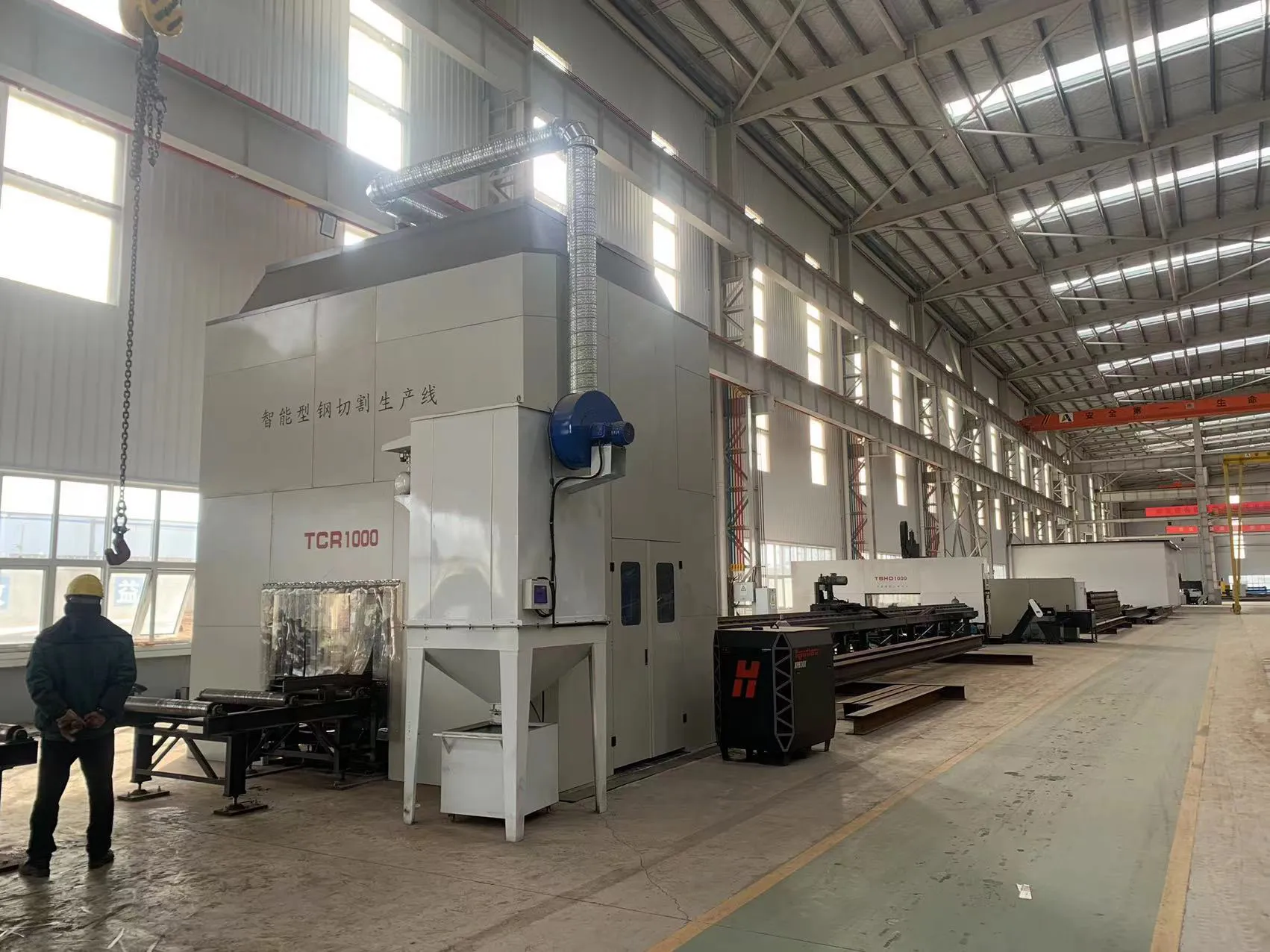
Data-Driven Operational Efficiency
For factory owners in Puebla, the transition to 40kW technology is driven by Return on Investment (ROI). Let’s analyze the data comparing a 20kW system versus a 40kW system for 20mm Brass cutting:
* **Cutting Speed:** A 20kW machine typically processes 20mm brass at approximately 0.8 – 1.2 m/min. A 40kW machine increases this to 3.5 – 4.5 m/min. This represents a 300% increase in throughput.
* **Electrical Efficiency:** While the peak power consumption is higher, the “power-per-cut” ratio is lower because the machine completes the job in a fraction of the time.
* **Maintenance Intervals:** Modern 40kW fiber sources are modular. If one module fails, the machine can often continue operating at reduced power, preventing total production downtime—a critical factor during the peak agricultural harvest seasons in Mexico.
The tube-welded bed also contributes to lower maintenance costs. Because the bed does not warp or vibrate excessively, there is less wear and tear on the linear guides, rack-and-pinion systems, and motors. This mechanical longevity is a key data point for long-term capital expenditure planning.
Installation and Environmental Considerations in Puebla
Puebla’s altitude (approximately 2,135 meters) and climate require specific engineering considerations for high-power lasers. The air density affects the cooling efficiency of the water chillers. A 40kW system requires a high-capacity, dual-circuit cooling system to manage the heat generated by both the laser source and the cutting head.
For agricultural factories, the integration of a dust extraction and filtration system is mandatory. Cutting brass produces fine metallic particulates; the 40kW machines are equipped with partitioned extraction zones under the tube-welded bed. These zones open and close based on the current position of the laser head, maximizing suction efficiency and maintaining a clean working environment for operators.
Conclusion: Strategic Advantage for the Mexican Market
The adoption of a 40kW Fiber Laser Cutting Machine with a tube-welded standard bed is more than an equipment purchase; it is a strategic upgrade for Puebla’s agricultural manufacturing base. By mastering the high-precision cutting of brass and other heavy-duty metals, local factories can move up the value chain, producing components that meet international engineering standards.
The combination of structural rigidity (tube-welded bed) and extreme energy density (40kW) allows for a level of manufacturing flexibility that was previously unattainable. Whether it is producing high-volume irrigation fittings or specialized prototype components for new agricultural machinery, this technology provides the speed, precision, and durability required to compete in a globalized economy. For the engineers and owners of Puebla, the 40kW fiber laser is the definitive tool for the next generation of industrial excellence.
















