Introduction to High-Precision Tube Processing in Monterrey
Monterrey, Nuevo León, has long been recognized as the industrial heart of Mexico. As the region experiences a massive influx of investment due to nearshoring trends, the demand for advanced manufacturing technologies has reached an all-time high. Among these technologies, the 3kW tube laser cutter has emerged as a critical tool for workshops and Tier 1 suppliers alike. This guide explores the technical nuances of operating a 3kW fiber laser system, with a specific focus on the challenges and advantages of processing galvanized steel within the unique industrial climate of Monterrey.
The transition from traditional mechanical sawing and drilling to CNC laser cutting represents a paradigm shift in productivity. A 3kW source provides the optimal balance between capital investment and processing capability, offering enough power to penetrate medium-thickness walls while maintaining the high speeds necessary for thin-gauge galvanized tubing used in construction and automotive frames.
The Technical Specifications of a 3kW Fiber Laser Source
A 3kW fiber laser source is engineered to deliver high power density. Unlike CO2 lasers of the past, fiber technology operates at a wavelength of approximately 1.06 microns, which is more readily absorbed by metallic surfaces. This absorption efficiency is particularly beneficial when dealing with galvanized steel, where the reflective properties of the zinc coating can sometimes interfere with the beam.
Power Density and Kerf Width
In a 3kW system, the beam is focused into a spot size often smaller than 0.1mm. This high concentration of energy allows for an incredibly narrow kerf (the width of the cut). For engineering firms in Monterrey producing complex assemblies, this precision means that interlocking tube joints—such as bird-mouth cuts or tab-and-slot designs—can be manufactured with tolerances tighter than +/- 0.1mm, virtually eliminating the need for secondary grinding before welding.

Wall Thickness Capabilities
While a 3kW laser cutting machine can theoretically cut carbon steel up to 20mm, its “sweet spot” for tube processing lies between 1mm and 8mm. For galvanized steel, which is typically found in lighter structural applications, the 3kW source allows for high-speed processing of 2mm to 4mm wall thicknesses, maintaining a clean edge without excessive dross or slag accumulation.
Processing Galvanized Steel: The Zinc Challenge
Galvanized steel is a staple in Monterrey’s construction and HVAC industries due to its corrosion resistance. However, from a laser cutting perspective, the zinc coating presents specific metallurgical challenges. Zinc has a much lower melting point (approx. 419°C) and boiling point (approx. 907°C) than the underlying steel (approx. 1500°C).
Managing Zinc Vaporization
As the laser beam hits the material, the zinc coating vaporizes before the steel melts. This creates a high-pressure gas pocket that can disrupt the stability of the molten pool. If not managed correctly, this leads to “spatter”—small droplets of molten metal that can adhere to the nozzle or, worse, the protective window of the laser head. To mitigate this, 3kW systems must utilize optimized cutting parameters, often involving a slightly higher focal position to widen the kerf and allow gases to escape more freely.
Assistant Gas Selection: Nitrogen vs. Oxygen
For galvanized materials, the choice of assistant gas is critical. While Oxygen can increase cutting speeds through an exothermic reaction, it often results in a charred, oxidized edge that compromises the corrosion resistance of the zinc near the cut. Nitrogen is the preferred choice for high-quality laser cutting of galvanized tubes in Monterrey. By using high-pressure Nitrogen (often exceeding 15 bar), the machine “blows” the molten metal out of the cut before it can react with oxygen, leaving a bright, clean edge that is ready for immediate assembly.
Strategic Applications in the Monterrey Industrial Corridor
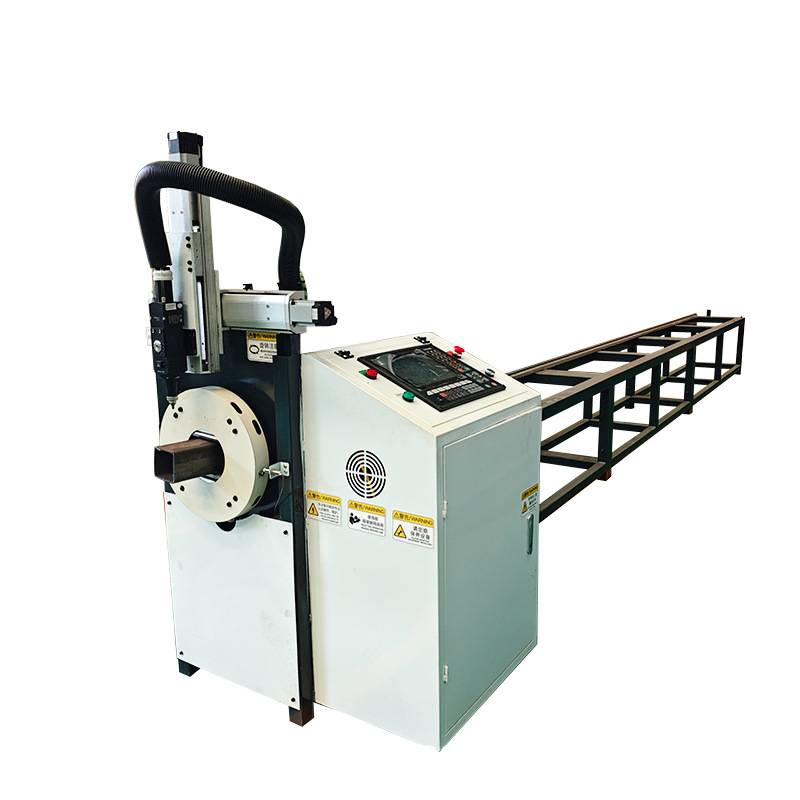
Monterrey’s economy is heavily weighted toward automotive manufacturing, appliance production (white goods), and heavy structural engineering. The 3kW tube laser cutter serves these sectors by providing a versatile platform for various tube profiles, including round, square, rectangular, and even open profiles like C-channels or L-angles.
Automotive and Transportation
With the presence of major OEMs and their suppliers in the Santa Catarina and Apodaca submarkets, the demand for precision-cut tubular components for chassis, seat frames, and exhaust systems is constant. The 3kW laser cutting process ensures that these components meet the rigorous safety and durability standards required by the global automotive industry.
Solar Racking and Construction
The solar energy sector in Northern Mexico relies heavily on galvanized square tubing for mounting structures. A 3kW machine can process thousands of meters of solar racking per day, performing complex hole patterns and end-cuts in a single pass. This replaces the traditional workflow of “cut-to-length, then drill,” significantly reducing labor costs and lead times for large-scale energy projects.
Optimizing the 3kW Laser for Monterrey’s Climate
Operating high-precision machinery in Monterrey requires consideration of the local environment. The region is known for extreme temperature fluctuations and high dust levels, both of which can impact the performance of a fiber laser.
Chiller Performance and Thermal Stability
A 3kW fiber laser generates significant heat within the resonator and the cutting head. In Monterrey, where summer temperatures frequently exceed 40°C, the cooling system (chiller) must be robust. It is essential to use a dual-circuit water chiller that maintains the laser source and the optics at a constant temperature. Any deviation can lead to “thermal lensing,” where the focus of the laser shifts during a long production run, resulting in inconsistent cut quality.
Dust Filtration and Air Quality
The laser cutting of galvanized steel produces fine zinc oxide fumes. These fumes are not only hazardous to health but can also settle on the machine’s linear guides and optical components. In Monterrey’s industrial parks, where ambient dust is already a factor, a high-capacity dust extraction and filtration system is mandatory. This ensures a clean working environment and protects the precision components of the 3kW tube laser, such as the rack-and-pinion drive system and the chuck mechanisms.
Software and Nesting: Maximizing Material Yield
In the competitive Monterrey market, material waste is a significant cost driver. Advanced nesting software integrated with the 3kW tube laser allows engineers to maximize the yield from every 6-meter or 12-meter raw tube. Modern software can “common-cut” shared edges between parts and automatically manage the “dead zone” (the material held by the chucks), reducing scrap rates to below 5% in many cases.
Simulation and Collision Avoidance
Tube laser cutting involves complex 3D movements as the tube rotates and the head moves along multiple axes. Using simulation software is vital to prevent collisions between the cutting head and the rotating tube, especially when processing non-symmetrical profiles. This “digital twin” approach allows Monterrey shops to validate their programs before a single spark is thrown, protecting the expensive 3kW cutting head from damage.
Maintenance Protocols for Long-Term Reliability
To maintain the competitive edge provided by a 3kW tube laser, a strict preventative maintenance schedule is required. For galvanized steel applications, the frequency of nozzle inspection and protective window cleaning must be increased due to the higher likelihood of zinc spatter.
Daily and Weekly Checks
- Nozzle Centering: Ensure the laser beam is perfectly centered in the nozzle orifice to maintain cut symmetry.
- Cover Glass Inspection: Check for any micro-pitting or dust on the protective lens. Even a tiny speck can absorb laser energy and shatter the glass.
- Chuck Lubrication: The pneumatic or hydraulic chucks that rotate the tube must move smoothly to ensure rotational accuracy.
Annual Technical Audits
For high-volume operations in Monterrey, an annual audit by a certified technician is recommended. This includes checking the beam quality (BPP), recalibrating the Z-axis height sensor, and inspecting the fiber optic cable for any signs of stress or degradation. Maintaining the integrity of the fiber delivery system is paramount for a 3kW machine to ensure it continues to deliver the rated power at the workpiece.
Conclusion: The Future of Tube Fabrication in Monterrey
The 3kW tube laser cutter is more than just a piece of equipment; it is a strategic asset for any Monterrey-based company looking to dominate the metal fabrication market. By mastering the laser cutting of galvanized steel, manufacturers can offer products that are precise, durable, and cost-competitive. As the region continues to evolve into a global manufacturing powerhouse, the integration of fiber laser technology will be the dividing line between traditional workshops and the “Factories of the Future.” Investing in high-quality 3kW systems, supported by rigorous technical knowledge and local maintenance expertise, ensures that Monterrey remains at the forefront of industrial innovation.