Comprehensive Engineering Guide: 3kW Tube laser cutting for Carbon Steel in Toluca
The industrial landscape of Toluca, State of Mexico, has undergone a significant transformation, evolving into a premier hub for automotive, aerospace, and heavy machinery manufacturing. Central to this evolution is the adoption of advanced fiber laser technology. Specifically, the 3kW tube laser cutting machine has emerged as the industry standard for processing carbon steel profiles. This guide provides an in-depth technical analysis of 3kW systems, focusing on their application within the unique industrial environment of Toluca.
The Strategic Advantage of 3kW Fiber Laser Technology
In the realm of laser cutting, power selection is a critical engineering decision. While 1kW systems are suitable for thin-walled materials and 6kW+ systems are reserved for heavy-duty industrial plates, the 3kW fiber laser represents the “sweet spot” for tube fabrication. It offers a perfect balance between capital investment and operational throughput.
For carbon steel—the most common material in Toluca’s construction and automotive sectors—a 3kW source provides sufficient energy density to achieve high-speed melt-expulsion. This power level allows for the efficient processing of square, rectangular, and round tubes with wall thicknesses ranging from 1mm up to 10mm. The fiber laser’s wavelength (typically 1.06 microns) is highly absorbed by carbon steel, ensuring a stable and narrow kerf width, which is essential for complex geometries and interlocking joints.
Material Focus: Carbon Steel Processing in Toluca
Carbon steel is the backbone of regional manufacturing in Toluca, utilized in everything from warehouse racking to automotive chassis components. When performing laser cutting on carbon steel, engineers must consider the grade and surface condition of the material. Common grades such as ASTM A36 or A500 are standard, but the presence of mill scale or rust can significantly impact the consistency of the cut.
In the high-altitude environment of Toluca (approximately 2,660 meters above sea level), atmospheric pressure is lower than at sea level. This affects the behavior of assist gases. When cutting carbon steel with a 3kW laser, Oxygen (O2) is typically used as the assist gas to facilitate an exothermic reaction. This reaction adds thermal energy to the process, allowing for faster speeds on thicker sections. However, in Toluca’s thinner air, precise calibration of the gas pressure and nozzle diameter is required to maintain a stable plasma cloud and ensure clean dross-free edges.
Technical Specifications and Machine Architecture
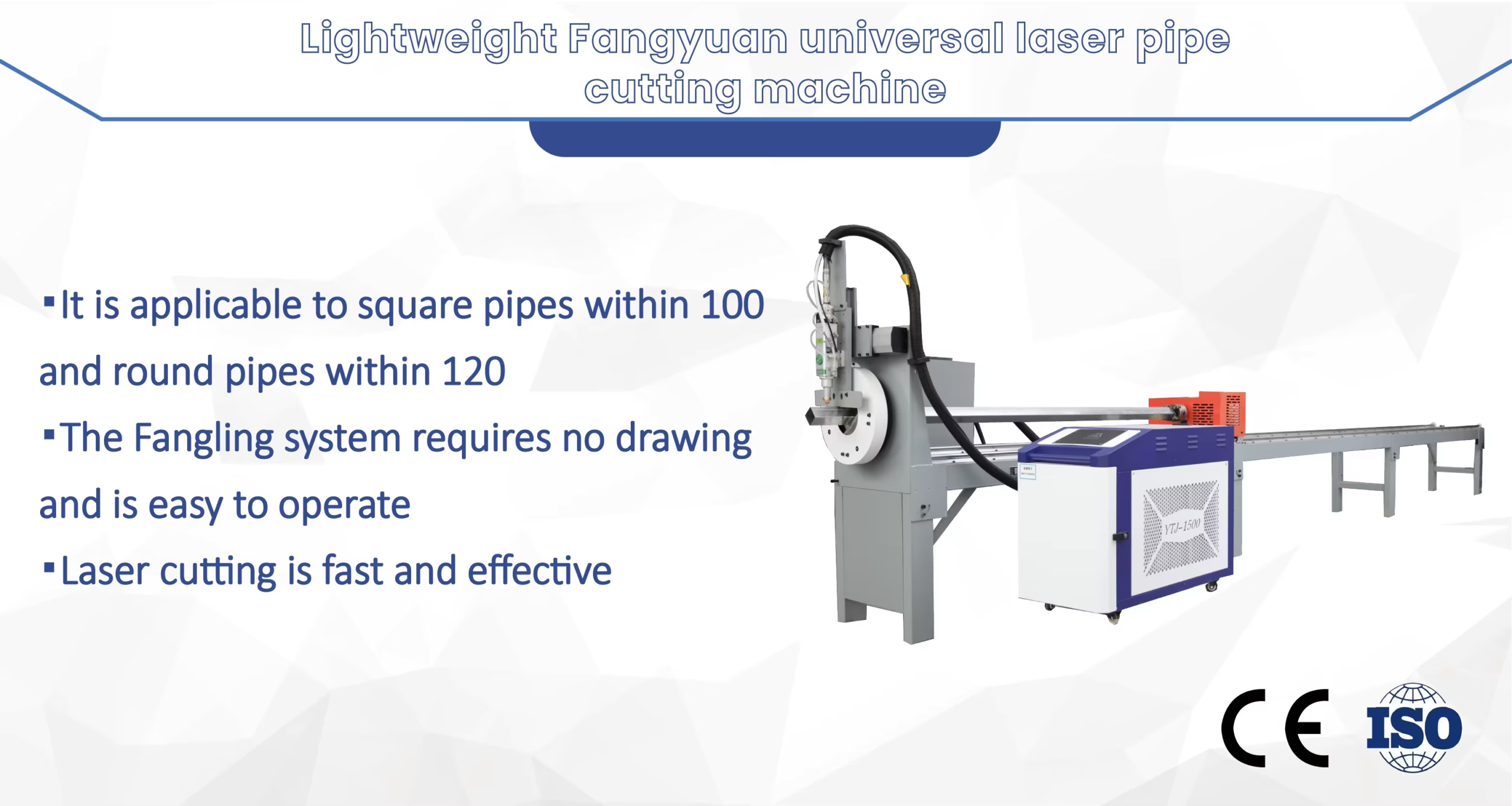
A professional-grade 3kW tube laser cutter is defined by its mechanical precision and software integration. Key components include:
- Fiber Laser Source: High-stability resonators from manufacturers like IPG or Raycus, providing a BPP (Beam Parameter Product) optimized for tube profiles.
- Pneumatic Chuck System: Automatic centering chucks that can handle various shapes without manual adjustment, ensuring the tube remains concentric during high-speed rotation.
- Cutting Head: Auto-focus heads (such as Raytools or Precitec) that adjust the focal point dynamically based on material thickness and real-time height sensing.
- CNC Controller: Advanced systems like CypTube that support 3D nesting and “frog-jump” lifting to minimize non-productive movement.

Optimizing the Laser Cutting Process
To achieve maximum efficiency in a 3kW system, several variables must be synchronized. The focal position is perhaps the most critical. For carbon steel, the focal point is usually set slightly above the material surface when using Oxygen, or deep within the material when using Nitrogen for high-pressure “clean cutting” of thinner walls.
Speed parameters are also vital. A 3kW laser can process 2mm carbon steel square tubing at speeds exceeding 20 meters per minute. However, as the wall thickness increases to 8mm, the speed drops significantly to maintain cut quality. In Toluca’s competitive market, fabricators often use Nitrogen for laser cutting carbon steel tubes thinner than 3mm to eliminate the oxidation layer, which simplifies subsequent welding or painting processes.
Challenges of Tube Geometry and Nesting
Unlike flat sheet cutting, tube laser cutting involves managing the structural integrity of the workpiece as it rotates. Long tubes (typically 6 meters) can suffer from “bowing” or twisting. High-end machines in Toluca’s industrial parks utilize mechanical supports and “follow-up” rests that move with the tube to prevent vibration and ensure dimensional accuracy.
Nesting software plays a crucial role in reducing waste. For carbon steel, which is sold by weight, optimizing the layout of parts on a single tube can result in significant cost savings. Advanced software allows for common-line cutting, where two parts share a single cut path, reducing both gas consumption and processing time.
Environmental Considerations in Toluca
The environmental conditions in Toluca present specific challenges for 3kW fiber lasers. The region is known for its wide temperature fluctuations and dust levels associated with industrial zones like Parque Industrial Toluca 2000. Fiber lasers are sensitive to ambient temperature; therefore, a high-quality industrial chiller is mandatory. The chiller must be a dual-circuit system, cooling both the laser source and the cutting optics independently to prevent condensation.
Furthermore, dust filtration is paramount. Carbon steel laser cutting produces a significant amount of fine metallic dust and iron oxide. A robust dust extraction system with HEPA filtration is necessary not only for worker safety but also to protect the precision linear guides and rack-and-pinion drives of the machine from premature wear.
Maintenance Protocols for Peak Performance
To maintain a competitive edge in the Toluca manufacturing sector, preventive maintenance is non-negotiable. For a 3kW system, the following schedule is recommended:
Daily Maintenance
- Clean the protective window of the cutting head using spectroscopic grade ethanol.
- Check the nozzle for slag buildup or deformation.
- Monitor the chiller water levels and temperature settings.
Weekly and Monthly Maintenance
- Lubricate the X, Y, and Z-axis rails and the chuck gear mechanism.
- Inspect the gas delivery lines for leaks, especially the high-pressure Nitrogen lines.
- Check the alignment of the laser beam to ensure it is perfectly centered in the nozzle.
Economic Impact and ROI for Toluca Fabricators
The transition from traditional methods (such as band sawing, drilling, and milling) to laser cutting offers a rapid Return on Investment (ROI). A 3kW tube laser can replace up to five traditional machines and their associated operators. In Toluca, where labor costs are rising but the demand for precision is higher than ever, the automation provided by a fiber laser is a strategic necessity.
By integrating “one-hit” processing—where cutting, hole-punching, and beveling are done in a single cycle—manufacturers can reduce lead times from days to minutes. This agility is particularly valuable for the “just-in-time” (JIT) delivery models required by the automotive OEMs located in and around the State of Mexico.
Conclusion
The 3kW tube laser cutter is a transformative tool for carbon steel fabrication in Toluca. By understanding the technical nuances of the fiber laser, optimizing assist gas parameters for high-altitude operation, and maintaining strict maintenance protocols, local engineers can achieve world-class production standards. As the region continues to grow as an industrial powerhouse, those who master the art of precision laser cutting will undoubtedly lead the market in efficiency, quality, and profitability.