
Introduction to 3kW Tube laser cutting in Tijuana
The manufacturing landscape in Tijuana, Baja California, has undergone a significant technological transformation over the last decade. As one of North America’s premier hubs for medical devices, aerospace components, and automotive assemblies, the demand for precision metal fabrication has never been higher. At the center of this industrial evolution is the 3kW tube laser cutting machine, a tool that has redefined how carbon steel is processed. For engineers and plant managers in the region, transitioning from traditional mechanical sawing and drilling to fiber laser technology represents a leap in both throughput and geometric complexity.
A 3kW fiber laser source provides the ideal power density for the majority of industrial tube applications. While higher wattages exist, the 3000W threshold is widely considered the “sweet spot” for carbon steel, offering a perfect balance between capital investment and operational capability. In Tijuana’s competitive maquiladora environment, the ability to produce high-tolerance parts with minimal secondary finishing is a critical advantage for maintaining lean manufacturing standards.

The Technical Superiority of Fiber Laser Technology
The 3kW tube laser utilizes fiber optic delivery systems to transport the beam from the resonator to the cutting head. Unlike older CO2 technology, which relies on a complex series of mirrors and gas mixtures, fiber lasers are solid-state. This results in a significantly higher wall-plug efficiency—often exceeding 30%—which translates to lower electricity costs for facilities operating in Baja California’s industrial zones.
Wavelength and Absorption in Carbon Steel
The wavelength of a fiber laser is approximately 1.06 microns, which is ten times shorter than that of a CO2 laser. This shorter wavelength is more readily absorbed by carbon steel, especially in the 3kW power range. This high absorption rate allows for faster piercing and higher feed rates. When processing carbon steel tubes, the energy is concentrated into a much smaller spot size, creating a high-intensity “keyhole” effect that vaporizes the metal almost instantaneously, resulting in a narrow kerf and a very small heat-affected zone (HAZ).
Optimizing Carbon Steel Processing in Tijuana
Carbon steel remains the most widely used material in Tijuana’s construction and automotive sectors due to its cost-effectiveness and structural integrity. Common grades such as ASTM A500, A513, and A36 are the primary candidates for laser cutting. A 3kW system is specifically engineered to handle these materials with high precision, whether the profile is round, square, rectangular, or a custom open profile like C-channels and angles.
Thickness Capacities and Performance Metrics
For carbon steel, a 3kW tube laser typically handles wall thicknesses ranging from 0.5mm to 10mm with exceptional clean-cut quality. While it can push into the 12mm to 14mm range, the 3kW power level excels in the 2mm to 8mm bracket, where it can maintain high-speed production without sacrificing edge quality. In a production environment, this means a 50mm diameter tube with a 3mm wall thickness can be processed at speeds exceeding 6 meters per minute, depending on the complexity of the cutouts.
Assist Gas Selection: Oxygen vs. Nitrogen
The choice of assist gas is a fundamental engineering decision when laser cutting carbon steel. In Tijuana’s fabrication shops, Oxygen (O2) is the standard for thicker carbon steel sections. The oxygen reacts exothermically with the iron, providing additional thermal energy to the cutting process. This allows for lower gas pressures and slower consumption rates, though it leaves a thin oxide layer on the cut edge that may require removal before painting or powder coating.
Conversely, Nitrogen (N2) is increasingly used with 3kW systems for thinner-walled carbon steel tubes. Nitrogen acts as a shielding gas, blowing away the molten metal without a chemical reaction. This results in a “bright” or oxide-free edge, which is essential for components destined for high-end aesthetic finishes or specific welding requirements common in the aerospace sector. Engineers must weigh the higher cost of Nitrogen against the savings in secondary cleaning processes.
Strategic Advantages for Tijuana Manufacturers
Tijuana’s proximity to the United States border provides a unique logistical framework. Manufacturers operating in Otay Mesa or El Florido can source raw carbon steel from both Mexican and US suppliers, and the 3kW tube laser allows them to process this material into finished goods for rapid export. The precision of laser cutting ensures that parts meet the rigorous standards of American OEMs (Original Equipment Manufacturers).
Reduction in Tooling and Setup Time
Traditional tube processing requires dedicated jigs, fixtures, and specialized tooling for every different hole diameter or slot shape. The 3kW tube laser eliminates these requirements. Since the process is entirely software-driven (CAD/CAM), switching from a round tube to a square tube requires only a few minutes of software adjustment and a change in the machine’s chuck settings. This flexibility is vital for Tijuana’s “High-Mix, Low-Volume” (HMLV) production models, where manufacturers must pivot quickly between different client orders.
Machine Components and Structural Integrity
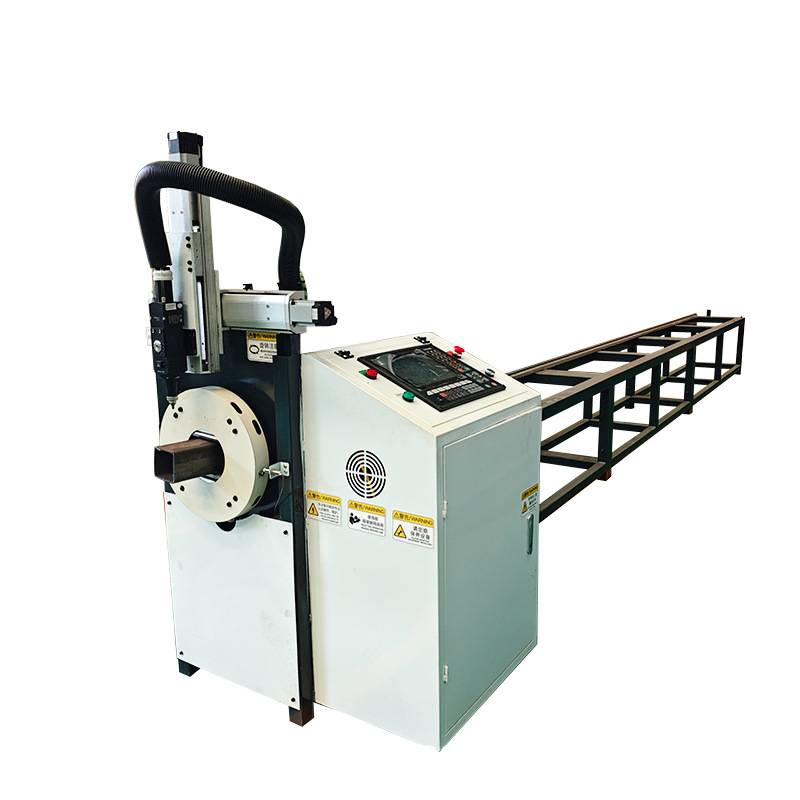
To achieve the tolerances required by modern engineering (often within ±0.1mm), the physical architecture of the tube laser must be exceptionally rigid. High-end 3kW systems feature a heavy-duty bed, often made of stress-relieved steel or cast iron, to dampen vibrations during high-speed movements.
Automatic Chucking and Centering Systems
One of the most difficult aspects of tube processing is managing the inherent “bow” or “twist” found in raw carbon steel stock. Advanced 3kW machines utilize pneumatic or hydraulic self-centering chucks. These systems automatically compensate for irregularities in the tube’s geometry. In Tijuana’s high-output facilities, automatic loading systems are often paired with the laser, allowing for a full bundle of tubes to be loaded and processed without manual intervention, significantly reducing labor costs and human error.
The Role of the Cutting Head
The cutting head on a 3kW system features an autofocus function. As the tube rotates and moves along the X-axis, the cutting head uses a capacitive sensor to maintain a constant distance from the material surface. This is particularly important for square or rectangular tubes, where the distance between the nozzle and the material changes as the head moves over the corners. Precise focal point control ensures that the energy density remains consistent, preventing “dross” or burr formation on the inside of the tube.
Maintenance and Operational Longevity
Operating a 3kW laser cutting system in an industrial environment like Tijuana requires a disciplined maintenance regimen. The local climate, characterized by coastal humidity and occasional dust, necessitates high-quality filtration systems for both the laser source and the chiller units. Fiber lasers are generally lower maintenance than CO2 lasers, but they are not “maintenance-free.”
Preventive Maintenance Schedules
Engineers should implement a daily check of the protective windows (cover slides) and the nozzle condition. A contaminated lens can quickly lead to beam distortion, which reduces cut quality and can eventually damage the expensive internal optics of the cutting head. Furthermore, the chiller system—responsible for maintaining the temperature of the 3kW source—must be treated with specialized additives to prevent algae growth and corrosion within the cooling lines. In the high-demand environment of Baja California, a downtime of even a few hours can disrupt the entire supply chain.
Software Integration and Industry 4.0
The efficiency of 3kW laser cutting is largely determined by the nesting software. Modern CAD/CAM systems allow engineers to “nest” multiple parts on a single length of tube, minimizing “remnant” or scrap material. This is particularly important when dealing with high-grade carbon steels where material costs can fluctuate. Integration with ERP (Enterprise Resource Planning) systems allows Tijuana-based plants to track material usage and production times in real-time, providing the data necessary for accurate quoting and project management.
Conclusion: The Future of Fabrication in Baja
The 3kW tube laser cutter is more than just a piece of machinery; it is a cornerstone of modern industrial capability in Tijuana. By providing the power necessary to slice through heavy carbon steel and the precision to handle intricate designs, it allows local manufacturers to compete on a global scale. As the region continues to attract high-tech investment, the reliance on fiber laser cutting will only grow. For any facility looking to optimize its production of carbon steel components, the 3kW tube laser represents the most reliable and efficient path forward, ensuring that “Made in Tijuana” remains a mark of engineering excellence.




























