
Engineering Guide: Implementing 3kW Fiber Laser Technology for Brass Tube Processing in the Leon Aerospace Sector
The industrial landscape of Leon has rapidly evolved from traditional manufacturing into a high-precision aerospace and automotive hub. For aerospace engineers and factory owners, the transition to 3kW fiber laser systems represents a critical upgrade in processing non-ferrous metals, specifically brass. Brass alloys, such as C26000 (Cartridge Brass) and C36000 (Free-Cutting Brass), are essential in aerospace for bushings, connectors, and fuel system components due to their corrosion resistance and electrical conductivity. However, their high reflectivity and thermal conductivity pose significant challenges for traditional CO2 lasers. The 3kW tube laser cutter, engineered with a plate-welded heavy-duty bed, provides the stability and beam density required to overcome these metallurgical hurdles while maintaining the stringent tolerances required by AS9100 standards.

Structural Integrity: The Engineering Behind the Plate-welded Heavy Duty Bed
In high-precision aerospace manufacturing, the machine’s foundation is as critical as the laser source. A 3kW tube laser operates at high acceleration speeds, often exceeding 1.2G. Without a robust frame, these inertial forces result in microscopic vibrations that manifest as “chatter” marks on the cut surface of the brass tube.
The plate-welded heavy-duty bed is engineered using high-tensile structural steel plates, typically ranging from 12mm to 20mm in thickness. Unlike lighter thin-walled tube frames, the plate-welded structure utilizes a cellular internal ribbing design. This design increases the moment of inertia and significantly enhances the damping capacity of the machine.
Following the welding process, the bed undergoes a rigorous thermal stress-relief annealing cycle. The frame is heated to approximately 600°C and cooled slowly to eliminate internal residual stresses. This ensures that the bed remains dimensionally stable for over 15 years of continuous operation. For engineers in Leon, where temperature fluctuations in the factory environment can affect machine geometry, this structural stability ensures that the X, Y, and Z axes remain perfectly orthogonal, maintaining a positioning accuracy of ±0.03mm over a 6-meter travel length.
Advanced 3kW Fiber Laser Source: Overcoming Brass Reflectivity
Brass is classified as a “highly reflective” metal. In the early days of laser cutting, back-reflection of the laser beam could travel back through the delivery fiber and destroy the laser diodes. Modern 3kW fiber lasers utilize an optical isolator and a specialized wavelength (typically 1.07 microns) that is more readily absorbed by yellow metals.
At the 3kW power level, the energy density at the focal point is sufficient to transition brass from a solid to a molten state almost instantaneously, minimizing the time the material spends in a reflective state. This is crucial for aerospace components where the Heat Affected Zone (HAZ) must be kept to a minimum to prevent altering the temper of the brass.
Data-driven analysis shows that a 3kW source can efficiently process brass tubes with wall thicknesses up to 8mm. For the common aerospace thickness of 2mm to 4mm, the 3kW system allows for high-speed nitrogen-assisted cutting. Nitrogen acts as a shielding gas, preventing oxidation and leaving a bright, weld-ready edge that requires no secondary finishing—a significant cost-saving factor for Leon-based Tier 1 suppliers.
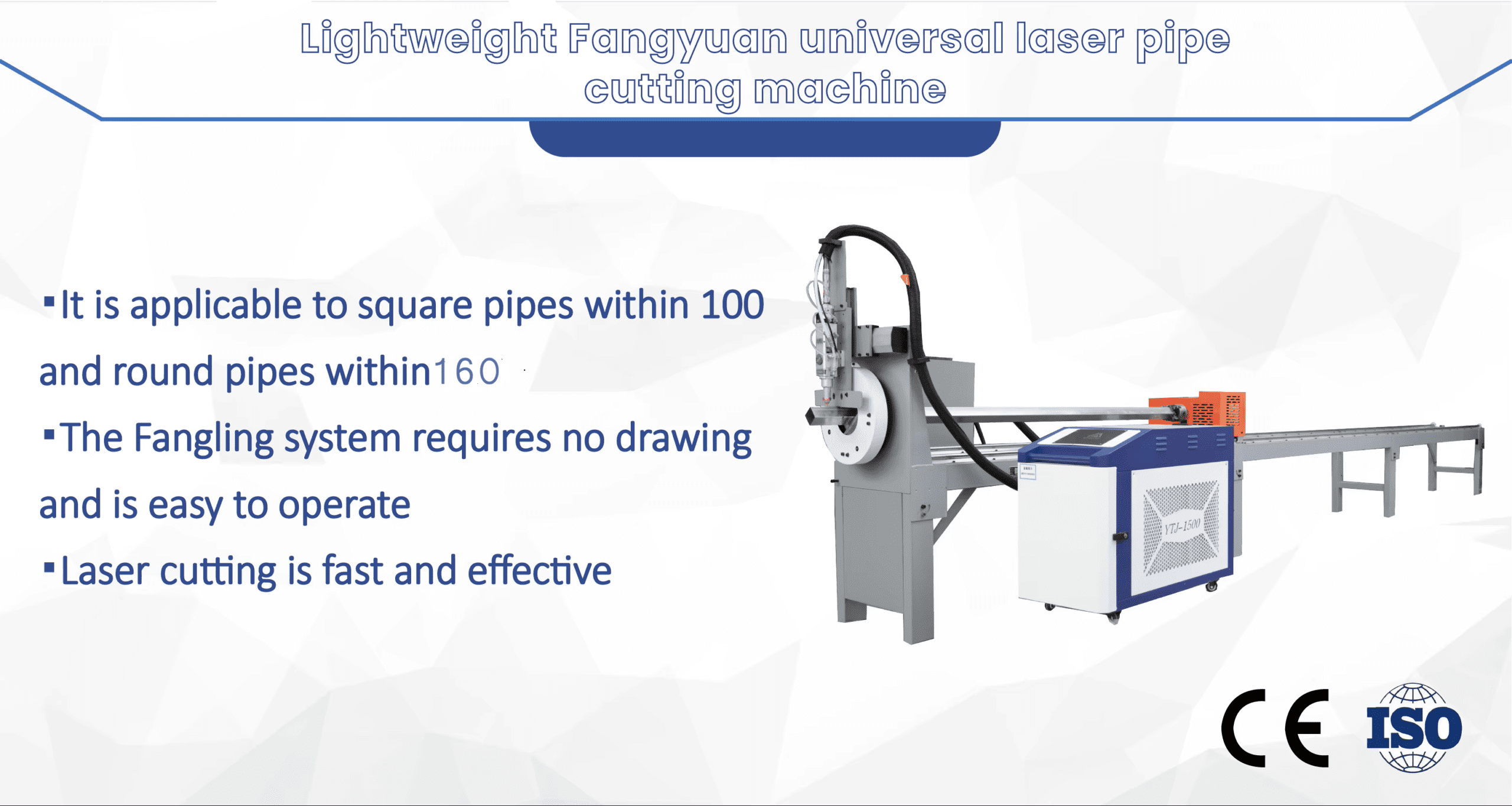
Precision Motion Control and Chuck Dynamics
For tube processing, the synchronization between the laser head and the rotating chucks is paramount. In the Leon market, aerospace components often involve complex geometries, such as interlocking joints or elliptical holes in round, square, or rectangular brass profiles.
The 3kW system typically employs a dual-pneumatic chuck system. The front chuck is stationary (but rotating), while the rear chuck provides the feed. To handle the soft surface of brass without marring or deformation, the clamping pressure is digitally controlled. High-precision servo motors, coupled with planetary reducers, ensure that the rotational axis (W-axis) maintains a tracking error of less than 0.01 degrees.
This precision allows for the execution of “micro-joint” technology. In aerospace ducting, engineers can cut complex patterns while leaving 0.2mm tabs to keep the part structurally sound during the cutting process, preventing the tube from sagging and ensuring the final dimensions are within the tight ±0.05mm tolerance required for assembly.
The Role of Intelligent Software in Aerospace Compliance
For factory owners in Leon, traceability and process repeatability are essential for aerospace certification. The 3kW tube laser is integrated with advanced CNC software (such as CypTube or similar professional suites) that allows for direct import of STEP or IGES files from CAD platforms like SolidWorks or CATIA.
The software includes a dedicated “Brass Cutting Library.” This database contains optimized parameters for power, frequency, duty cycle, and gas pressure specifically tuned for various brass alloys. By utilizing “Frog-leap” positioning and real-time power ramping, the software ensures that corners are not over-burnt—a common defect in high-thermal-conductivity metals.
Furthermore, the system provides real-time monitoring of gas consumption and laser power stability. For an aerospace engineer, this data can be exported to form part of the Quality Assurance (QA) documentation for every batch of parts produced, ensuring full compliance with international aviation standards.
Thermal Management and Dust Extraction in Brass Processing
Cutting brass generates a specific type of fine metallic dust and fumes that can be hazardous and abrasive. A professional-grade 3kW system designed for the Leon market features a partitioned dust extraction system. The extraction follows the laser head, focusing the vacuum pressure directly where the cut is occurring.
Additionally, because brass conducts heat so efficiently, the 3kW system employs a dual-circuit industrial chiller. One circuit cools the laser source, while the other cools the cutting head and the internal optics. This prevents thermal expansion of the cutting nozzle, which could otherwise lead to “nozzle drift,” where the beam becomes decentralized, resulting in an asymmetrical kerf and rejected parts.
Economic Impact and ROI for Leon-Based Manufacturers
Investing in a 3kW tube laser with a plate-welded heavy-duty bed is a strategic financial decision. While the initial capital expenditure is higher than a standard light-duty machine, the Total Cost of Ownership (TCO) is significantly lower for high-volume aerospace work.
1. Reduced Secondary Operations: The high-quality edge finish on brass eliminates the need for manual deburring or grinding, reducing labor costs by up to 40%.
2. Material Efficiency: Advanced nesting algorithms for tube cutting reduce scrap rates. In the case of expensive aerospace-grade brass, a 5% improvement in material utilization can save thousands of dollars annually.
3. Reliability: The plate-welded bed prevents the need for frequent recalibrations and repairs associated with frame warping, ensuring maximum machine uptime in Leon’s competitive industrial environment.
Technical Specifications Summary for Engineering Procurement
When evaluating a 3kW system for brass tube processing, engineers should look for the following minimum technical benchmarks:
– Laser Source: Fiber Laser (IPG, nLIGHT, or Raycus) with back-reflection protection.
– Bed Type: Plate-welded, heat-treated, and machined on a high-precision gantry milling center.
– Positioning Accuracy: ≤ ±0.03 mm.
– Repetition Accuracy: ≤ ±0.02 mm.
– Max Tube Diameter: Typically 160mm to 220mm for aerospace applications.
– Cutting Thickness (Brass): Optimal at 1mm – 6mm; Maximum at 8mm.
– Control System: Dedicated Tube CNC with 3D nesting capabilities.
Conclusion: Elevating Leon’s Aerospace Capabilities
The integration of a 3kW tube laser cutter specialized for brass is more than a capacity upgrade; it is a commitment to the precision and reliability demanded by the global aerospace industry. By combining the mechanical dampening of a plate-welded heavy-duty bed with the concentrated energy of a 3kW fiber source, manufacturers in Leon can achieve tolerances and finish qualities that were previously impossible.
As aerospace designs become more complex and material requirements more stringent, the ability to process brass tubes with high speed and surgical precision will define the leaders in the Leon industrial sector. This technology provides the necessary tools to transition from a regional supplier to a global aerospace partner, ensuring that every cut meets the highest standards of engineering excellence.
















