Introduction to 3kW Tube laser cutting in Guadalajara’s Industrial Landscape
Guadalajara, often referred to as the “Silicon Valley of Mexico,” has evolved into a sophisticated hub for electronics, automotive components, and high-end furniture manufacturing. Within this competitive industrial ecosystem, the adoption of advanced fiber laser technology has become a prerequisite for maintaining a competitive edge. The 3kW tube laser cutter represents a critical technological milestone for local manufacturers, offering a precise balance between power efficiency and high-speed processing capabilities, particularly when working with non-ferrous metals like brass.
The transition from traditional mechanical sawing or plasma cutting to fiber laser cutting has revolutionized how Jalisco-based engineers approach tube fabrication. For brass—a material prized in Guadalajara’s decorative lighting and architectural hardware sectors—the 3kW power threshold provides the necessary energy density to overcome the material’s inherent reflectivity while maintaining a narrow kerf and superior edge quality. This guide explores the technical nuances of operating a 3kW tube laser system specifically optimized for brass applications within the unique climate and industrial infrastructure of the Guadalajara metropolitan area.
 laser cutting machine“>
The Physics of 3kW Fiber Lasers and Brass Interaction
Overcoming High Reflectivity
Brass is an alloy of copper and zinc, both of which are highly reflective in the infrared spectrum used by fiber lasers. In the early days of CO2 lasers, cutting brass was hazardous to the machine’s internal optics due to back-reflection. However, the 1.06-micron wavelength of a 3kW fiber laser is absorbed much more efficiently by yellow metals. At 3,000 watts, the laser generates sufficient power to instantly transition the brass from a solid to a molten state, significantly reducing the “reflective window” during the initial piercing phase.
Thermal Conductivity and Heat Management
Brass possesses high thermal conductivity, meaning heat dissipates rapidly away from the cut zone. A 3kW system provides the high power density required to stay ahead of this heat dissipation. By maintaining a high feed rate, the laser cutting process minimizes the Heat Affected Zone (HAZ), preventing the warping or discoloration that often plagues lower-powered systems. This is especially vital for the thin-walled tubes frequently used in Guadalajara’s furniture industry, where aesthetic perfection is mandatory.
Technical Specifications for Tube Processing
Chuck Configuration and Material Handling
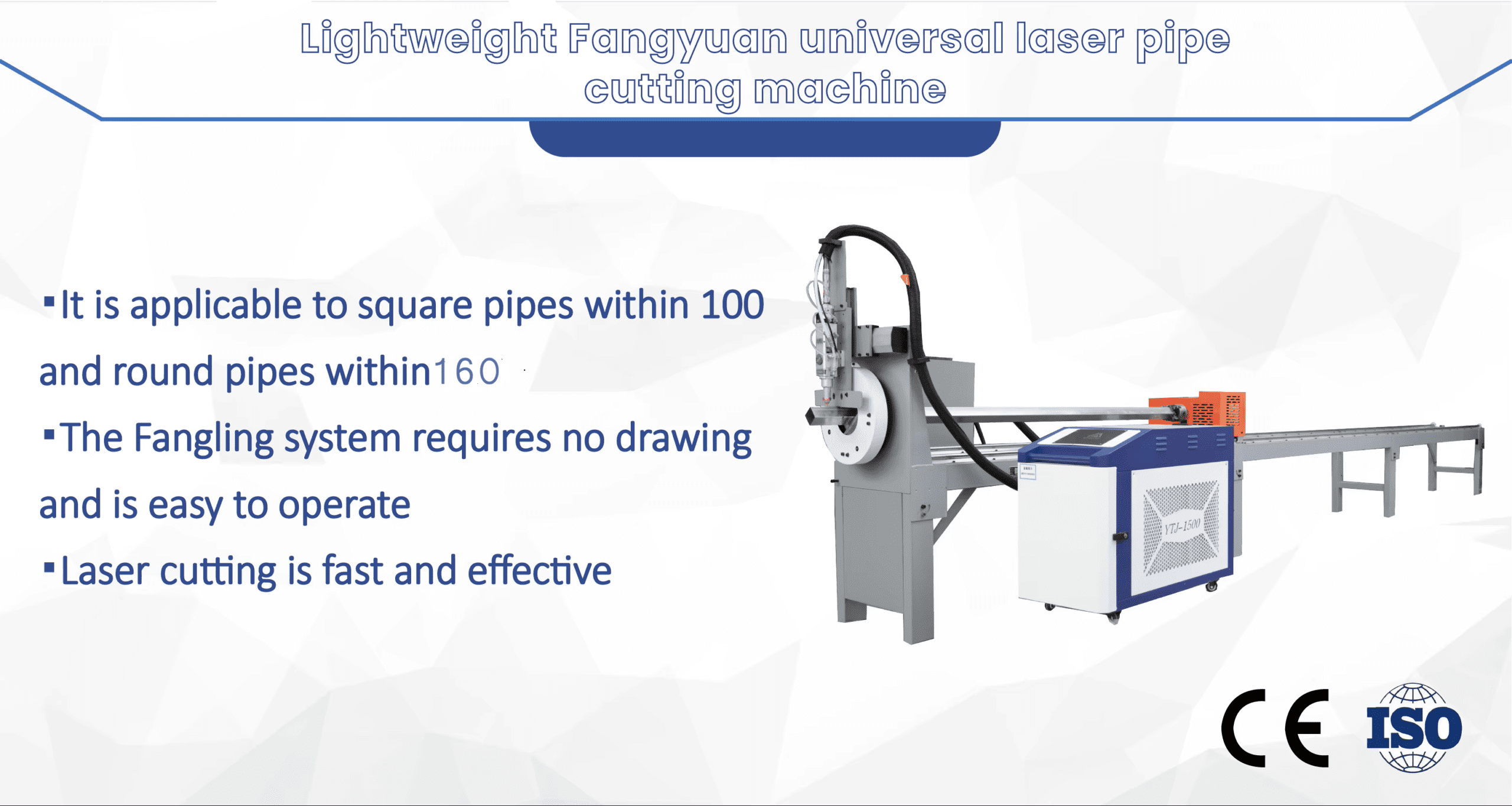
A standard 3kW tube laser cutter designed for the Mexican market typically features dual or triple pneumatic chuck systems. These chucks must be calibrated to handle the weight of brass, which is denser than mild steel. For a 3kW machine, the typical processing range includes round tubes from 20mm to 220mm in diameter and square profiles up to 150mm. In Guadalajara’s diverse job shops, the ability to quickly switch between these profiles via automated software adjustments is a significant productivity booster.
Nesting and Software Integration
Efficiency in laser cutting is largely determined by the nesting software. For expensive materials like brass, minimizing scrap is essential. Advanced CypTube or Lantek software suites allow engineers to perform “common line cutting,” where two parts share a single cut path. This not only saves material but also reduces the total processing time and gas consumption, directly impacting the bottom line of Guadalajara’s manufacturing facilities.

Optimizing Parameters for Brass in Guadalajara
Assist Gas Selection: Nitrogen vs. Oxygen
In the laser cutting of brass, the choice of assist gas is paramount. Nitrogen is the industry standard for high-quality brass finishes. It acts as a mechanical force to blow the molten metal out of the kerf while preventing oxidation, resulting in a bright, clean edge that requires no secondary polishing. In Guadalajara, sourcing high-purity Nitrogen (99.999%) is critical. While Oxygen can be used to increase cutting speeds in thicker brass, it often leaves a darkened oxide layer that must be chemically or mechanically removed, which may not be acceptable for decorative applications.
Nozzle Selection and Focal Position
For a 3kW output, a double-layer nozzle is generally recommended for brass to ensure stable gas flow. The focal position is typically set slightly below the surface of the material to ensure the energy is concentrated within the tube wall, facilitating a clean “blow-through” of the melt. Engineering teams in Zapopan and Tlaquepaque often find that fine-tuning the pulse frequency (measured in Hz) helps in managing the dross levels on the interior of the tube, a common challenge when cutting circular profiles.
Environmental and Infrastructure Considerations in Jalisco
Power Stability and Electrical Requirements
Guadalajara’s industrial zones can occasionally experience voltage fluctuations. A 3kW fiber laser requires a stable power supply to protect its sensitive laser diodes. It is standard practice for local installations to include a high-capacity voltage regulator and a dedicated grounding system. This protects the resonator from power surges, ensuring the laser cutting process remains consistent throughout multi-shift operations.
Climate Control and Chiller Systems
The climate in Guadalajara is generally temperate, but during the summer months, ambient temperatures can rise significantly. Fiber lasers are sensitive to heat. A 3kW system must be paired with a dual-circuit industrial chiller that maintains the laser source and the cutting head at precise temperatures (usually around 22-25°C). Ensuring the chiller is rated for the local altitude and peak temperatures is vital to prevent condensation inside the optics, which can lead to catastrophic failure.
Maintenance Protocols for Longevity
Optics and Protective Windows
The laser cutting of brass generates a specific type of fine metallic dust. If this dust settles on the protective window of the cutting head, it can absorb laser energy and shatter the lens. Maintenance teams in Guadalajara should implement a strict cleaning schedule, involving the use of isopropyl alcohol and lint-free swabs in a “clean room” environment. Checking the protective window every 4-8 hours of operation is a best practice for high-volume brass fabrication.
Lubrication and Mechanical Alignment
The rack and pinion system, along with the linear guides, must be kept free of brass shavings. Automated lubrication systems are common on 3kW machines, but manual inspection of the bellows and way-covers is necessary to ensure that the abrasive brass dust does not cause premature wear on the motion system. In the humid Guadalajara rainy season, ensuring that the lubricants used have anti-corrosive properties is also recommended.
Applications in Guadalajara’s Key Industries
Furniture and Interior Design
The “Tonalá” and “Ocotlán” regions near Guadalajara are famous for furniture production. The 3kW tube laser allows these manufacturers to create intricate interlocking joints in brass tubing, enabling the production of high-end mid-century modern furniture that was previously impossible to mass-produce. The precision of laser cutting ensures that joints fit perfectly without the need for excessive brazing or filler material.
Automotive and Electronics
As Guadalajara continues to grow as an automotive hub, the demand for brass bushings, connectors, and fluid handling tubes has increased. A 3kW tube laser provides the speed required for Tier 2 and Tier 3 suppliers to meet tight delivery schedules while maintaining the strict tolerances required by international automotive standards (IATF 16949).
Conclusion: The Future of Metal Fabrication in Jalisco
Investing in a 3kW tube laser cutter is a strategic move for any Guadalajara-based fabrication shop looking to specialize in brass and other non-ferrous metals. The combination of high power, precision software, and robust mechanical design allows for a level of productivity that traditional methods cannot match. By understanding the specific requirements of brass—from reflectivity management to assist gas purity—and accounting for the local environmental factors of Jalisco, manufacturers can achieve a rapid return on investment. As the region continues to attract global investment, those equipped with high-performance laser cutting technology will be best positioned to capture the growing market for complex, high-quality metal components.