
Precision Engineering for the Elevator Industry: A Guide to 3kW Fiber Laser Cutting in Guadalajara
The industrial landscape of Guadalajara, often referred to as Mexico’s Silicon Valley, is undergoing a significant transformation in its metal-mechanical sector. For elevator factory owners and lead engineers, the demand for high-aesthetic, high-precision stainless steel components has never been higher. As urban density increases in Zapopan and the Guadalajara Metropolitan Area, the elevator industry must pivot toward manufacturing technologies that offer both speed and surgical precision. The 3kW fiber laser cutting machine, specifically configured with a tube-welded standard bed, represents the current engineering gold standard for processing the stainless steel grades (304, 316L, and 430) prevalent in elevator cabin construction.
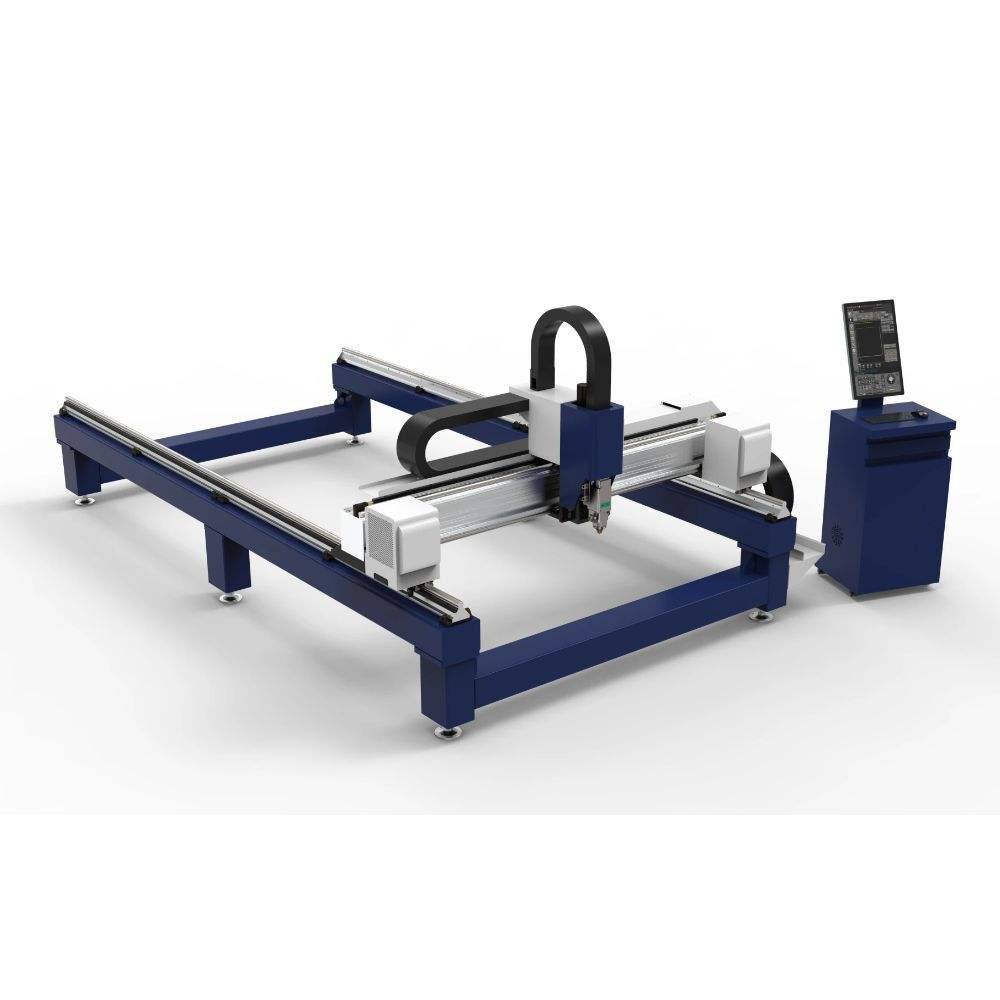
The Structural Foundation: Engineering Advantages of the Tube-Welded Standard Bed
In the realm of high-precision laser cutting, the machine’s frame is the ultimate arbiter of long-term accuracy. For a 3kW system, which operates at high acceleration rates (often exceeding 1.0G), the bed must neutralize harmonic vibrations that could otherwise manifest as “chatter” marks on the cut edge of stainless steel panels.
The tube-welded standard bed is engineered using high-quality carbon structural steel pipes. Unlike lighter, bolt-together frames, the welded structure undergoes a rigorous thermal processing cycle. This includes high-temperature annealing to eliminate internal stresses generated during the welding process. For an elevator manufacturer, this translates to geometric stability over a 10-to-15-year lifecycle. When cutting long elevator door skins or ceiling panels, even a 0.1mm deviation over three meters can lead to assembly failures. The tube-welded bed ensures that the X and Y axes remain perfectly perpendicular, maintaining a positioning accuracy of ±0.03mm.
Furthermore, the internal honeycomb-like structure of the tube-welded bed provides a superior strength-to-weight ratio. This design allows for rapid rapid-traverse speeds without compromising the structural integrity of the machine. In the context of Guadalajara’s fluctuating industrial temperatures, the thermal mass of the standard bed provides a buffer against minor ambient expansions, ensuring consistent performance from the morning shift through the afternoon heat.

Optimizing 3kW Power for Stainless Steel Fabrication
While fiber lasers are available in higher wattages, the 3kW configuration is the “sweet spot” for elevator manufacturing. Elevator components—ranging from 1.2mm decorative trims to 6.0mm structural brackets—fall perfectly within the high-efficiency zone of a 3kW source.
When processing stainless steel, the 3kW laser utilizes a high-density energy beam that melts the material almost instantaneously. When coupled with Nitrogen (N2) as an assist gas, the process becomes a high-pressure expulsion of molten metal, preventing oxidation. This is critical for elevator interiors where the “mirror finish” or “hairline” texture of the stainless steel must remain untarnished. A 3kW system can cut 2mm stainless steel at speeds exceeding 15-20 meters per minute, providing a throughput that traditional CNC punching or CO2 lasers cannot match.
Data-driven analysis shows that at 3kW, the Heat Affected Zone (HAZ) is minimized. For engineers, this means the metallurgical properties of the stainless steel remain unchanged near the cut. This is particularly vital for load-bearing components like hoistway brackets or door interlock housings, where material fatigue resistance is a safety requirement.
High-Precision Cutting for Elevator Aesthetic Components
The elevator industry is unique in its requirement for both structural robustness and architectural beauty. The 3kW fiber laser excels in creating intricate patterns in car operating panels (COP), hall call stations, and decorative ceiling grids.
1. **Burr-Free Edging:** High-precision fiber lasers eliminate the need for secondary grinding. For elevator door panels, this ensures a “soft touch” edge that is safe for passengers and aesthetically superior.
2. **Small Hole Ratios:** The 3kW beam quality allows for the cutting of holes with diameters equal to the material thickness. This is essential for mounting hardware and LED indicators in control panels.
3. **Film-Protected Cutting:** Modern 3kW lasers feature specialized “film-piercing” cycles. This allows factories to cut stainless steel with its protective plastic film intact, preventing scratches during the cutting and subsequent bending processes.
In Guadalajara’s competitive market, the ability to deliver a finished product directly from the laser bed to the assembly line provides a significant lead-time advantage.
Economic Analysis: Operational Efficiency in the Guadalajara Market
For factory owners, the transition to a 3kW fiber laser is a strategic financial decision. Compared to traditional CO2 lasers, fiber technology offers a wall-plug efficiency of approximately 30-35%, versus 8-10% for CO2. In the industrial zones of El Salto or Tlaquepaque, where energy costs are a significant overhead, this 70% reduction in power consumption directly impacts the bottom line.
**Consumable Cost Breakdown:**
* **Assist Gas:** While Nitrogen is the primary cost, the 3kW laser’s speed reduces the volume of gas used per meter of cut compared to lower-power systems.
* **Nozzles and Optics:** Fiber lasers use solid-state technology, meaning there are no mirrors to align or replace. The protective windows and nozzles are the primary consumables, with a low replacement cost relative to the machine’s output.
* **Maintenance:** The tube-welded bed requires minimal maintenance beyond standard lubrication of the hiwin/pmi linear rails and rack-and-pinion systems.
For a typical Guadalajara-based elevator factory producing 20-30 units per month, the ROI on a 3kW fiber laser is typically achieved within 14 to 18 months through labor savings, material optimization (via nesting software), and the elimination of outsourcing costs.
Technical Specifications for Engineering Evaluation
When reviewing procurement options, engineers should prioritize the following technical parameters for a 3kW system specialized in stainless steel:
* **Laser Source:** IPG or Raycus (optimized for high-reflectivity materials like stainless steel).
* **Cutting Head:** Auto-focus heads (e.g., Raytools or Precitec) are mandatory. They allow the machine to adjust the focal point dynamically during the piercing and cutting phases, which is essential for consistent quality across varying sheet thicknesses.
* **Motion System:** Dual-drive Y-axis with high-precision servo motors (Yaskawa or Delta). The synchronization of these motors on the tube-welded bed prevents gantry skewing.
* **Nesting Software:** Integration with platforms like CypCut or Lantek. These tools allow for “bridge cutting” and “common line cutting,” which can reduce stainless steel scrap rates by up to 15%.
Integration into the Elevator Production Workflow
The implementation of a 3kW laser should be viewed as an integration task rather than a standalone purchase. In an elevator factory, the laser sits at the start of the production chain. The precision of the laser cut dictates the precision of the subsequent CNC bending. If the laser cut is accurate to ±0.03mm, the press brake operators can utilize the “back gauge” more effectively, resulting in elevator cars that are perfectly square and rattle-free during high-speed travel.
Moreover, the versatility of the 3kW system allows for the cutting of galvanized steel for the car frame and carbon steel for heavy-duty counterweight frames, all on the same machine. This multi-material capability is essential for Guadalajara shops that may also take on architectural metalwork or custom cabinetry contracts to diversify their revenue streams.
Conclusion: Future-Proofing Guadalajara’s Manufacturing Base
For the elevator engineers and factory owners of Jalisco, the 3kW sheet metal laser with a tube-welded standard bed is not merely a tool; it is a platform for industrial growth. It addresses the dual needs of the modern market: the uncompromising precision required for safety-critical components and the flawless finish required for luxury architectural interiors.
By investing in a machine that prioritizes structural stability (the tube-welded bed) and optimal power dynamics (3kW fiber), local manufacturers can outcompete imports through superior quality, faster delivery, and reduced operational costs. As Guadalajara continues to grow vertically, the factories equipped with high-precision laser technology will be the ones defining the skyline.
















