
Engineering Excellence: The 3kW Fiber Laser in Leon’s Agricultural Manufacturing Sector
The industrial landscape of Leon has undergone a significant transformation, moving from traditional fabrication methods to high-precision automated systems. At the heart of this evolution is the 3kW fiber laser cutting machine, a tool that has become indispensable for agriculture factory owners and engineers. For a region where the production of silos, irrigation systems, and livestock equipment defines the local economy, the ability to process galvanized steel with speed and micron-level accuracy is not just an advantage—it is a necessity. This guide explores the technical architecture of the 3kW sheet metal laser, focusing on the engineering superiority of the tube-welded standard bed and the specific challenges of processing galvanized materials.
The Structural Foundation: Technical Advantages of the Tube-Welded Standard Bed
In the realm of CNC laser cutting, the stability of the machine bed dictates the quality of the final cut. For the 3kW models favored in the Leon market, the tube-welded standard bed represents a pinnacle of structural engineering designed for longevity and vibration resistance. Unlike lighter, bolt-together frames, the tube-welded bed is constructed from high-density industrial rectangular tubes.
The engineering process involves welding these tubes into a rigid lattice structure, which then undergoes a rigorous stress-relief process. This typically includes high-temperature annealing at approximately 600°C, followed by natural cooling over several days. This process ensures that the internal stresses generated during welding are eliminated, preventing the bed from deforming over years of operation. For an agricultural factory owner, this means the machine purchased today will maintain the same ±0.03mm positioning accuracy a decade from now.
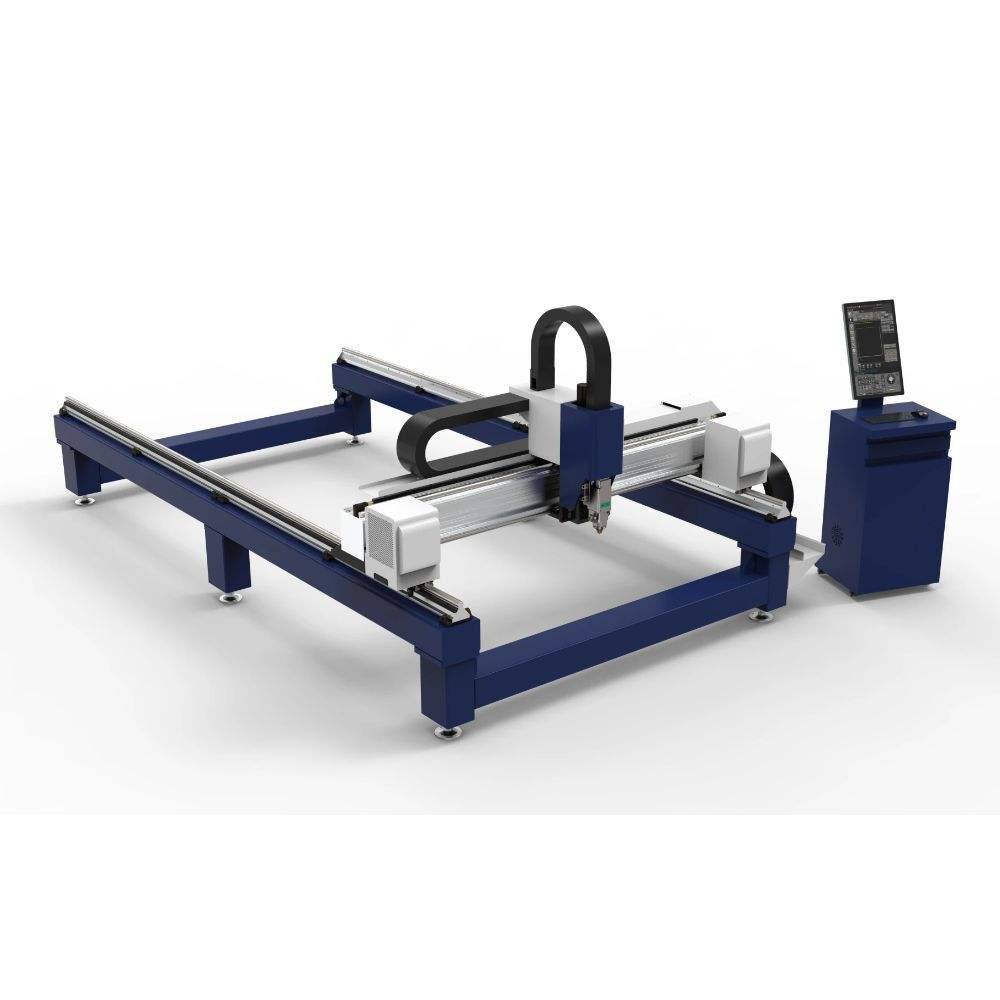
Furthermore, the tube-welded structure offers superior vibration damping. During high-speed cutting—where the gantry may move at speeds exceeding 100m/min—the inertia generated can cause micro-vibrations in lesser machines. The mass and structural geometry of the tube-welded bed absorb these oscillations, ensuring that the laser beam remains perfectly centered in the nozzle, resulting in a clean, burr-free edge even at high accelerations.
Optimizing the 3kW Power Source for Galvanized Steel
The selection of a 3kW power rating is a strategic decision for Leon’s engineers. While 1kW or 2kW machines may suffice for thin carbon steel, the 3kW threshold is the “sweet spot” for galvanized steel ranging from 1mm to 8mm in thickness. Galvanized steel presents a unique challenge: the protective zinc coating. Zinc has a significantly lower melting point (approx. 419°C) than the underlying steel (approx. 1500°C).
When a laser hits the surface, the zinc layer vaporizes almost instantly. In lower-power machines, this vapor can interfere with the laser beam’s stability or contaminate the protective lens. However, a 3kW fiber laser provides the power density required to pierce the material rapidly, while the high-pressure auxiliary gas (typically Nitrogen for galvanized sheets) blows the molten zinc and steel away before dross can form. This results in a “bright finish” cut that requires no secondary grinding, a critical factor in reducing labor costs in agricultural machinery production.
High-Precision Cutting Dynamics for Agricultural Components
Agricultural engineering requires a balance between heavy-duty durability and intricate design. Components for grain elevators, specialized harvesters, and automated feeding systems often feature complex hole patterns and interlocking tabs. The 3kW sheet metal laser excels here due to its narrow kerf width and high-precision motion control systems.
The integration of high-torque servo motors with the tube-welded bed allows for precise “fly-cutting” techniques. In Leon’s factories, where production volume is high, fly-cutting enables the laser to cut a series of holes without stopping the gantry movement, significantly reducing cycle times. For galvanized steel, maintaining a consistent standoff distance is vital. Modern 3kW systems utilize capacitive height sensors that can respond in milliseconds, adjusting the cutting head to follow any slight undulations in the sheet metal, ensuring the focal point remains optimal throughout the process.

The Chemistry of the Cut: Managing Zinc Oxide and Dross
Engineers must understand the metallurgy involved when laser cutting galvanized steel. The primary issue is the sublimation of the zinc coating. As the laser processes the metal, zinc oxide fumes are produced. A professional-grade 3kW machine for the Leon market is equipped with a high-volume partitioned dust extraction system. This system follows the cutting head, drawing fumes directly from the source to prevent the accumulation of zinc dust on the machine’s precision components and to protect the health of the operators.
To achieve a high-precision edge on galvanized steel, the choice of auxiliary gas is paramount. Nitrogen is the standard choice for “clean cutting.” By using Nitrogen at pressures of 15-20 bar, the gas acts as a mechanical force to eject the melt without allowing oxygen to react with the metal. This prevents oxidation of the edge, ensuring that the part remains corrosion-resistant—a vital requirement for equipment exposed to the harsh outdoor environments of Leon’s farms.
Economic Impact: ROI for Leon’s Agricultural Factories
From a data-driven perspective, the transition to a 3kW fiber laser with a tube-welded bed offers a compelling Return on Investment (ROI). Traditional plasma cutting or mechanical shearing often results in a 10-15% material waste factor due to wider kerfs and the inability to nest parts tightly. Fiber laser nesting software can reduce this waste to less than 5%.
Furthermore, the speed of a 3kW laser on 3mm galvanized steel is roughly 3 to 4 times faster than a 1kW machine. In a factory producing 500 silos per year, this speed differential translates to hundreds of saved man-hours. When combined with the low maintenance requirements of the fiber source—which boasts a lifespan of up to 100,000 hours—the total cost of ownership (TCO) becomes significantly lower than CO2 lasers or traditional mechanical methods.
Maintenance and Environmental Considerations in Industrial Leon
The industrial environment in Leon can be demanding, with temperature fluctuations and airborne particulates from nearby agricultural processing. The tube-welded standard bed’s stability is complemented by fully enclosed guide rails and racks. These enclosures prevent dust and debris from contaminating the lubrication system, which is essential for maintaining high-precision movement.
Engineers should also note the energy efficiency of the 3kW fiber laser. Fiber technology has a wall-plug efficiency of approximately 30-35%, compared to the 8-10% efficiency of older CO2 lasers. This reduction in power consumption not only lowers operational costs but also aligns with the increasing demand for sustainable manufacturing practices within the European and regional Spanish markets.
Conclusion: Future-Proofing Leon’s Manufacturing Base
For the agriculture factory owners and engineers of Leon, the 3kW sheet metal laser is more than a tool; it is a platform for innovation. The combination of a robust, tube-welded standard bed and the high-power density of a 3kW fiber source allows for the production of galvanized steel components that meet the highest international standards.
As the agricultural sector moves toward more complex, automated machinery, the precision offered by fiber laser technology will be the dividing line between local workshops and global competitors. By investing in equipment that prioritizes structural integrity and specialized material processing, Leon’s manufacturers ensure they remain at the forefront of the industry, delivering durable, high-quality solutions to the farmers who depend on them.
















