
Introduction to 3kW Fiber laser cutting in Tijuana
The manufacturing landscape in Tijuana, Baja California, has undergone a significant transformation over the last decade. As a critical hub for the aerospace, medical device, and automotive industries, the demand for precision metal fabrication has never been higher. Among the various technologies driving this evolution, the 3kW fiber laser cutting system stands out as the industry standard for high-efficiency processing of carbon steel. This power level offers the ideal balance between capital investment and operational throughput, particularly for the diverse thickness requirements found in regional maquiladora supply chains.
Laser cutting technology has superseded traditional plasma and mechanical shearing methods due to its superior accuracy, minimal kerf width, and ability to produce complex geometries without the need for secondary finishing. In the context of carbon steel—a material ubiquitous in structural components, enclosures, and automotive frames—the 3kW fiber laser provides the thermal energy necessary to maintain high feed rates while ensuring structural integrity and edge quality.
The Evolution of Sheet Metal Fabrication in the Border Region
Tijuana’s proximity to the United States has necessitated a manufacturing standard that aligns with international quality certifications such as ISO 9001 and AS9100. For local fabricators, adopting 3kW fiber technology is not merely an upgrade; it is a strategic requirement to remain competitive in the “nearshoring” era. The transition from CO2 lasers to fiber lasers has been particularly impactful. Fiber lasers utilize a solid-state gain medium, delivering the beam through a flexible fiber optic cable. This results in a beam with a much smaller spot size and higher power density than traditional gas lasers, making it exceptionally efficient for cutting reflective and non-reflective metals alike.
Technical Specifications of a 3kW Laser System
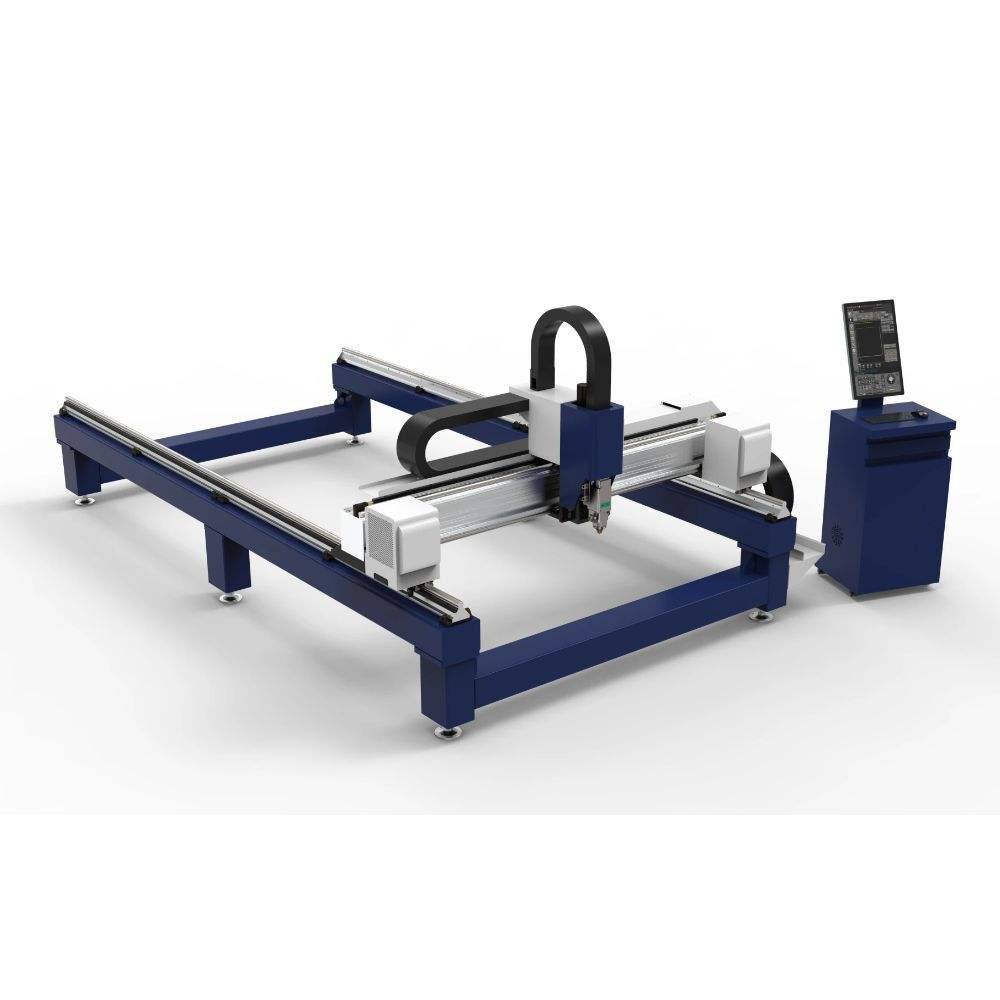
A 3kW fiber laser cutting machine is engineered to handle a wide range of sheet metal gauges. While higher wattage machines exist, the 3kW variant is often considered the “sweet spot” for shops focusing on carbon steel thicknesses ranging from 0.5mm to 20mm. At this power level, the machine can achieve rapid traverse speeds and high-acceleration cutting cycles, which are critical for high-volume production runs.
Power Output and Material Penetration
The 3000-watt output refers to the continuous wave power generated by the laser source. When focused through a high-quality cutting head, this energy is concentrated into a beam typically measuring between 0.1mm and 0.3mm in diameter. For carbon steel, this concentration allows for an instantaneous melt and vaporization of the material. In Tijuana’s industrial sector, where 1/4-inch and 1/2-inch carbon steel plates are standard, a 3kW system can maintain cutting speeds that significantly reduce the cost-per-part compared to lower-wattage alternatives.
The beam parameter product (BPP) of a 3kW fiber laser ensures that the beam remains stable over long distances, which is vital for large-format tables (e.g., 1500mm x 3000mm or 2000mm x 4000mm) commonly used in the region. This stability ensures that the cut quality at the far end of the gantry is identical to the quality near the source.
Processing Carbon Steel: Engineering Considerations
Carbon steel is the backbone of industrial construction and manufacturing. However, its reaction to laser cutting is highly dependent on its chemical composition, specifically its carbon content and surface finish. In the Tijuana market, fabricators frequently work with ASTM A36, A572, and various cold-rolled grades.
Material Grades and Surface Quality
The success of the laser cutting process begins with the quality of the raw material. Carbon steel with high levels of silicon or phosphorus can affect the stability of the melt pool, leading to increased dross (slag) on the underside of the cut. For high-precision components, using “laser-grade” carbon steel is recommended. This material is specifically processed to be flat and free of internal stresses, preventing the “pop-up” effect where a part tilts after being cut, potentially damaging the laser head.
Surface oxidation (mill scale) is another critical factor. While 3kW lasers can cut through mill scale, the presence of heavy rust or oil can cause beam scattering or inconsistent piercing. Many advanced 3kW systems in Tijuana utilize specialized piercing cycles—such as three-stage or frequency-modulated piercing—to cleanly penetrate thick carbon steel without creating large craters or splattering the protective lens.
The Role of Assist Gases: Oxygen vs. Nitrogen
In carbon steel laser cutting, the choice of assist gas is a fundamental engineering decision. Oxygen is the most common choice for carbon steel. The oxygen reacts exothermically with the heated metal, adding thermal energy to the process and allowing for faster cutting speeds on thicker plates. However, this reaction leaves a thin oxide layer on the cut edge, which may need to be removed if the part is to be painted or powder-coated.
Alternatively, nitrogen can be used as a “high-pressure” assist gas. Nitrogen acts as a shielding gas, blowing the molten metal out of the kerf without causing a chemical reaction. This results in a clean, oxide-free edge that is ready for immediate welding or coating. While nitrogen cutting requires more power (making the 3kW threshold vital) and increases gas consumption costs, it eliminates secondary cleaning processes, providing a lower total cost of ownership for certain high-end applications in the Tijuana aerospace sector.
Why Tijuana? The Strategic Manufacturing Hub
Tijuana has positioned itself as a premier destination for advanced manufacturing. The integration of 3kW laser cutting technology into the local ecosystem is driven by several regional advantages. The city’s industrial parks, such as Otay Mesa and El Florido, house hundreds of companies that require rapid prototyping and high-volume production of steel components.
Proximity to the California Market
The “just-in-time” (JIT) manufacturing model favored by California-based firms relies on Tijuana’s ability to produce and ship components across the border within hours. A 3kW laser system allows local shops to handle rush orders for carbon steel brackets, frames, and panels with minimal lead time. The precision of laser cutting ensures that parts meet the rigorous standards of US-based OEMs without the delays associated with overseas shipping.
Skilled Labor and Technical Infrastructure
Tijuana boasts a highly skilled workforce of engineers and CNC operators who are proficient in CAD/CAM software and laser physics. Local technical universities and training centers have focused on automation and metalworking, ensuring a steady supply of talent capable of optimizing 3kW laser parameters. This human capital is essential for maintaining the complex optical and mechanical systems inherent in modern fiber lasers.
Operational Optimization and Maintenance
To maximize the ROI of a 3kW laser cutting system in a demanding environment like Tijuana, operational discipline is paramount. This involves both software optimization and a rigorous preventive maintenance schedule.
Precision Nesting and Software Integration
Modern laser cutting is as much about software as it is about hardware. Advanced nesting algorithms allow engineers to fit the maximum number of parts onto a single sheet of carbon steel, reducing scrap rates. Common-line cutting, where two parts share a single cut path, can further increase efficiency and reduce the total “beam-on” time. Integrating the laser’s software with the facility’s ERP system allows for real-time tracking of material usage and production costs, which is vital for the competitive bidding processes common in the Mexican manufacturing sector.
Preventive Maintenance for High-Uptime Environments
The dusty and sometimes humid environment of a border city requires specific maintenance protocols. For a 3kW fiber laser, the cooling system (chiller) is the most critical component. The chiller must maintain a precise temperature to prevent thermal drift in the laser source and the cutting head. Regular inspection of the protective windows, nozzle alignment, and lubrication of the linear guides ensures that the machine maintains its micron-level accuracy over years of operation.
Furthermore, the quality of the compressed air used in the pneumatic systems must be strictly monitored. Moisture or oil contamination in the air lines can lead to catastrophic failure of the optical components. Many shops in Tijuana invest in high-end air dryers and filtration systems to mitigate these risks, ensuring that their laser cutting operations remain uninterrupted.
Conclusion
The 3kW sheet metal laser has become an indispensable tool in the Tijuana manufacturing landscape. By providing the power necessary to process carbon steel with speed and precision, it enables local fabricators to meet the demanding requirements of the global market. Whether it is through the strategic choice of assist gases, the implementation of advanced nesting software, or the utilization of the region’s skilled labor force, the 3kW fiber laser represents the pinnacle of modern metal fabrication technology. As Tijuana continues to grow as a center for industrial excellence, the role of high-precision laser cutting will only become more central to its economic success.
















