Introduction to 3kW Fiber laser cutting in Guadalajara
The industrial landscape of Guadalajara, often referred to as Mexico’s Silicon Valley, has undergone a significant transformation. While the city is a global hub for electronics and software, its manufacturing sector—specifically metal fabrication—has seen a surge in technical sophistication. At the heart of this evolution is the 3kW fiber laser cutting system. This power class has become the industry standard for small to medium-sized enterprises (SMEs) in the region, offering a perfect balance between capital investment and high-performance output. For fabricators in Jalisco working primarily with carbon steel, understanding the nuances of 3kW technology is essential for maintaining a competitive edge in the North American supply chain.
As the automotive and aerospace industries expand within the Bajío region, the demand for precision-cut carbon steel components has reached unprecedented levels. The 3kW laser cutting machine provides the necessary versatility to handle thin-gauge sheet metal with extreme speed while maintaining the capacity to pierce and cut thicker structural plates. This guide explores the technical parameters, material considerations, and regional advantages of deploying 3kW fiber technology in the Guadalajara industrial corridor.
The Strategic Importance of 3kW Power
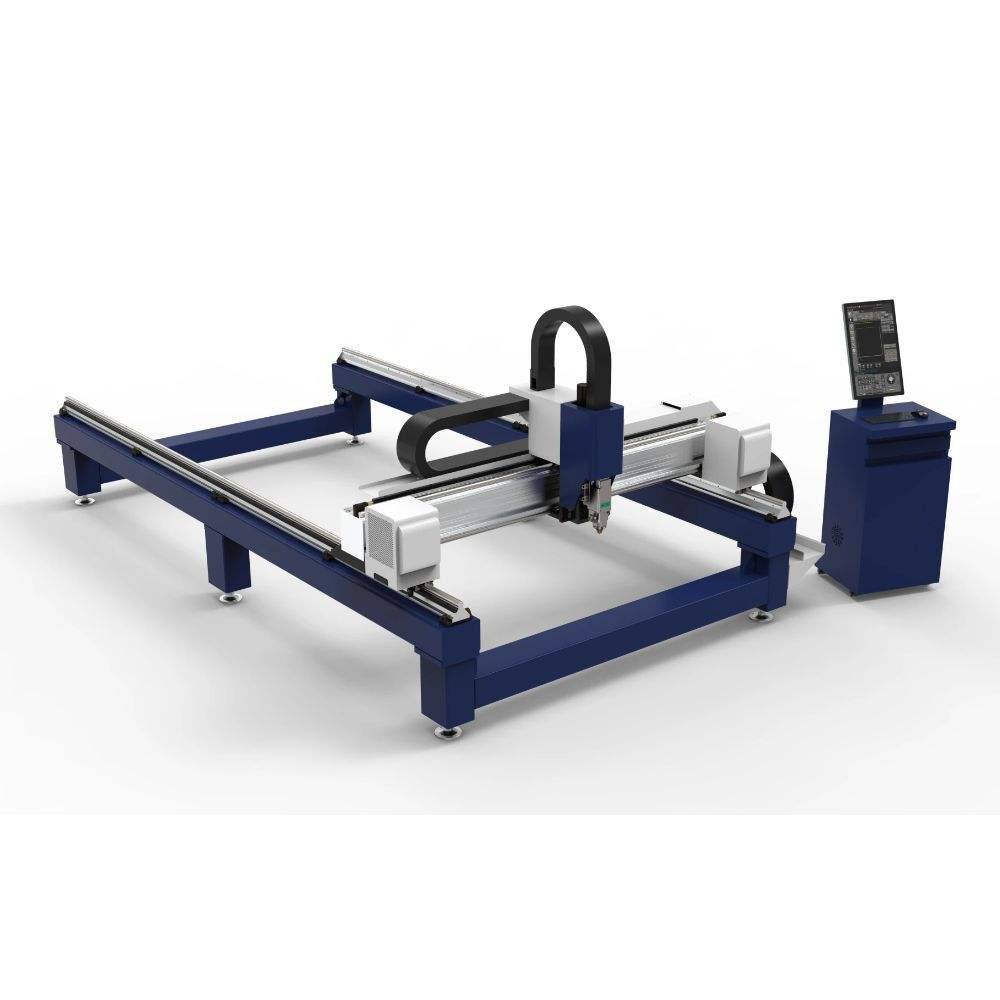
In the hierarchy of fiber laser power levels, 3000 watts (3kW) represents a critical “sweet spot.” For many years, 1kW and 2kW systems were the entry-point standards, but they often struggled with processing speeds on carbon steel thicker than 6mm. Conversely, ultra-high-power lasers (12kW and above) require massive infrastructure and significantly higher operational costs. The 3kW system offers the high beam density required for rapid laser cutting of 1mm to 12mm carbon steel, which constitutes the bulk of general manufacturing requirements in Guadalajara’s industrial parks like El Salto and Zapopan.
 laser cutting machine” style=”width: 100%; max-width: 800px; height: auto; margin: 20px 0;”>
Optimizing Carbon Steel Processing
Carbon steel is the backbone of Guadalajara’s construction and automotive sectors. When using a 3kW fiber laser, the material’s interaction with the beam is highly efficient due to the 1.06-micron wavelength of fiber technology. This wavelength is absorbed more readily by carbon steel compared to the older CO2 laser technology, resulting in faster processing speeds and reduced heat-affected zones (HAZ).
However, successful laser cutting of carbon steel is not merely about raw power; it involves the precise management of thermal dynamics. Carbon steel is susceptible to heat accumulation, which can lead to “self-burning” or “thermal runaway,” especially when cutting intricate geometries or sharp corners. A 3kW system provides enough overhead to utilize advanced pulsing techniques and power ramping to mitigate these risks, ensuring clean edges even on lower-grade A36 or 1018 steels commonly sourced in Mexico.
Oxygen vs. Nitrogen Assist Gases
The choice of assist gas is the most significant factor in determining the quality of the cut edge. For carbon steel, oxygen (O2) is the traditional choice. Oxygen acts as an exothermic reactant, creating an additional heat source that allows the 3kW laser cutting head to move through thick material with relatively low gas pressure. This results in a fast cut but leaves a thin layer of iron oxide on the edge, which must be removed if the part is to be powder-coated or painted.
Increasingly, Guadalajara-based shops are moving toward Nitrogen (N2) or high-pressure air for laser cutting thinner carbon steel (up to 3mm or 4mm). While this requires the 3kW laser to work harder, it results in a “bright cut”—an oxide-free edge that is immediately ready for welding or coating. Given the high humidity during the rainy season in Jalisco, preventing oxidation on cut edges is a major operational advantage that reduces secondary processing costs.
Thickness Thresholds and Edge Quality
With a 3kW fiber source, the practical limit for high-quality production laser cutting of carbon steel is typically around 20mm, though 16mm is the reliable “clean cut” limit. At 3mm to 6mm, the 3kW system operates at peak efficiency, often reaching speeds that make it 2-3 times more productive than a 1kW system. As the thickness increases toward 12mm and 16mm, the laser cutting process relies more heavily on the optics’ focal length and the nozzle’s design to maintain a vertical kerf and minimize dross (slag) at the bottom of the cut.

Technical Parameters for 3kW Systems
To achieve engineering-grade precision in Guadalajara’s competitive market, operators must master the machine’s internal parameters. The 3kW power level requires specific attention to the beam’s focal point. Unlike lower-power systems, the high energy density of a 3kW beam can cause “thermal shift” in the lens if the optics are not properly cooled or if there is even minor contamination.
Focus Position and Nozzle Selection
For carbon steel laser cutting with oxygen, the focal point is usually set at or slightly above the material surface. This encourages a wider kerf that allows the oxygen to penetrate the full depth of the cut and flush out the molten metal. Nozzle selection is equally critical; a double-layer nozzle is typically used for oxygen cutting to stabilize the gas flow. In the 3kW range, nozzle diameters between 1.2mm and 2.5mm are standard, depending on the plate thickness. In Guadalajara’s industrial environment, where dust can be an issue, keeping these nozzles and the protective windows clean is the first line of defense against poor cut quality.
Piercing Strategies for Thick Plate
Piercing is often the most time-consuming part of the laser cutting cycle for thick carbon steel. A 3kW system allows for “multi-stage piercing.” Instead of a single high-power blast, the machine uses a sequence of varying power levels, frequencies, and gas pressures to gently melt through the plate. This prevents “volcanoing,” where molten metal splashes back onto the nozzle, and ensures that the laser cutting process starts from a clean, small hole. Advanced CNC controllers found on modern 3kW machines can reduce piercing time by 50% compared to older models, significantly increasing the number of parts produced per shift.
The Guadalajara Industrial Context
Operating a 3kW laser cutting system in Guadalajara presents unique environmental and logistical considerations. The city’s altitude (approximately 1,500 meters above sea level) and its climate require specific machine configurations. For instance, the air density can affect the cooling efficiency of the laser’s chiller system. Engineers must ensure that the chiller is rated for the local ambient temperature peaks, which can exceed 35°C in the spring.
Supply Chain Integration
Guadalajara serves as a logistical pivot point for the Bajío region. Local fabricators using 3kW laser cutting technology are often integrated into the “Just-In-Time” (JIT) delivery systems of major automotive OEMs in nearby Guanajuato and Aguascalientes. The ability of a 3kW laser to switch quickly between different thicknesses of carbon steel—from 2mm brackets to 12mm chassis components—makes it an indispensable tool for these Tier 2 and Tier 3 suppliers. Furthermore, the local availability of high-purity industrial gases in Jalisco ensures that the laser cutting process remains consistent and cost-effective.
Maintenance and Operational Longevity
The lifespan of a 3kW fiber laser source can exceed 100,000 hours, but this is only achievable through rigorous maintenance. In the heavy manufacturing zones of Guadalajara, airborne particulates from grinding and welding can infiltrate the laser cutting machine’s motion system. Professional engineering standards dictate a weekly cleaning of the rails and a monthly inspection of the bellows to prevent abrasive wear on the linear guides.
Preventative Maintenance in High-Humidity Environments
During the humid summer months in Jalisco, moisture in the compressed air lines can be catastrophic for a laser cutting system. If using air-assist or if the nitrogen generator is not properly filtered, moisture can contaminate the laser head’s protective window. Fabricators in Guadalajara are advised to invest in high-quality refrigerated air dryers and multi-stage filtration systems. Keeping the internal temperature of the laser cabinet stabilized via a dedicated air conditioner (standard on most high-end 3kW models) prevents condensation on the sensitive electronic components and the fiber source itself.
Conclusion
The 3kW sheet metal laser cutting machine represents the current pinnacle of practical fabrication technology for the Guadalajara market. Its ability to process carbon steel with a combination of speed, precision, and cost-efficiency aligns perfectly with the demands of Mexico’s growing industrial sector. By mastering the technical nuances of oxygen-assist dynamics, focal management, and regional environmental factors, Jalisco’s manufacturers can leverage 3kW technology to compete on a global scale. As the region continues to attract high-tech investment, the fiber laser will remain the foundational tool for turning raw carbon steel into the infrastructure of the future.