
Engineering Guide: 3kW Fiber Laser Optimization for Brass Processing in Puebla’s Agricultural Sector
The industrial landscape of Puebla, Mexico, represents a unique convergence of traditional agricultural excellence and modern automotive manufacturing standards. For factory owners and engineers in the region, the transition toward high-precision fabrication is no longer optional. Among the various materials utilized in the production of high-end agricultural machinery, brass remains a critical alloy due to its corrosion resistance, electrical conductivity, and low friction coefficients. However, processing brass with traditional methods or underpowered lasers often leads to inefficiencies. This guide explores the engineering superiority of the 3kW Fiber Laser, specifically focusing on the structural advantages of the Plate-welded Heavy Duty Bed and the technical nuances of high-precision brass cutting.
The Structural Foundation: Plate-welded Heavy Duty Bed Engineering
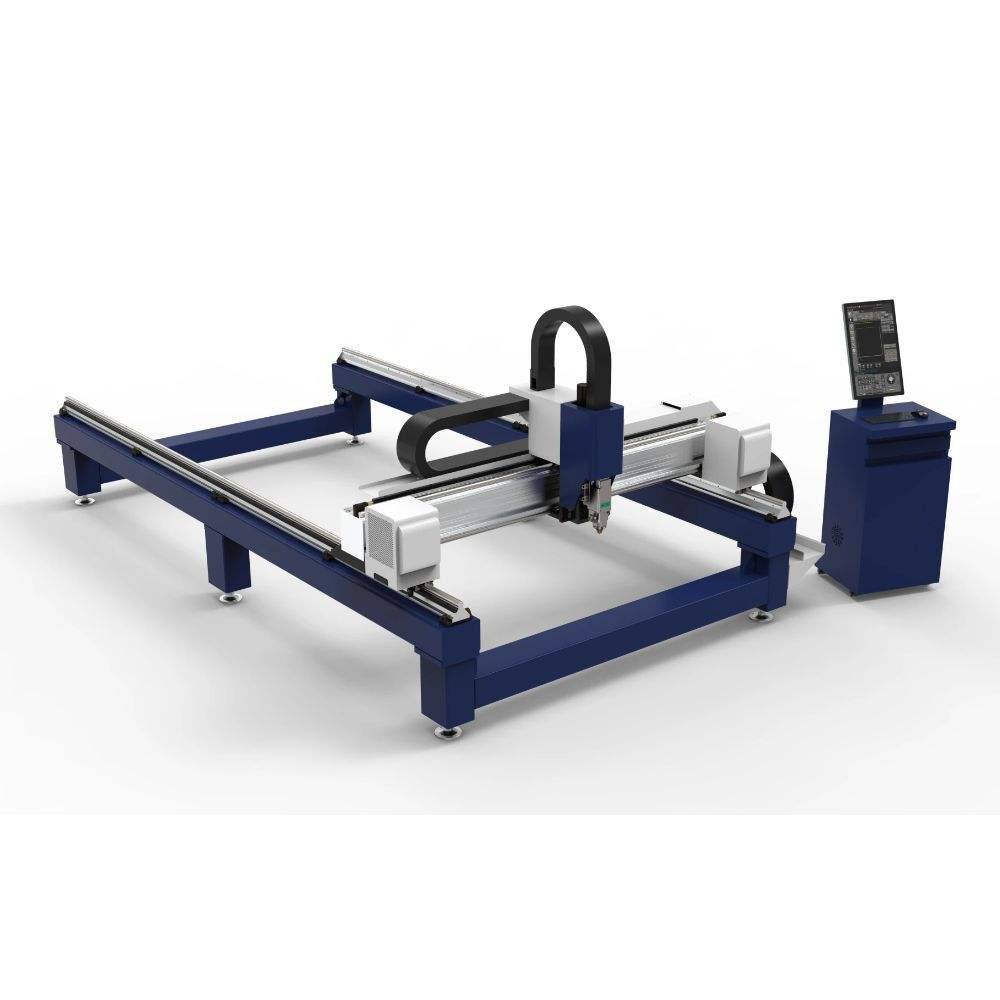
In the realm of CNC fiber laser cutting, the machine bed is the most critical component for long-term accuracy. For a 3kW system operating in a high-output environment like Puebla, a standard frame is insufficient. The Plate-welded Heavy Duty Bed is engineered to address the specific challenges of high-speed acceleration and thermal expansion.
Unlike tube-welded frames, which are often found in entry-level machines, the plate-welded bed is constructed from high-tensile carbon steel plates, often ranging from 12mm to 20mm in thickness. The engineering process involves several critical stages:
1. Stress Relief through Annealing: After the initial welding process, the entire bed undergoes a high-temperature annealing process (approximately 600°C) in a specialized furnace. This eliminates internal residual stresses caused by welding, ensuring that the frame does not warp or deform over decades of use.
2. Structural Rigidity and Vibration Damping: The sheer mass of a plate-welded bed provides superior vibration damping. When the 3kW laser head moves at high speeds—often reaching accelerations of 1.2G to 1.5G—the inertia generated can cause micro-vibrations. In brass cutting, where precision is measured in microns, these vibrations can lead to “chatter” marks on the cut edge. The heavy-duty bed absorbs these forces, maintaining a stable cutting environment.
3. Precision Milling: Once annealed, the mounting surfaces for the guide rails and racks are machined using large-scale five-axis gantry milling machines. This ensures a flatness and parallelism tolerance of less than 0.02mm across the entire working area.

3kW Fiber Laser: The Technical “Sweet Spot” for Brass
Brass is classified as a highly reflective material in the world of laser processing. Traditional CO2 lasers often struggle with brass because the material reflects the 10.6μm wavelength back into the optics, causing catastrophic damage. Fiber lasers, operating at a wavelength of 1.064μm, are much more efficiently absorbed by non-ferrous metals.
For the Puebla market, where agricultural components often require a balance of thickness and speed, 3kW is the optimal power level. It provides sufficient power density to overcome the initial reflectance of brass alloys (such as C26000 or C36000) while maintaining a narrow kerf width.
Technical Advantages of 3kW on Brass:
– Penetration Power: A 3kW source can comfortably cut brass up to 8mm or 10mm with high edge quality. For the majority of agricultural valves, connectors, and sprayer components, this covers 95% of production requirements.
– Speed Efficiency: At a 2mm thickness, a 3kW laser can achieve cutting speeds exceeding 15 meters per minute, significantly reducing the “cost per part” compared to lower-wattage systems.
– Reflectance Protection: Modern 3kW systems are equipped with optical isolators and back-reflection sensors. If the laser detects too much reflected energy—common when starting a cut on polished brass—it automatically adjusts parameters or shuts down to protect the fiber source.
High-Precision Cutting Dynamics for Non-Ferrous Alloys
Precision in brass cutting is not merely a function of power; it is a result of gas dynamics and beam focal management. Engineers in Puebla must consider the following data-driven parameters to achieve “burr-free” results:
Assist Gas Selection: While Oxygen (O2) can be used for thicker sections to increase speed through exothermic reaction, Nitrogen (N2) is the preferred choice for high-precision brass work. Nitrogen acts as a shielding gas, preventing oxidation on the cut edge. This results in a clean, bright finish that requires no post-processing—a vital factor for agricultural components that must maintain tight tolerances for fluid seals.
Focal Point Positioning: Brass has high thermal conductivity, meaning heat dissipates quickly from the cut zone. To maintain a stable melt pool, the focal point is typically set slightly below the surface of the material (negative focus). This ensures that the energy is concentrated within the kerf, facilitating a smoother ejection of the molten metal.
Nozzle Geometry: Using a double-layer nozzle with a diameter of 1.5mm to 2.5mm allows for a more laminar flow of the assist gas. This reduces turbulence at the cutting point, which is essential for maintaining the integrity of the brass alloy’s delicate edges.
Applications in the Puebla Agricultural Sector
Puebla’s agricultural equipment manufacturers deal with high-stress environments where component failure leads to significant downtime. The 3kW fiber laser allows for the localized production of specialized brass components that were previously imported or cast.
1. Irrigation Systems: Precision-cut brass manifold plates and filter screens. The 3kW laser allows for incredibly fine hole patterns (perforations) that are impossible to achieve with mechanical punching without deforming the material.
2. Fluid Control Valves: High-precision flanges and internal valve components. The plate-welded bed ensures that even after hours of continuous cutting, the circularity of the holes remains perfect, ensuring leak-proof assemblies.
3. Decorative and Functional Hardware: For high-end export machinery, brass is often used for branding plates or specialized bushings. The fiber laser’s ability to engrave and cut in a single pass increases throughput.
Economic Impact and ROI for Local Factories
From an engineering management perspective, the investment in a 3kW system with a heavy-duty bed is justified through its lifecycle cost.
– Maintenance Reduction: The plate-welded bed requires significantly less recalibration than lighter frames. In a region like Puebla, where temperature fluctuations between day and night can be pronounced, the thermal stability of the heavy-duty bed prevents the “drift” in accuracy that plagues cheaper machines.
– Energy Efficiency: Fiber lasers convert electrical energy into light with an efficiency of about 30-35%, compared to the 10% of CO2 lasers. For a factory in Puebla, this translates to thousands of pesos saved in monthly utility costs.
– Material Savings: The high precision of the 3kW beam allows for “nesting” parts closer together. Given the high market price of brass, reducing scrap by even 5% can result in a return on investment within the first 18 months of operation.
Operational Maintenance for Longevity
To maintain the high-precision capabilities of the machine, engineers must implement a strict maintenance protocol tailored to the Puebla environment. Dust from local agricultural processing can be abrasive; therefore, the machine’s bellows and guide rail lubrication systems must be inspected weekly.
The cooling system (chiller) is equally vital. For a 3kW laser, the chiller must maintain the laser source and the cutting head at a constant temperature (usually within ±0.5°C). In the warmer months in Puebla, ensuring the chiller is properly vented and the coolant is deionized will prevent internal scaling and maintain beam quality.
Conclusion
For agricultural factory owners in Puebla, the 3kW Sheet Metal Laser with a Plate-welded Heavy Duty Bed represents the pinnacle of current fabrication technology. By choosing a machine built on a foundation of structural rigidity and utilizing a power source optimized for the challenges of brass, manufacturers can achieve a level of precision that meets international standards.
The transition to this technology allows for faster prototyping, reduced waste, and the ability to handle complex geometries in non-ferrous metals with ease. As the industrial demands of the region continue to evolve, the integration of high-precision fiber lasers will be the defining factor for competitive manufacturing in the Mexican heartland.
















