
The Evolution of 3kW Precision Laser Systems in Puebla’s Industrial Sector
The industrial landscape of Puebla, Mexico, has long been defined by its robust automotive, aerospace, and decorative metalworking sectors. As global manufacturing standards shift toward tighter tolerances and faster production cycles, the adoption of the 3kW precision laser system has become a cornerstone for local enterprises. Specifically, when dealing with non-ferrous alloys such as brass, the technical requirements for laser cutting demand a sophisticated balance of power, wavelength stability, and optical protection.
A 3kW fiber laser represents the “sweet spot” for many medium-to-heavy industrial applications. It provides sufficient energy density to overcome the high reflectivity of yellow metals while maintaining a narrow kerf width that minimizes material waste. In Puebla, where traditional craftsmanship meets modern automotive engineering, this technology bridges the gap between high-volume production and artisanal precision.
The Physics of Brass and the Reflectivity Challenge
Brass, an alloy primarily composed of copper and zinc, presents unique challenges in the realm of laser cutting. Its high thermal conductivity and high reflectivity—especially in the infrared spectrum—can be detrimental to standard laser resonators if not managed correctly. When a laser beam hits a polished brass surface, a significant portion of the energy can be reflected back into the delivery fiber, potentially damaging the optical components.
Modern 3kW systems utilize fiber laser technology with a wavelength of approximately 1.06 microns. This wavelength is absorbed much more efficiently by brass compared to the 10.6 microns of older CO2 laser systems. By utilizing a 3kW power source, operators can achieve a stable “keyhole” effect during the cutting process, ensuring that the energy is trapped within the material to facilitate a clean melt rather than bouncing off the surface.
 laser cutting machine” style=”width: 100%; max-width: 800px; margin: 20px 0;”>
Technical Specifications and Machine Architecture
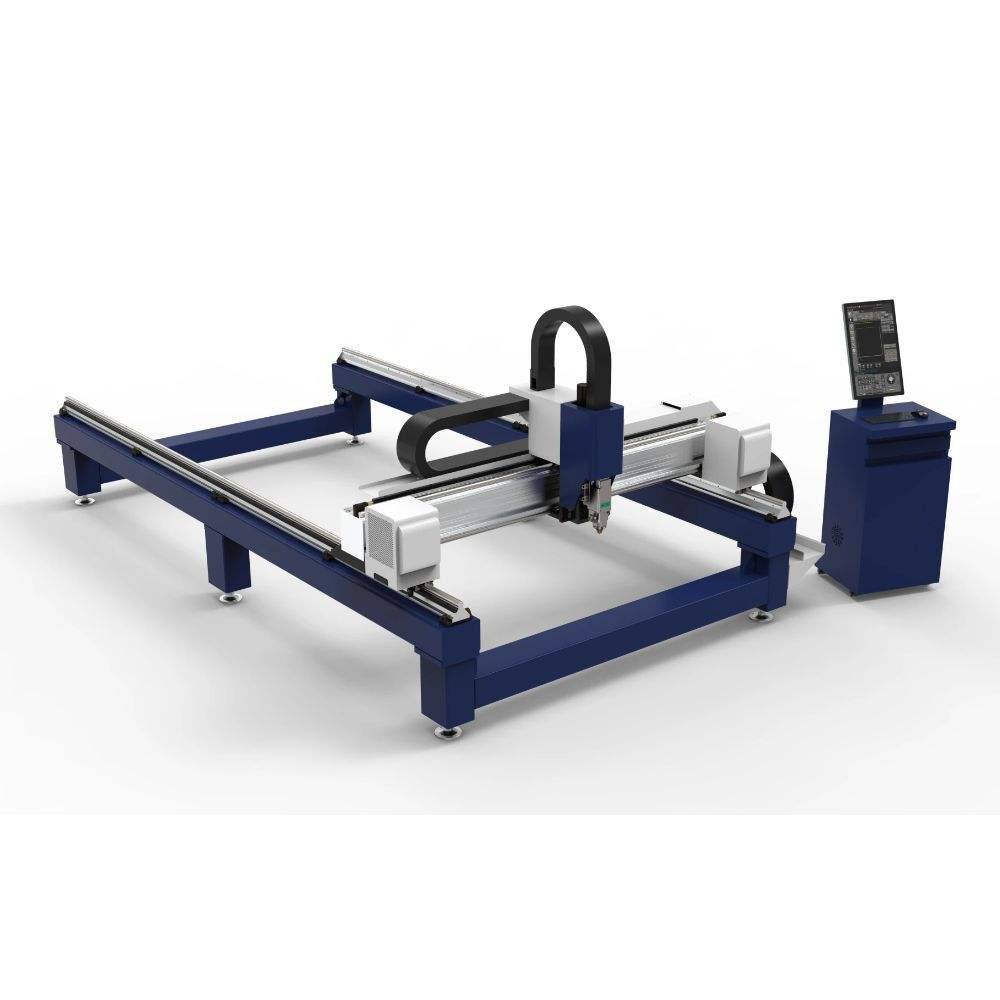
The architecture of a 3kW precision laser system designed for the Puebla market must account for both plate and occasionally tube processing. These machines are typically built on a heavy-duty, heat-treated gantry frame to ensure vibration damping. In precision laser cutting, even micron-scale oscillations can result in striations along the cut edge of a brass component, which is unacceptable for decorative or high-pressure valve applications.
Beam Quality and Parameter Product (BPP)
For a 3kW system, the Beam Parameter Product (BPP) is a critical metric. A lower BPP indicates a beam that can be focused to a smaller spot size, increasing the power density at the focal point. When processing brass in thicknesses ranging from 1mm to 8mm, a high-quality beam ensures that the heat-affected zone (HAZ) remains minimal. This preserves the structural integrity of the brass alloy, preventing the vaporization of zinc which can lead to porosity near the cut edge.
High-Speed Motion Control
Precision is not merely a function of the laser source but also of the motion system. In Puebla’s competitive manufacturing environment, the integration of linear motors or high-precision rack-and-pinion drives allows the 3kW system to maintain accuracy at high feed rates. When laser cutting thin brass sheets, the machine must move rapidly to prevent over-burning, requiring a CNC controller capable of processing complex geometries with high look-ahead capabilities.
Optimizing Laser Cutting for Brass in Puebla
Puebla’s unique altitude and environmental conditions can subtly affect the gas dynamics of laser cutting. Engineering teams must calibrate their systems to account for local atmospheric pressure, particularly when selecting assist gases. For brass, the choice of assist gas—typically Nitrogen or Oxygen—dictates the final finish of the part.
Nitrogen vs. Oxygen Assist Gases
In most precision brass applications, Nitrogen is the preferred assist gas. It acts as a cooling agent and mechanically flushes the molten metal out of the kerf without causing oxidation. This results in a “bright” cut edge that requires little to no post-processing, which is essential for the decorative hardware industry in Puebla. However, the 3kW system must be equipped with high-pressure gas lines and nozzles to ensure the Nitrogen can effectively clear the heavy, viscous molten brass.
Oxygen can be used for thicker brass sections to add exothermic energy to the cut, increasing speed. However, this often results in an oxidized, darkened edge. For the precision-focused shops in Puebla, Nitrogen at pressures exceeding 20 bar is the standard for maintaining the aesthetic and functional quality of brass components.
Advanced Piercing Strategies
Piercing is the most volatile stage of laser cutting brass. A 3kW system utilizes “stage piercing” or “flash piercing” to prevent back-reflection. By gradually increasing the power and frequency while modulating the nozzle height, the system creates a clean entry hole. This protects the protective window of the laser head from “spatter,” which is a common cause of downtime in non-ferrous metal processing.
Applications in Puebla’s Key Industries
The versatility of the 3kW precision laser system allows it to serve multiple sectors within the Puebla region. From the mass production of automotive bushings to the intricate filigree of architectural brass, the technology is transformative.
Automotive and Electrical Components
Puebla is a global hub for automotive manufacturing. Brass is frequently used in electrical connectors, terminals, and sensor housings due to its conductivity and corrosion resistance. Laser cutting provides the ability to produce these parts with zero mechanical stress, unlike traditional stamping. This ensures that the electrical properties of the brass remain unchanged, and the tight tolerances required for modern vehicle electronics are consistently met.
Architectural and Decorative Brass
There is a rich tradition of metalwork in Puebla. Modern architects are increasingly specifying custom brass inlays, signage, and decorative screens. A 3kW laser allows for the execution of incredibly complex patterns that would be impossible with mechanical routing or waterjet cutting. The precision of the laser ensures that interlocking pieces fit perfectly, a requirement for high-end interior design projects in the region.
Maintenance and Operational Longevity
To maintain a 3kW laser system at peak performance in an industrial environment like Puebla, a rigorous maintenance schedule is mandatory. The primary focus for brass processing is the optical path. Because brass is so reflective, the “back-reflection” sensors within the fiber source must be monitored. Modern systems include an optical isolator that diverts reflected light into a water-cooled “dump,” but the cleanliness of the external cutting head optics remains the operator’s responsibility.
Cooling Systems and Thermal Management
The 3kW resonator and the cutting head generate significant heat. In Puebla’s climate, a high-efficiency dual-circuit chiller is necessary. One circuit cools the laser source to maintain wavelength stability, while the other cools the cutting head and optics. Fluctuations in temperature can cause “focus shift,” where the focal point of the laser moves during a long cut, leading to a loss of precision and potential part scrappage.
Nozzle and Sensor Calibration
The capacitive height sensor is a critical component of the laser cutting head. It maintains a constant distance between the nozzle and the brass sheet. Because brass can warp slightly during the heating process, the sensor must be calibrated to react in milliseconds. Regular cleaning of the nozzle and ensuring the copper tip is free of debris will prevent “head crashes” and ensure the gas flow remains laminar.
Economic Impact and ROI for Puebla Manufacturers
Investing in a 3kW precision laser system offers a significant return on investment (ROI) for Puebla-based shops. The speed of laser cutting brass with a 3kW fiber source is often 3 to 5 times faster than a 1kW system, while the operating costs remain relatively comparable. This increased throughput allows shops to take on more contracts and compete on a global scale.
Furthermore, the reduction in secondary finishing processes—thanks to the clean edges produced by nitrogen-assisted cutting—dramatically lowers labor costs. In a region where precision and efficiency are the keys to surviving in the automotive supply chain, the 3kW laser is not just a tool, but a strategic asset.
Conclusion: The Future of Metal Fabrication in Puebla
As we look toward the future of manufacturing in Puebla, the integration of high-power, high-precision fiber lasers will only accelerate. The 3kW precision laser system stands as the ideal solution for the challenges of brass fabrication, offering a blend of power, accuracy, and reliability. By mastering the technical nuances of laser cutting reflective alloys, Puebla’s industrial sector will continue to lead the way in both Mexican and international markets, turning raw brass into the high-tech components of tomorrow.
















