
Introduction to 3kW Fiber Laser Systems in Guadalajara’s Industrial Landscape
In the heart of Jalisco, Guadalajara has emerged as a premier manufacturing hub, often referred to as the “Silicon Valley of Mexico.” As the region’s industrial sector shifts toward high-tech electronics, automotive components, and intricate decorative hardware, the demand for precision machining has never been higher. Among the various technologies driving this evolution, the 3kW precision fiber laser system stands out as a cornerstone for modern fabrication, particularly when dealing with non-ferrous metals like brass. This guide explores the technical intricacies, operational advantages, and localized benefits of implementing 3kW laser cutting technology in the Guadalajara market.
The transition from CO2 lasers to fiber laser technology has revolutionized how manufacturers approach reflective materials. A 3kW system provides a specific power density that is ideal for medium-thickness brass sheets, offering a balance between speed, edge quality, and operational cost. For engineers in Guadalajara’s industrial parks—from El Salto to Zapopan—understanding the synergy between laser physics and material science is essential for maintaining a competitive edge in a globalized economy.
The Physics of Laser Cutting Brass
Brass, an alloy primarily composed of copper and zinc, presents unique challenges for thermal cutting processes. Its high thermal conductivity and significant optical reflectivity make it one of the most difficult materials to process with standard equipment. However, the 1.06-micron wavelength of a fiber laser is absorbed much more efficiently by brass than the 10.6-micron wavelength of traditional CO2 lasers.
Overcoming High Reflectivity and Thermal Conductivity
When a laser beam first hits a polished brass surface, a significant portion of the energy is reflected. In a 3kW system, the power density must be high enough to instantly melt the surface, transitioning the material from a solid to a liquid state. Once the material is molten, its reflectivity drops significantly, allowing the laser energy to couple more effectively with the workpiece. This “piercing phase” is critical; 3kW systems utilize specialized back-reflection protection to ensure that any reflected light does not travel back up the delivery fiber and damage the laser source.
Furthermore, because brass dissipates heat rapidly, the 3kW power level is necessary to maintain a stable melt pool. Lower power systems often struggle to keep up with the heat dissipation, resulting in “dross” or “slag” (resolidified metal) on the underside of the cut. The 3kW threshold ensures that the laser cutting process remains faster than the rate of thermal conduction, resulting in a narrow heat-affected zone (HAZ) and superior edge finish.
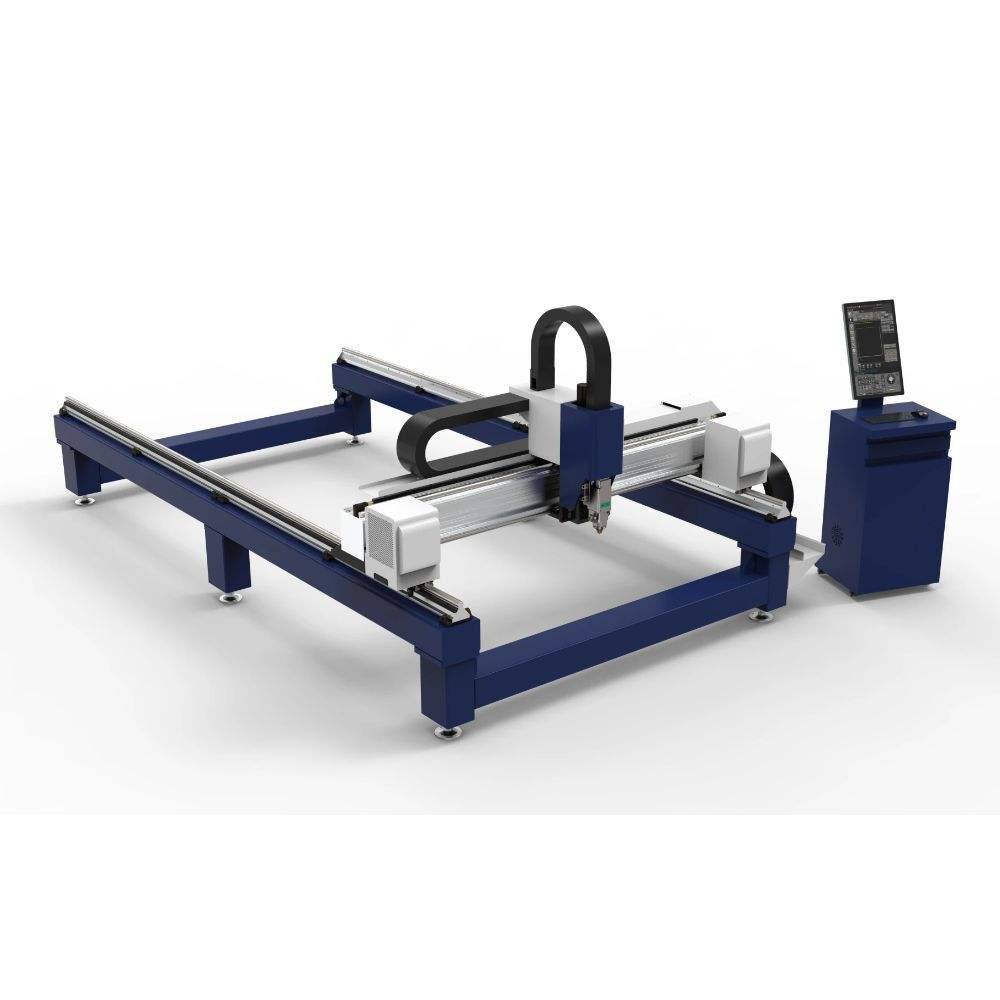
 laser cutting machine” style=”width: 100%; max-width: 800px; height: auto; margin: 20px 0;”>
Technical Specifications of the 3kW Precision System
A precision 3kW system is defined by more than just its raw power. It is an integrated assembly of high-end optical components, motion control systems, and software. In Guadalajara’s demanding production environments, the following specifications are standard for high-performance units:
- Beam Quality (M²): Typically < 1.1, ensuring a tightly focused spot size for maximum energy concentration.
- Positioning Accuracy: ±0.03mm, essential for the intricate components required by the electronics and aerospace sectors.
- Cutting Capacity: Optimal for brass up to 8mm, with high-speed performance on 1mm to 4mm gauges.
- Drive System: Linear motors or high-precision rack-and-pinion systems to handle the rapid accelerations required for complex geometries.
The Role of the Cutting Head
The cutting head is the “business end” of the 3kW system. For brass applications, an autofocus cutting head is mandatory. Because brass can warp slightly under thermal stress, the sensor-driven autofocus maintains a consistent standoff distance between the nozzle and the material. This ensures that the focal point remains perfectly positioned within the kerf, preventing “blowouts” and maintaining a consistent edge taper throughout the production run.
Applications in Jalisco’s Manufacturing Hub
Guadalajara’s diverse economy provides a wide array of applications for brass laser cutting. The versatility of the 3kW system allows local shops to pivot between industries with minimal downtime.
Electronics and Electrical Components
As a center for electronics manufacturing, Guadalajara produces vast quantities of connectors, busbars, and terminals. Brass is favored for these components due to its excellent electrical conductivity and corrosion resistance. The precision of a 3kW fiber laser allows for the production of miniature parts with tolerances that meet international standards, such as those required by IPC (Association Connecting Electronics Industries).
Automotive and Aerospace Tiers
The automotive supply chain in Mexico is increasingly moving toward lightweight and high-conductivity materials. Brass bushings, valves, and specialized fittings are commonly processed using 3kW systems. The ability to integrate tube-cutting attachments allows for the fabrication of complex fluid-handling systems used in both automotive and aerospace cooling architectures.
Architectural and Decorative Hardware
Guadalajara has a rich tradition of craftsmanship. Modern architectural firms in the region are increasingly incorporating custom brass elements into high-end residential and commercial projects. From intricate room dividers to bespoke signage, the 3kW laser offers the capability to cut complex patterns that would be impossible or prohibitively expensive to achieve through traditional stamping or manual milling.
Optimizing the Cutting Process: Gas and Optics
To achieve the best results in brass, the choice of assist gas and optical configuration is paramount. Engineering teams must calibrate these variables based on the specific grade of brass (e.g., C26000 or C36000).
Nitrogen vs. Oxygen Cutting
For most 3kW applications involving brass, high-pressure Nitrogen is the preferred assist gas. Nitrogen acts as a shielding agent, preventing the oxidation of the cut edge. This results in a “bright” finish that is ready for secondary processes like plating or welding without additional cleaning. Typically, gas pressures for brass range from 12 to 20 bar, necessitating a robust gas delivery system and high-flow nozzles.
Oxygen can be used for thicker brass plates to add exothermic energy to the process, but this often results in a darker, oxidized edge and a wider kerf. In the precision-focused markets of Guadalajara, Nitrogen remains the industry standard for 3kW laser cutting.
Nozzle Selection and Maintenance
The nozzle plays a dual role: it directs the assist gas and acts as a sensor for the height control system. For brass, chrome-plated copper nozzles are often used to resist the accumulation of metal spatter. Regular inspection of the nozzle orifice is required; even minor deformations can disrupt the gas flow, leading to turbulence that ruins the cut quality.
Maintenance and Longevity for High-Output Environments
Operating a 3kW laser in an industrial environment like Guadalajara requires a proactive maintenance strategy. The region’s climate, characterized by a distinct rainy season and periods of high dust, can impact sensitive optical components.
Environmental Controls
The laser source and the electrical cabinet should be housed in a temperature-controlled environment. High humidity can lead to condensation on the optics, which, if hit by a 3kW beam, will cause catastrophic failure. Most modern systems utilize dual-circuit chillers to maintain the laser source and the cutting head at precise temperatures, but the ambient air quality in the factory must also be managed through proper filtration and ventilation.
Optical Path Integrity
The fiber optic cable is a robust component, but the protective windows (cover slides) in the cutting head are consumables. In brass cutting, the risk of “back-splash” is higher than with mild steel. Operators must be trained to inspect and replace cover slides in a cleanroom-like environment to prevent dust from entering the internal lens assembly. A single speck of dust can absorb enough 3kW energy to crack a lens within seconds.
The Economic Impact of 3kW Systems in Guadalajara
Investing in a 3kW laser cutting system is a strategic decision for Guadalajara-based enterprises. The ROI (Return on Investment) is driven by three factors: speed, material utilization, and the reduction of secondary operations. By eliminating the need for deburring and polishing, manufacturers can significantly reduce lead times for their clients in the US and Canada, leveraging the advantages of “nearshoring.”
Furthermore, the high nesting efficiency provided by modern CAD/CAM software ensures that expensive brass sheets are used with minimal waste. In a market where raw material prices fluctuate, the ability to squeeze every millimeter of usable part from a sheet is a direct contribution to the bottom line.
Conclusion: The Future of Metal Fabrication in Jalisco
As Guadalajara continues to solidify its position as a global manufacturing powerhouse, the adoption of 3kW precision laser systems will only accelerate. The ability to process brass with high speed and extreme accuracy opens doors to new markets and more complex engineering challenges. By mastering the nuances of fiber laser cutting, local manufacturers are not just cutting metal; they are carving out a future defined by precision, efficiency, and technological excellence. Whether for electronics, automotive, or architectural design, the 3kW laser is the tool that will define the next decade of industrial growth in Jalisco.
















