
Introduction to 3kW Precision Laser Systems in the Mexican Industrial Landscape
The industrial sector in Mexico City (CDMX) and the surrounding metropolitan area has undergone a significant technological transformation over the last decade. As a primary hub for automotive, aerospace, and electronics manufacturing, the demand for high-precision components has skyrocketed. Among the most critical technologies driving this evolution is the 3kW precision fiber laser system. This power class represents a “sweet spot” for many fabricators, offering a perfect balance between capital investment, operational costs, and the ability to process non-ferrous metals, particularly aluminum alloys.
In the high-altitude environment of Mexico City, where atmospheric conditions can influence thermal dynamics and gas physics, deploying a 3kW laser requires a nuanced understanding of both the hardware and the material science involved. This guide explores the technical intricacies of utilizing 3kW fiber technology for aluminum alloy fabrication, focusing on the specific challenges and advantages found in the Mexican industrial context.
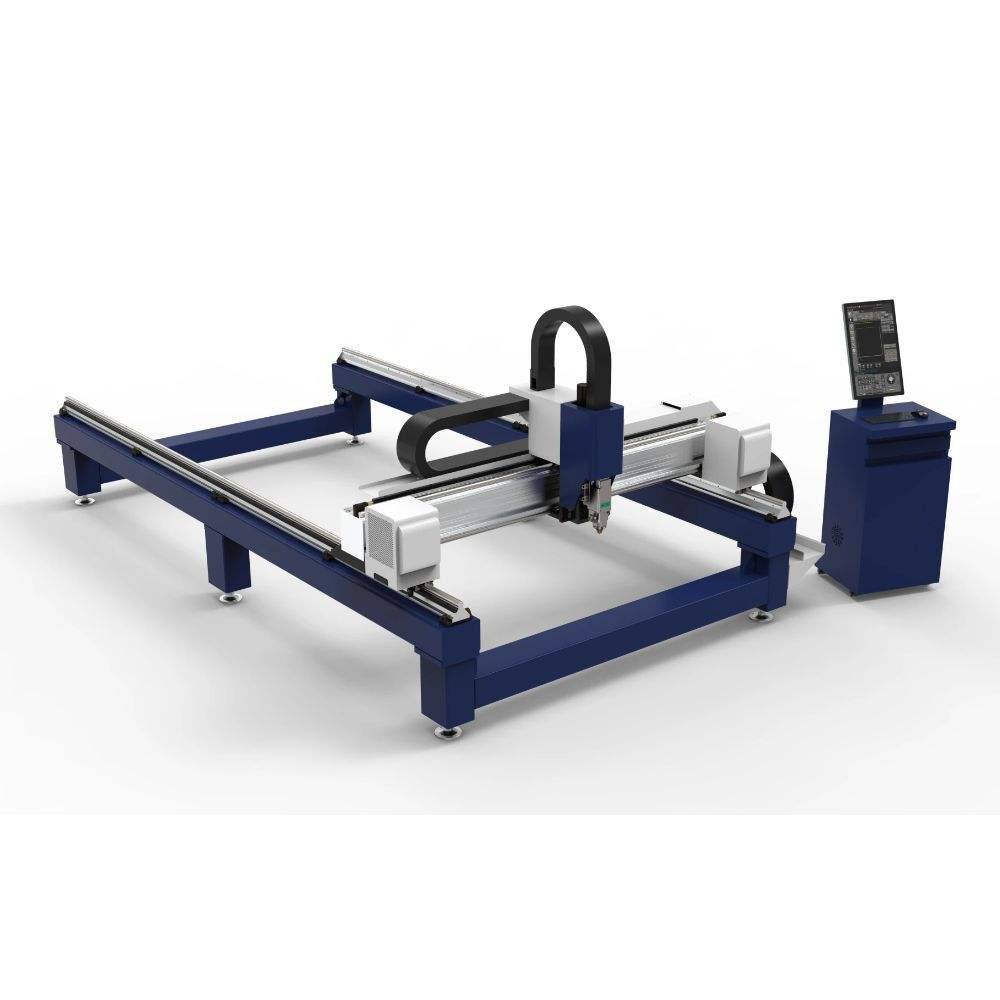
The Technical Superiority of 3kW Fiber Lasers for Aluminum
Wavelength and Absorption Characteristics
The 3kW fiber laser operates at a wavelength of approximately 1.06 microns. For aluminum alloys, which are notoriously reflective in the infrared spectrum, this wavelength is significantly more effective than the 10.6 microns produced by traditional CO2 lasers. At 1.06 microns, aluminum’s absorption rate is higher, allowing the beam to couple with the material more efficiently. This reduces the risk of back-reflection, which can damage the internal components of the laser source—a critical consideration for high-value 3kW systems.
Power Density and Kerf Management
A 3kW system provides sufficient power density to maintain a stable melt pool in aluminum alloys ranging from 1mm to 12mm in thickness. Precision laser cutting in aluminum requires a fine balance; too much heat leads to excessive dross and a wide heat-affected zone (HAZ), while too little power results in incomplete penetration and “welding” of the kerf. The 3kW threshold allows for high-speed processing of 3mm to 6mm sheets, which are the most common gauges used in Mexico City’s signage, automotive heat shields, and structural bracket industries.
Challenges of Aluminum Alloy Fabrication
Thermal Conductivity and Dissipation
Aluminum is characterized by high thermal conductivity. During the laser cutting process, heat rapidly dissipates away from the point of contact into the surrounding material. This can cause the entire workpiece to expand, leading to dimensional inaccuracies if the cutting path is not optimized. In a precision 3kW system, the high feed rates achievable help to “outrun” the thermal conduction, ensuring that the energy is concentrated on melting the kerf rather than heating the part.
Reflectivity and Back-Reflection Protection
Even with the improved absorption of fiber lasers, aluminum remains highly reflective in its solid state. Modern 3kW systems designed for the Mexican market incorporate advanced back-reflection isolation. These optical “one-way valves” protect the ytterbium-doped fiber modules from returning photons. For operators in Mexico City, ensuring these sensors are calibrated is vital, as the thinner air can sometimes affect the cooling of the optical housing, making the system more sensitive to thermal shifts.

The Mexico City Factor: Altitude and Atmospheric Considerations
Impact of Altitude on Assist Gases
Mexico City sits at an elevation of approximately 2,240 meters (7,350 feet) above sea level. At this altitude, the atmospheric pressure is roughly 25% lower than at sea level. This has a direct impact on the fluid dynamics of assist gases like Nitrogen and Oxygen. When laser cutting aluminum, Nitrogen is typically used as a high-pressure shroud to expel molten material without oxidation. In CDMX, the lower ambient pressure means that gas regulators and nozzle geometries must be adjusted to maintain the same mass flow rate required for a clean cut. Engineers must often increase the input pressure by 10-15% compared to sea-level specifications to achieve the same kinetic energy in the gas jet.
Cooling System Efficiency
The 3kW laser source and the cutting head require constant chilling. Chillers operate on the principle of heat exchange with the ambient air. In the thinner air of Mexico City, the heat transfer coefficient is lower, meaning the cooling system must work harder to dissipate the same amount of energy. It is recommended that facilities in the Valle de México region over-spec their chilling units or ensure they are placed in well-ventilated, temperature-controlled environments to prevent “thermal tripping” during long production shifts.
Optimizing Process Parameters for 3kW Systems
Assist Gas Selection: Nitrogen vs. Compressed Air
For high-precision aluminum components, Nitrogen is the industry standard. It prevents the formation of aluminum oxide on the cut edge, which is essential if the parts are to be welded or painted later. However, many shops in Mexico are turning to high-pressure compressed air (filtered and dried) for 3kW laser cutting of thinner aluminum (under 4mm). While this introduces slight oxidation, the cost savings in gas consumption are significant, and the 3kW power is sufficient to overcome the slightly lower efficiency of air compared to pure Nitrogen.
Focal Position and Nozzle Alignment
Aluminum requires a “negative” focal position, meaning the beam’s narrowest point is located inside the material rather than on the surface. For a 3kW system, a focal depth of -2mm to -4mm is common for medium-gauge alloys. Precise nozzle alignment is paramount; even a 0.1mm deviation can lead to asymmetrical dross or a slanted cut edge. In the precision-driven markets of Mexico City, where ISO standards are strictly followed, daily calibration of the capacitive height sensor is a mandatory protocol.
Material Specifics: 5052 vs. 6061 Alloys
Processing 5052 (Marine Grade)
The 5052 alloy is widely used in Mexico for its excellent corrosion resistance. It is relatively “soft” and reacts well to 3kW laser cutting. It produces a very clean edge with minimal burr. Because it lacks the high silicon content of other alloys, the risk of micro-cracking along the cut edge is low, making it ideal for structural components in the heavy transport sector.
Processing 6061 (Structural Grade)
6061-T6 is the workhorse of the aerospace and precision machining sectors in CDMX. However, it is more challenging to laser cut than 5052 due to its magnesium and silicon content. These elements can cause the melt pool to become more viscous. To achieve a “mirror finish” on 6061 using a 3kW system, operators must fine-tune the frequency and duty cycle of the laser pulse, often employing a “pulsed cutting” technique for intricate geometries to prevent overheating the corners.
Maintenance and Longevity in the Mexican Climate
Dust and Particulate Management
Mexico City’s environment can be dusty, with high concentrations of particulate matter. For a precision 3kW laser, dust is the enemy of optics. The cutting head’s protective windows must be inspected in a clean-room environment. Any particulate on the lens can absorb the 3kW energy, leading to localized heating and eventual “thermal runaway” or lens cracking. Implementing a positive-pressure filtration system in the laser room is a standard best practice for high-tier Mexican manufacturers.
Electrical Stability
The power grid in some industrial zones of Mexico can experience voltage fluctuations. A 3kW fiber laser is a sensitive electronic instrument. Utilizing a high-capacity voltage stabilizer and an Uninterruptible Power Supply (UPS) is not just a recommendation; it is a necessity to protect the laser diodes from spikes that can significantly shorten their 100,000-hour expected lifespan.
Economic Impact and ROI for Mexican Fabricators
Investing in a 3kW precision laser system allows Mexican workshops to move up the value chain. Instead of providing raw materials, they can provide finished, high-tolerance components for global OEMs. The speed of 3kW laser cutting on aluminum reduces the cost per part significantly compared to CNC milling or waterjet cutting. In the competitive landscape of the USMCA (United States-Mexico-Canada Agreement) trade zone, the ability to produce precision aluminum parts locally in Mexico City provides a logistical and financial advantage that is hard to overstate.
Conclusion
The 3kW precision laser system is a transformative tool for aluminum alloy fabrication in Mexico City. By understanding the unique interplay between the 1.06-micron wavelength and the physical properties of aluminum—and by accounting for the specific atmospheric challenges of high-altitude operations—manufacturers can achieve world-class results. As the Mexican industrial sector continues to modernize, the mastery of laser cutting technology remains a cornerstone of engineering excellence and economic growth.
















