
The Strategic Advantage of 3kW Fiber laser cutting in Leon’s Industrial Sector
The industrial landscape of Leon, Guanajuato, has undergone a massive transformation over the last decade. Historically known as the shoe capital of the world, Leon has diversified into a high-tech hub for automotive, aerospace, and specialized metal fabrication. Central to this evolution is the adoption of advanced laser cutting technology. Specifically, the 3kW fiber laser cutting machine has emerged as the “sweet spot” for local manufacturers who require a balance between high-speed production and the ability to process reflective materials like galvanized steel.
A 3kW fiber laser source provides a concentrated beam of light at a wavelength of approximately 1.07 microns. This wavelength is absorbed much more efficiently by metals compared to the 10.6 microns of traditional CO2 lasers. For the workshops and factories in Leon, this translates to faster processing times, lower electrical consumption, and the ability to tackle complex geometries in galvanized sheets that were previously difficult to manage without significant dross or edge damage.

Understanding the Physics of Cutting Galvanized Steel
Galvanized steel presents a unique set of challenges in the laser cutting process. The material consists of a carbon steel core coated with a protective layer of zinc. The primary difficulty arises from the disparate melting points of these two metals: zinc vaporizes at approximately 907°C, while steel melts at around 1,370°C. When the laser hits the surface, the zinc layer often vaporizes explosively before the steel begins to melt, which can interfere with the stability of the laser beam and the assist gas flow.
A 3kW system provides sufficient power density to overcome the reflective nature of the zinc coating. In Leon’s competitive manufacturing environment, using a 3kW fiber laser allows for “high-pressure nitrogen cutting.” By using nitrogen as an assist gas, the machine displaces the molten metal quickly without allowing oxygen to react with the zinc. This results in a clean, silver-bright edge that retains its anti-corrosive properties, which is essential for components used in outdoor infrastructure or automotive chassis parts produced in the Bajío region.
Technical Specifications and Performance Metrics
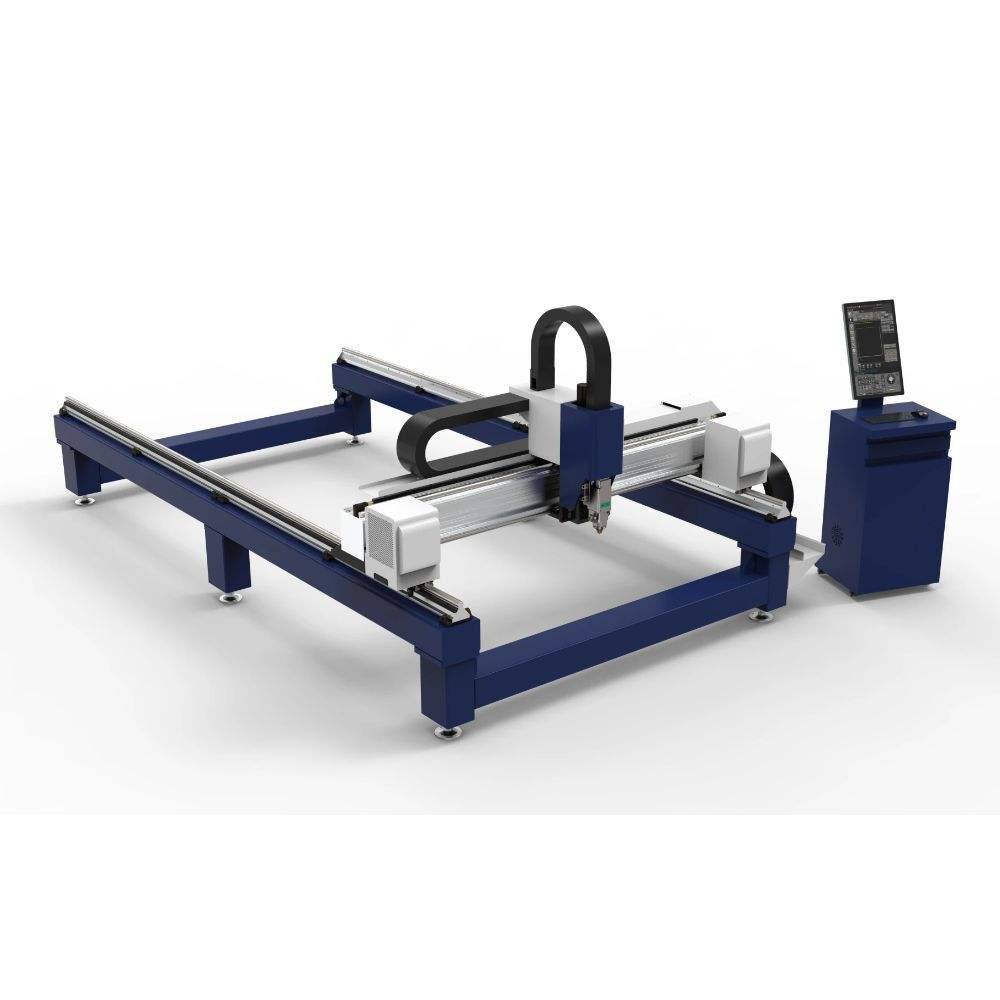
When evaluating a 3kW fiber laser cutting machine for a facility in Leon, engineers must look beyond just the wattage. The integration of the CNC system, the precision of the rack and pinion drive, and the stability of the heavy-duty frame are all critical. A standard 3kW machine is typically capable of cutting galvanized steel up to 5mm or 6mm with high precision, and carbon steel up to 20mm. However, for the high-volume production of ductwork, electrical enclosures, and automotive brackets common in Leon, the machine usually operates in the 1mm to 4mm range where it achieves maximum efficiency.
The Role of Nitrogen and Oxygen Assist Gases
The choice of assist gas is a determining factor in the quality of the laser cutting finish. In Leon’s industrial parks, where quality standards are dictated by international automotive OEMs, the use of high-purity nitrogen is standard for galvanized steel. Nitrogen prevents the oxidation of the cut edge, ensuring that the part can move directly to the welding or assembly stage without secondary cleaning. While oxygen can be used to cut thicker plates at lower power, it often leads to a charred edge on galvanized material, which compromises the integrity of the zinc protection.
Precision Motion Control in Leon’s Manufacturing
The 3kW machines utilized in Leon often feature high-acceleration gantry systems. Because fiber lasers cut thin galvanized sheets so quickly—sometimes at speeds exceeding 40 meters per minute—the mechanical components of the machine must be able to keep up. This requires high-precision servo motors and a robust software interface like CypCut or similar CNC controllers. These systems allow local engineers to nest parts efficiently, reducing material waste in expensive galvanized coils and sheets.
Why Leon is the Ideal Location for Fiber Laser Integration
Leon is strategically positioned within the “Diamond of Mexico,” providing easy access to the automotive clusters in Silao, Celaya, and Querétaro. Companies in Leon that invest in 3kW laser cutting technology find themselves as preferred Tier 2 and Tier 3 suppliers. The ability to deliver precise, burr-free galvanized parts on tight deadlines is a significant competitive advantage.
Overcoming Local Environmental Challenges
The climate in Leon can be dusty and experiences significant temperature fluctuations between day and night. For a 3kW fiber laser, maintaining a controlled environment is vital. The fiber optic cable and the cutting head are sensitive to dust contamination. Local shops must implement rigorous maintenance schedules, ensuring that the dual-temperature water chillers are functioning correctly to keep the laser source and the optics at a constant temperature. Failure to manage the thermal stability can lead to “beam drift,” which results in inconsistent cut quality on galvanized surfaces.
Human Capital and Technical Expertise
One of Leon’s greatest strengths is its growing pool of skilled technicians. Local universities and technical schools have begun incorporating CNC programming and laser cutting maintenance into their curricula. A 3kW machine is sophisticated but user-friendly enough that a well-trained operator can optimize cutting parameters—such as frequency, duty cycle, and gas pressure—to handle different grades of galvanized coating (e.g., G60 vs. G90) effectively.
Operational Cost Analysis for 3kW Systems
From an engineering perspective, the Return on Investment (ROI) for a 3kW fiber laser in Leon is highly favorable. Compared to a 1kW or 2kW machine, the 3kW version offers significantly higher throughput on 2mm-3mm galvanized steel, which is the industry standard for many structural applications. While the initial capital expenditure is higher, the cost per part is lower due to the increased speed and the reduction in labor hours.
Energy Efficiency and Sustainability
Fiber lasers are remarkably efficient, converting about 30% to 35% of electrical energy into laser light. In contrast, CO2 lasers only manage about 8% to 10%. For a business in Leon, where industrial electricity rates can be a major overhead factor, the energy savings of a 3kW fiber system can amount to thousands of dollars annually. Furthermore, the lack of mirrors and the long lifespan of the laser diodes (up to 100,000 hours) minimize the long-term maintenance costs.
Material Versatility: Beyond Galvanized Steel
While galvanized steel is a primary focus, the 3kW laser cutting machine provides the versatility to handle other materials essential to Leon’s economy. This includes stainless steel for the food processing industry and aluminum for the burgeoning aerospace components sector. The high power density of the 3kW beam allows it to pierce through reflective materials that would damage older laser technologies, making it a future-proof investment for local entrepreneurs.
Best Practices for Maintaining Cut Quality
To ensure the longevity of the machine and the consistency of the output, several engineering best practices should be followed in the Leon workshops. First, the protective windows in the cutting head must be inspected daily. Even a tiny speck of dust can absorb laser energy, heat up, and crack the lens. Second, the gas purity must be verified; moisture in the nitrogen lines can cause “micro-explosions” during the laser cutting of galvanized layers, leading to poor surface finish.
Software Optimization and Nesting
Modern 3kW machines come equipped with advanced nesting software. For Leon-based manufacturers, this means the ability to integrate with ERP systems to track material usage. When cutting galvanized steel, the software can implement “lead-in” and “lead-out” strategies that prevent the accumulation of heat in small corners, which is where zinc vaporization is most likely to cause defects. Proper nesting not only saves material but also optimizes the travel path of the laser head, further reducing cycle times.
Conclusion: The Future of Fabrication in Guanajuato
The adoption of 3kW fiber laser cutting machines represents a significant step forward for the industry in Leon. By mastering the nuances of processing galvanized steel—balancing power, speed, and gas pressure—local manufacturers are positioning themselves at the forefront of the Mexican industrial sector. The 3kW fiber laser is not just a tool; it is a catalyst for economic growth, enabling higher precision, lower costs, and the ability to meet the rigorous demands of the global supply chain.
As Leon continues to grow as a center for engineering excellence, the integration of these high-power laser systems will be the foundation upon which new innovations are built. Whether it is for automotive frames, complex architectural elements, or industrial enclosures, the 3kW fiber laser remains the definitive choice for high-quality galvanized steel fabrication in the heart of Mexico.
















