The Rise of 3kW Fiber laser cutting in Puebla’s Industrial Sector
Puebla has long been recognized as the heart of Mexico’s automotive and manufacturing industry. With the presence of global giants like Volkswagen and Audi, the regional supply chain demands a level of precision and efficiency that only advanced technology can provide. Among these technologies, the 3kW fiber laser cutting machine has emerged as a cornerstone for metal fabrication shops and industrial plants. This specific power rating—3000 watts—offers an optimal balance between capital investment and high-speed processing capabilities, particularly for carbon steel, which remains the most widely used material in the region’s construction and automotive sectors.
The transition from traditional CO2 lasers and plasma cutting to fiber laser technology represents a significant leap in productivity. Fiber lasers utilize a solid-state gain medium, which results in a much smaller spot size and higher energy density. For manufacturers in Puebla, this translates to narrower kerf widths, minimal heat-affected zones (HAZ), and the ability to produce complex geometries that were previously impossible or too costly to achieve.
Understanding the 3kW Fiber Laser Source
A 3kW fiber laser cutting system operates by generating a high-intensity beam through a series of laser diodes, which is then amplified in a fiber optic cable doped with rare-earth elements like ytterbium. The resulting beam is delivered via a flexible fiber cable directly to the cutting head. Unlike CO2 lasers, there are no mirrors to align, which significantly reduces maintenance requirements and downtime—a critical factor for the high-output factories located in Puebla’s industrial parks like FINSA or Chachapa.
At 3000W, the laser possesses enough energy to penetrate carbon steel plates up to 20mm or 22mm in thickness, though its “sweet spot” for high-speed, high-quality production lies between 3mm and 12mm. In this range, the 3kW machine outperforms lower-powered units by a massive margin, offering cutting speeds that can exceed 10 meters per minute depending on the specific grade of the steel and the auxiliary gas used.

Optimizing Carbon Steel Processing in Puebla
Carbon steel is the backbone of industrial development in Central Mexico. From structural beams for new warehouses to precision brackets for automotive chassis, the demand for high-quality carbon steel components is relentless. Laser cutting carbon steel with a 3kW fiber source requires a deep understanding of the material’s metallurgy. Carbon steel absorbs the 1.06-micron wavelength of a fiber laser much more efficiently than it does the 10.6-micron wavelength of a CO2 laser, leading to faster piercing times and cleaner cuts.
In Puebla, where the altitude is approximately 2,135 meters above sea level, atmospheric conditions can slightly influence the behavior of auxiliary gases. However, the 3kW fiber laser’s stability ensures that these environmental factors are easily managed through precise CNC control. When processing carbon steel, the choice of gas is paramount. Oxygen is typically used for thicker plates to facilitate an exothermic reaction that adds heat to the cutting process, while Nitrogen or high-pressure Air is preferred for thinner gauges where a dross-free, oxide-free edge is required for subsequent welding or painting.
Technical Parameters for High-Precision Cutting
To achieve the best results with a 3kW fiber laser cutting machine on carbon steel, engineers must fine-tune several variables. The focal position is perhaps the most critical; for carbon steel, the focus is usually set slightly above or at the surface of the material when using oxygen to ensure a wide enough kerf for the molten metal to be ejected. Conversely, when cutting with nitrogen at high pressure, the focus is often buried deep within the material.
Nozzle selection also plays a vital role. For 3kW applications, double-layer nozzles are standard for oxygen cutting to maintain a stable gas flow and prevent turbulence that could mar the edge quality. In the competitive manufacturing landscape of Puebla, achieving a “mirror-like” finish on the cut edge of 8mm or 10mm carbon steel can be a major differentiator for local workshops bidding on international contracts.
The Impact of Fiber Laser Technology on Puebla’s Automotive Supply Chain
The automotive industry in Puebla operates on a Just-In-Time (JIT) manufacturing model. This requires suppliers to be extremely agile. A 3kW fiber laser cutting machine provides this agility by allowing for rapid prototyping and quick transitions between different production runs. Since there are no physical dies or molds involved, a manufacturer can go from a CAD drawing to a finished carbon steel part in minutes.
Furthermore, the precision of laser cutting—often within tolerances of +/- 0.05mm—eliminates the need for secondary machining processes. For Tier 2 and Tier 3 suppliers in the region, this reduction in the production cycle is essential for maintaining profitability. The 3kW power level is particularly effective for the medium-gauge plates used in automotive seating, suspension components, and reinforced structural brackets.
Maintenance and Environmental Considerations in Central Mexico
Operating high-tech machinery in Puebla requires attention to local conditions. The region can experience significant temperature fluctuations and dust, especially in industrial zones. A 3kW fiber laser cutting machine must be equipped with a high-quality dual-circuit water chiller to regulate the temperature of both the laser source and the cutting head. Maintaining a consistent temperature is vital for beam stability and the longevity of the optical components.
Regular maintenance schedules should include checking the protective windows, cleaning the nozzle, and ensuring the rack-and-pinion motion system is properly lubricated. Given the volcanic activity of nearby Popocatépetl, air filtration systems for the laser’s power supply and the cutting area are highly recommended to prevent fine ash or dust from interfering with sensitive electronics. A proactive maintenance approach ensures that the machine maintains its 3kW output efficiency for years, protecting the owner’s investment.
Economic Advantages and ROI for Local Manufacturers
The economic argument for investing in a 3kW fiber laser cutting machine in Puebla is compelling. While the initial purchase price is higher than a plasma cutter, the cost per part is significantly lower due to the speed and the lack of consumables like electrodes or expensive gas mixes. Fiber lasers also boast a wall-plug efficiency of approximately 30-35%, compared to the 8-10% efficiency of CO2 lasers. This leads to substantial savings on electricity bills, which is a major overhead cost for Mexican factories.
Additionally, the versatility of the 3kW system allows shops to expand their service offerings. While the primary focus might be carbon steel, these machines can easily handle stainless steel, aluminum, and even highly reflective materials like brass and copper, which are common in the electrical and decorative industries of Puebla and neighboring Tlaxcala. This diversification helps local businesses remain resilient during shifts in the automotive market.
Choosing the Right Machine Configuration
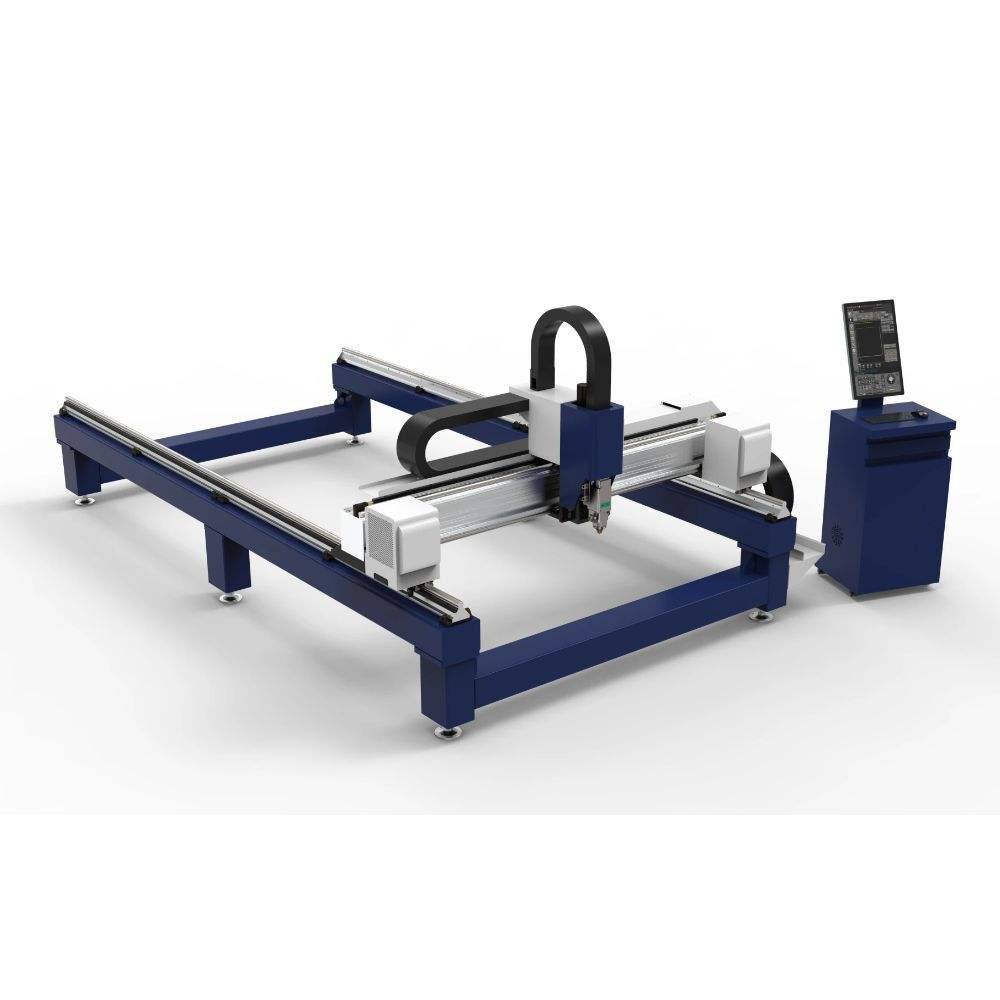
When selecting a 3kW machine, Puebla-based companies should consider the bed size and the inclusion of an exchange table. A 1500mm x 3000mm bed is standard, but for larger industrial applications, 2000mm x 6000mm tables are becoming increasingly popular. An automatic exchange table allows for simultaneous loading and unloading while the machine is cutting, maximizing the “beam-on” time. For those processing structural tubing alongside flat plate, a “tube and plate” integrated machine—as seen in many modern Puebla facilities—offers incredible flexibility without the footprint of two separate machines.
Software integration is another key component. Modern 3kW systems utilize advanced nesting software that optimizes material usage, reducing scrap rates on expensive carbon steel sheets. In a region where material costs can fluctuate based on global markets, saving even 5% of a steel sheet through better nesting can result in thousands of dollars in annual savings.
Conclusion: The Future of Metal Fabrication in Puebla
The integration of 3kW fiber laser cutting technology is not just a trend; it is a fundamental shift in how metal is processed in Puebla. As the region continues to attract foreign direct investment and grows its reputation as a global manufacturing hub, the reliance on high-precision, high-speed fabrication will only increase. For the engineers and business owners of Puebla, mastering the 3kW fiber laser is the key to unlocking new levels of productivity, quality, and competitiveness in the global market.
By focusing on the specific needs of carbon steel processing and adapting to the local environmental and economic landscape, manufacturers can ensure that their investment in laser cutting technology yields the highest possible returns. The 3kW fiber laser stands as a testament to the industrial evolution of Puebla, bridging the gap between traditional craftsmanship and the future of Industry 4.0.